Peppered Moth Coloration and Industrial Pollution
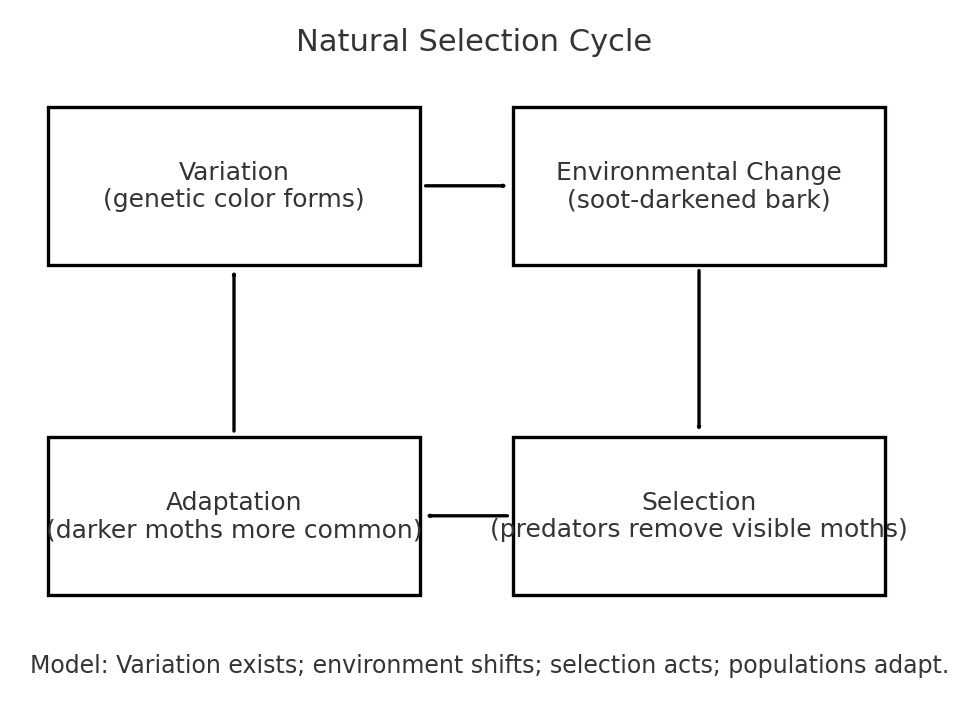
The story of the peppered moth (Biston betularia) is one of the best-documented examples of evolution by natural selection. Before the Industrial Revolution, most trees were covered with light-colored lichen. The light form of the moth blended into the bark, making it less likely to be seen and eaten by birds. A dark form also existed, caused by a genetic mutation, but it was rare because dark moths were easier for predators to spot.
When soot from factories darkened tree trunks in the mid-1800s, the environment reversed. Now the light moths stood out, and birds more easily captured them. Dark moths, however, were camouflaged against the soot-covered trees, giving them a survival advantage. Over several decades, the proportion of dark moths in industrial areas rose dramatically - from less than 5% to over 90%. This shift was not caused by the environment changing the moths directly, but by natural selection favoring the individuals whose inherited traits best fit the environment.
When air pollution controls were introduced in the 20th century, tree bark lightened again. Researchers observed the reverse process: the light-colored moths became common once more. Field experiments by British biologist Bernard Kettlewell in the 1950s confirmed that bird predation was responsible for the change. This demonstrated that selective pressures in the environment - like predation and camouflage - can shift allele frequencies within populations over time.
Today, scientists use the peppered moth to teach how genetic variation and environmental change interact to drive evolution. The same principles apply to antibiotic resistance in bacteria or pesticide resistance in insects: variation, selection, and adaptation over generations.
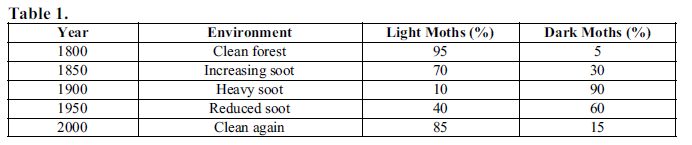
Graph of Information - Figure 1.
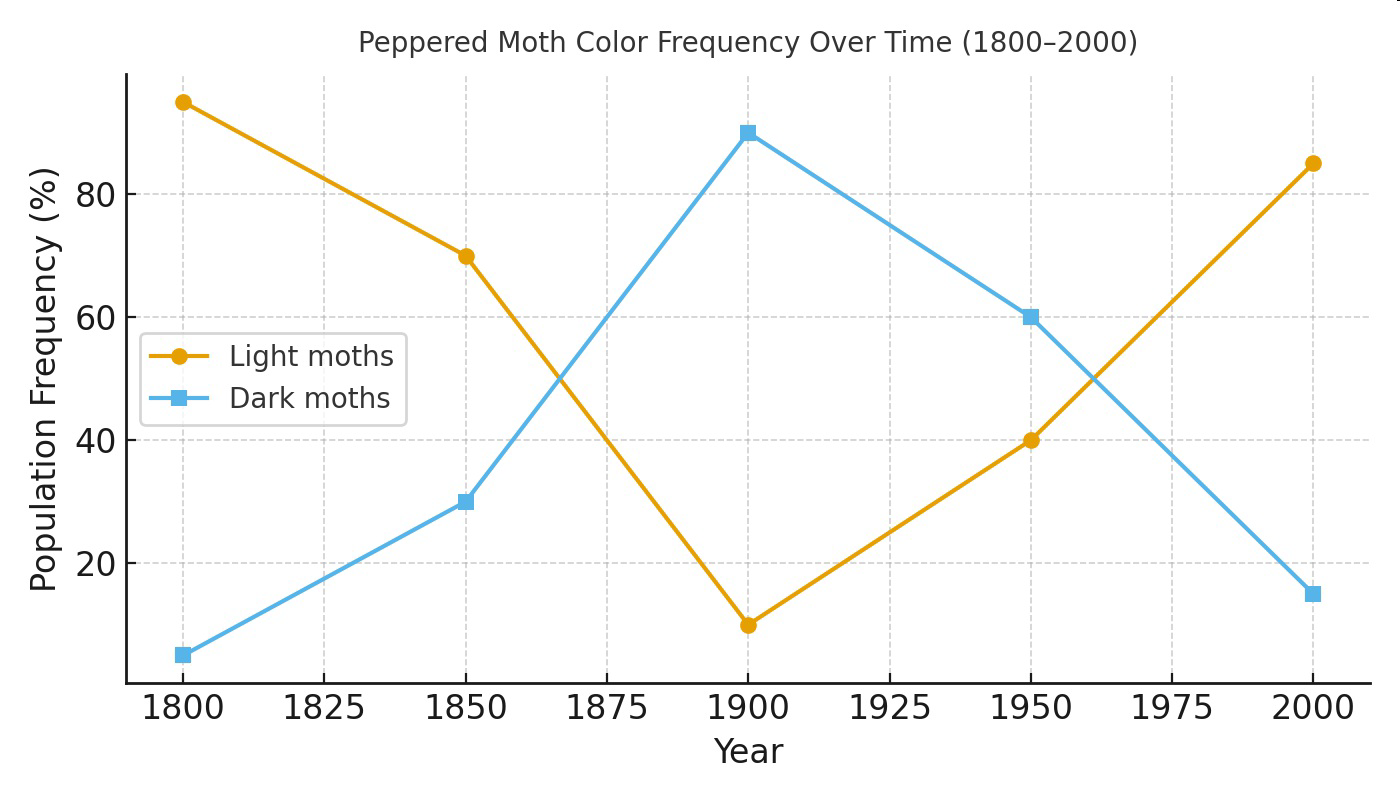
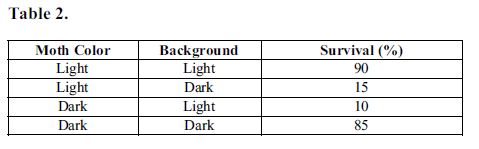
Graph of Information - Figure 2.
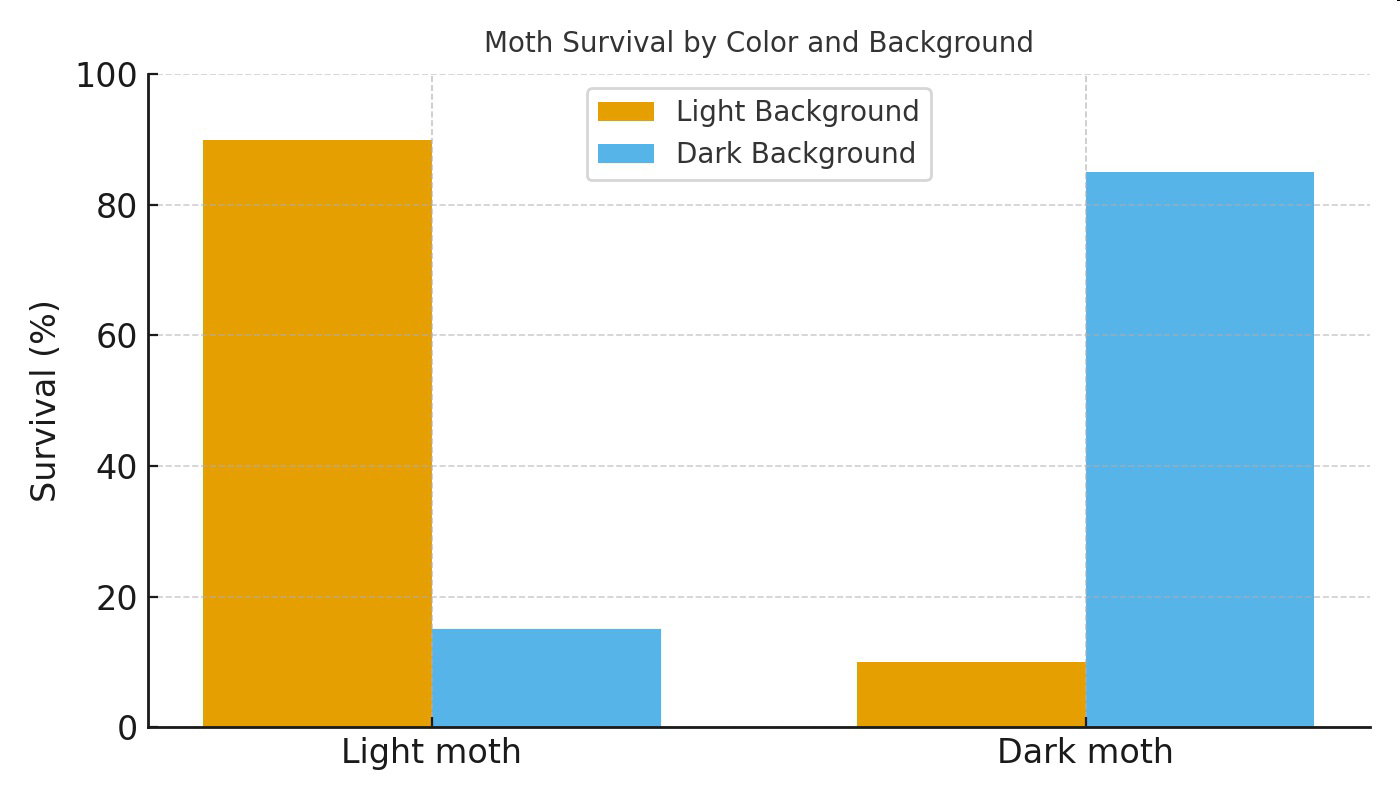
Figure 3.
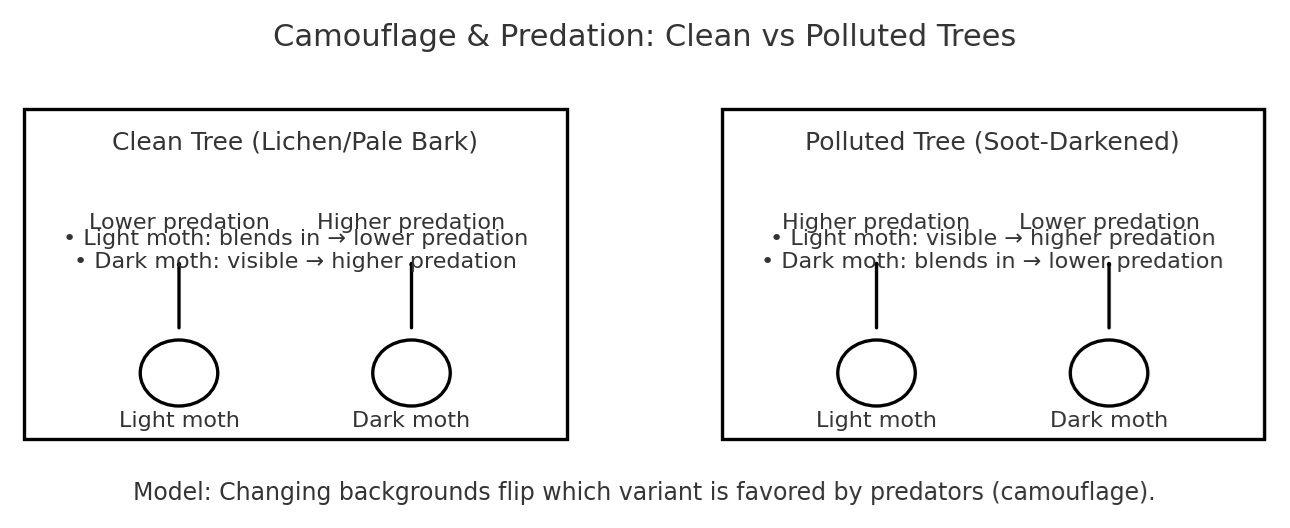
Figure 4.