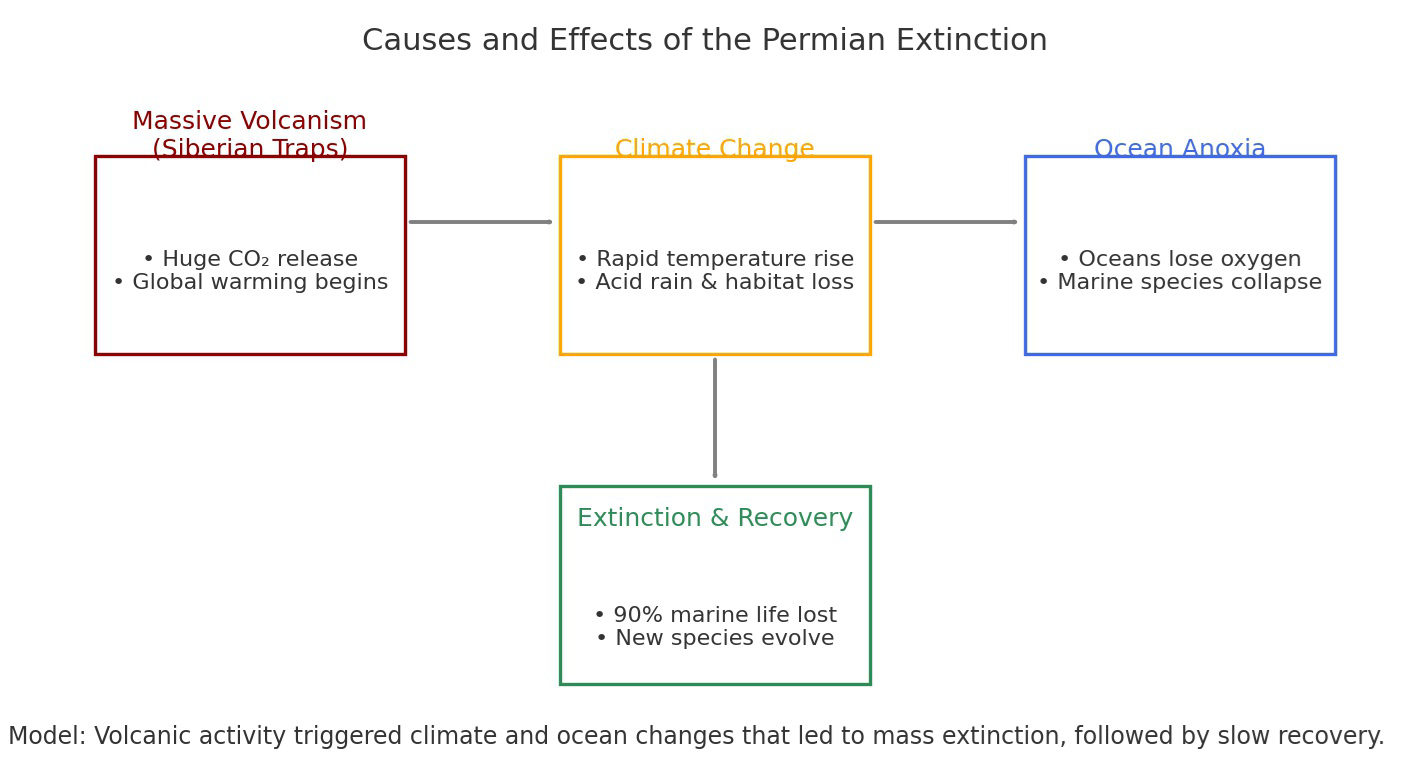
The Great Permian Extinction
The Permian Extinction was the most severe biodiversity crisis in Earth’s history. Before the event, life in the oceans and on land was rich and diverse — coral reefs, trilobites, and giant amphibians thrived. Then, around $252$ million years ago, massive volcanic eruptions in what is now Siberia released vast amounts of carbon dioxide into the atmosphere. This triggered global warming, acid rain, and a collapse in ocean oxygen levels (anoxia).
Fossil records from marine sediments show a rapid decline in shell-forming species like brachiopods and ammonites. Rock layers from this time are dark and organic-rich, indicating oxygen-poor waters. On land, many plant species disappeared, leading to food web collapse and widespread extinction of reptiles and amphibians.
It took over $10$ million years for ecosystems to fully recover, as new groups evolved to fill empty ecological niches. The recovery period led to the dominance of reptiles, setting the stage for the Mesozoic Era, the “Age of Dinosaurs.”
By examining fossils and rock chemistry, scientists see that the causes and effects of the Permian Extinction mirror processes we can still observe today - climate change, atmospheric $CO_2$ buildup, and ecosystem collapse. The fossil record demonstrates that the same natural laws of physics, chemistry, and biology have shaped life through both stability and catastrophe.
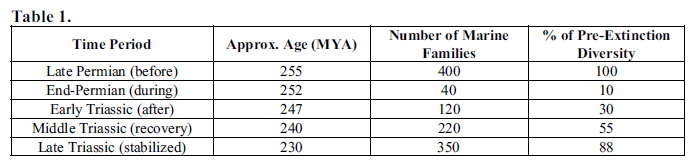

Graph of Information - Figure 1.
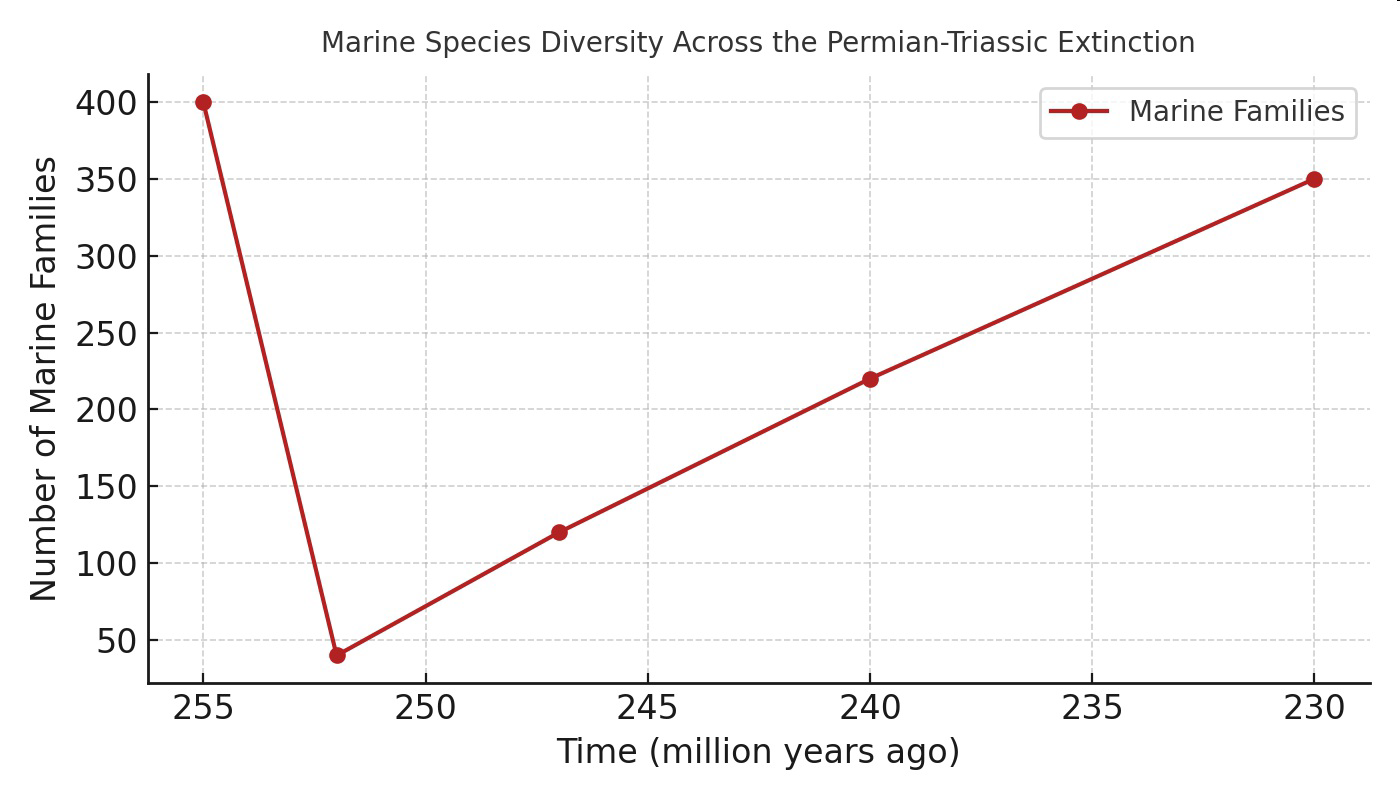
Figure 2.