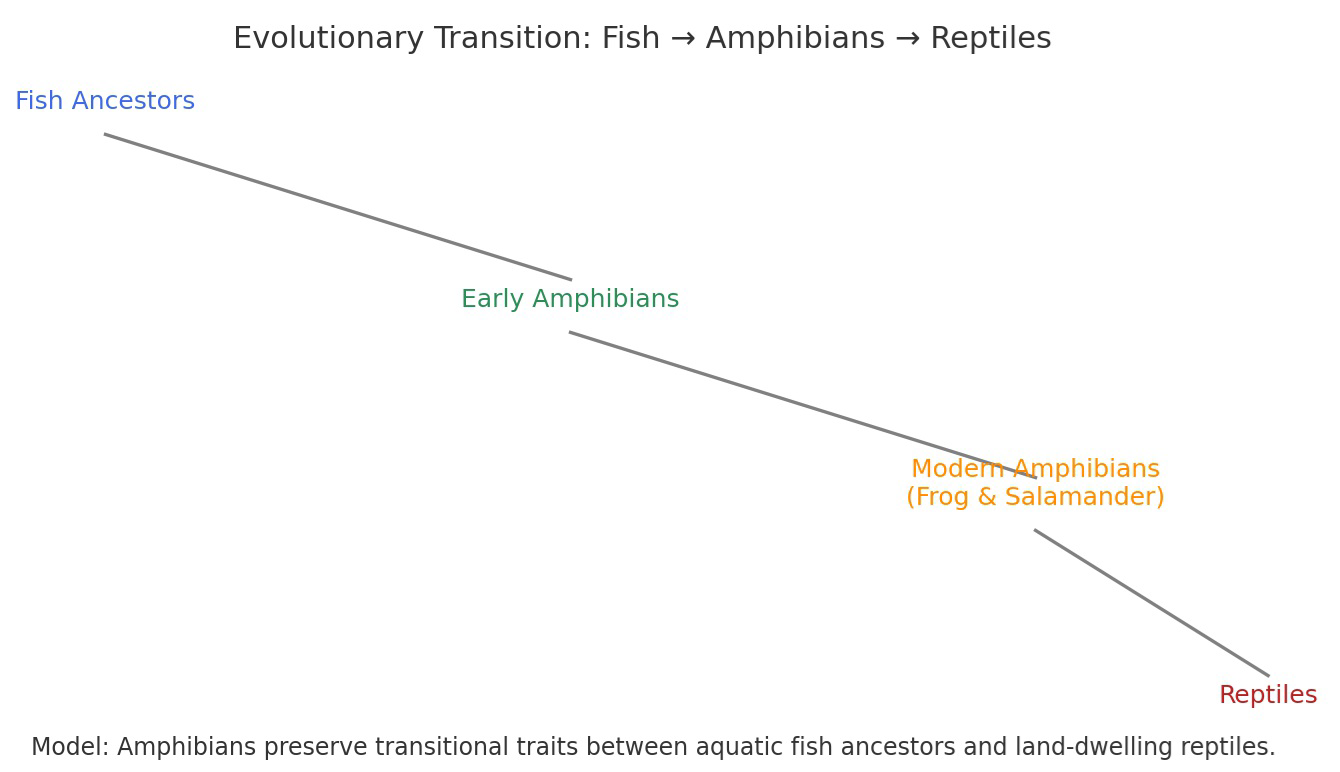
Amphibian Clues to Evolution
Amphibians are among the best examples for studying how developmental patterns reveal evolutionary history. Although adult frogs and salamanders look quite different, their embryos and early larvae share striking similarities - and both show traits that connect them to fish ancestors.
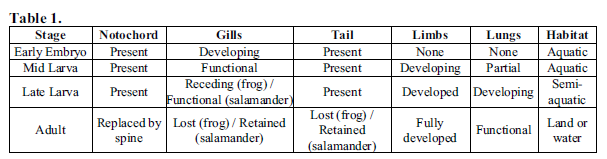
Frog embryos begin life in water, forming gill arches, a notochord, and a tail. Salamander embryos develop nearly the same way, even though adult salamanders retain gills longer. In early stages, both species have structures used for swimming, including a muscular tail and lateral line sensory cells like those in fish.
As development proceeds, differences emerge: frogs begin to form hind limbs first, while salamanders develop front limbs earlier. By late larval stages, frogs start resorbing their tails and developing lungs, while salamanders often keep their tails and gills into adulthood.
Scientists use microscopic and pictorial data from frog and salamander embryos to explore evolutionary connections. The sequence of developmental changes provides clues to how early vertebrates transitioned from fully aquatic to partly terrestrial lifestyles. For instance, both species briefly form internal gills similar to fish, then develop lungs and legs - showing a living reflection of the ancient transition from water to land.
Modern techniques, such as time-lapse microscopy and genetic analysis, show that both species activate the same Hox gene clusters to pattern their limbs, but small differences in gene timing cause distinct adult body forms. This demonstrates how evolution reuses the same developmental toolkit across species, producing variation through gradual change.
Graph of Information - Figure 1.


Graph of Information - Figure 2.
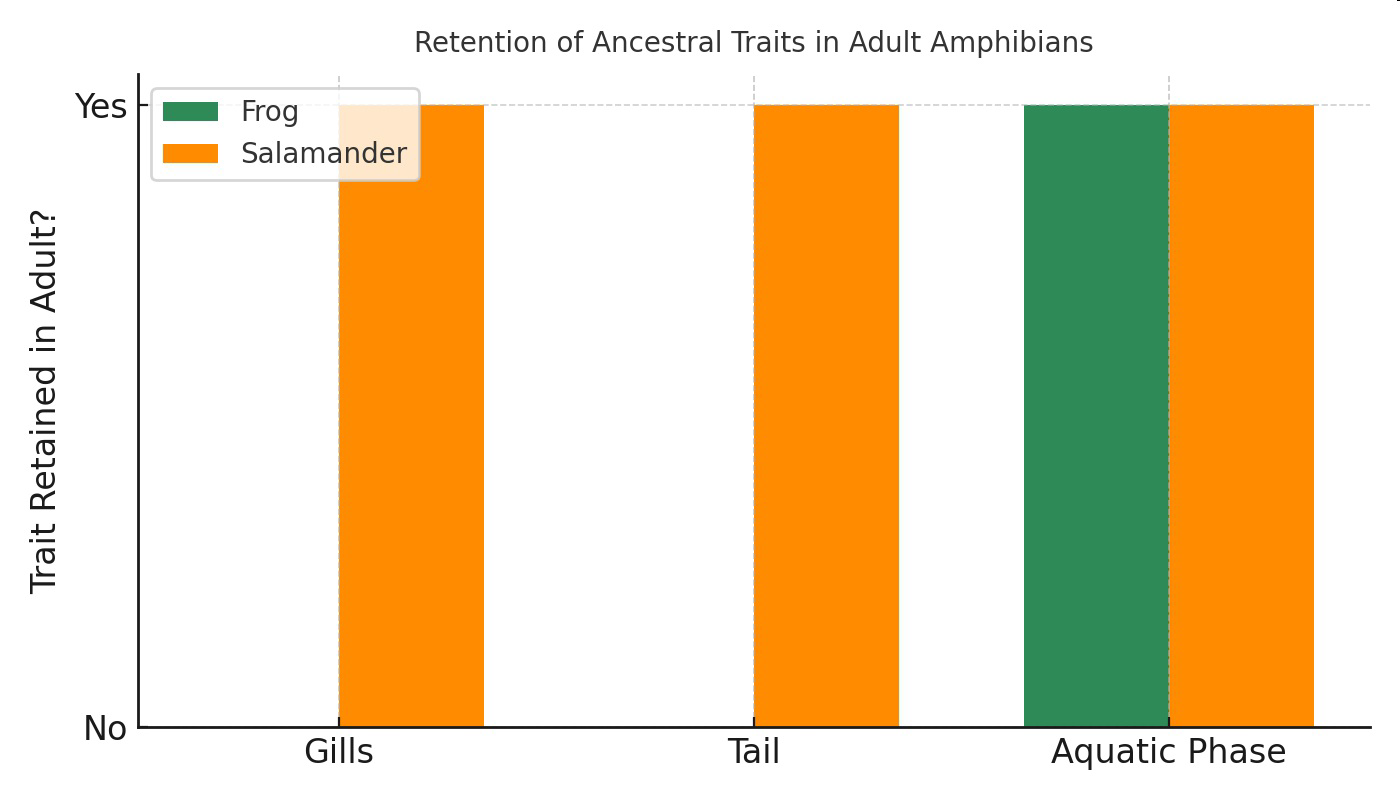
Figure 3.
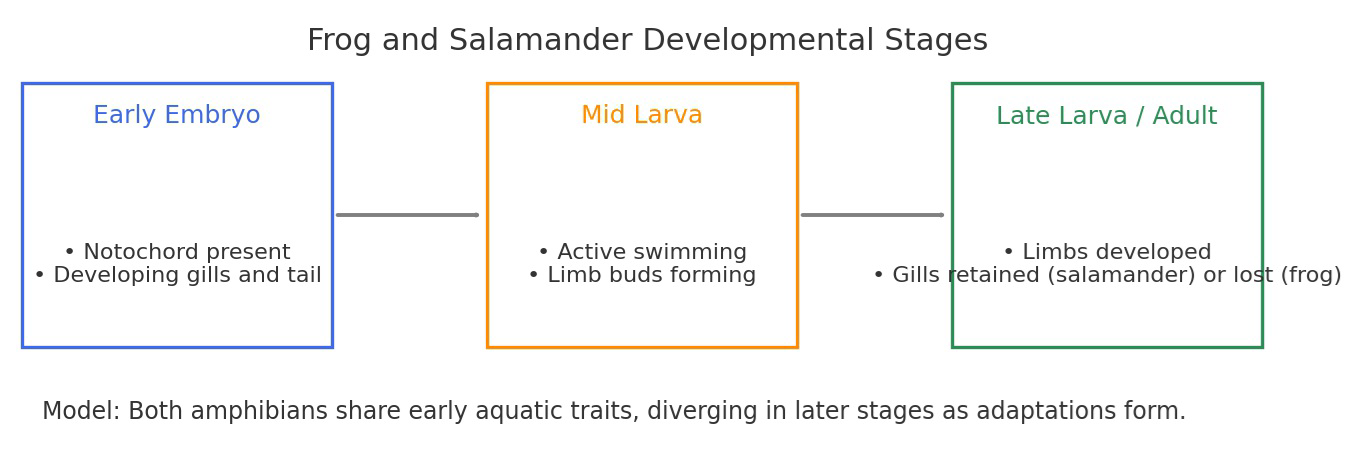
Figure 4.