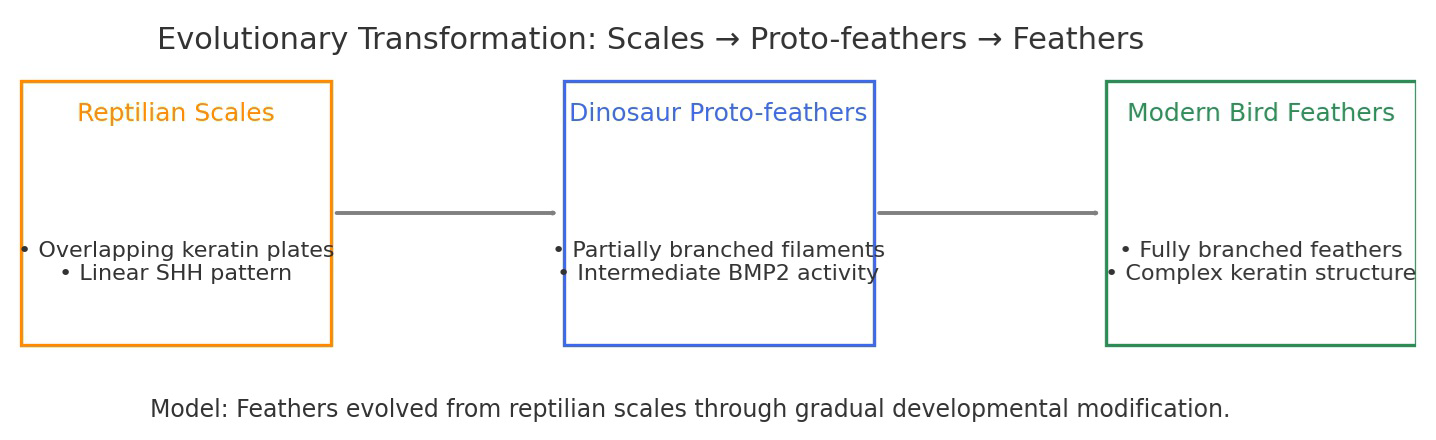
Bird and Reptile Embryos
Reptiles and birds share a common ancestor that lived more than 250 million years ago. Even though a lizard and a robin look completely different as adults, their embryos reveal hidden similarities.
When scientists observe reptile and bird embryos under a microscope, both show small skin bumps called placodes that later form epidermal structures. In lizards, these placodes flatten into overlapping scales, while in birds they elongate and branch into feather filaments. This means that feathers and scales are homologous structures - they come from the same embryonic origin, but develop differently.
Modern research has shown that a few key genetic switches control whether placodes form feathers or scales. For example, genes like β-catenin, BMP2, and Sonic Hedgehog (SHH) are activated in similar patterns in both embryos, but at different intensities and times. By adjusting these signals, scientists can even cause chicken embryos to develop scale-like patches, or reptile embryos to form proto-feather structures - proving that both features share a developmental foundation.
These discoveries have major implications for understanding evolution. The fossil record shows that many theropod dinosaurs had feathery coverings, long before birds appeared. When combined with embryological data, these findings show that feathers are simply modified reptilian scales, reshaped through time and development.
By analyzing pictorial and microscopic data from embryonic skin development, students can see how small changes in early development lead to major evolutionary innovations - the difference between walking on land and taking flight.
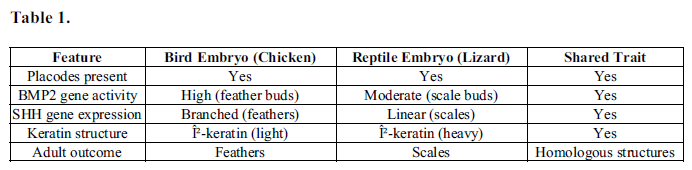
Graph of Information - Figure 1.
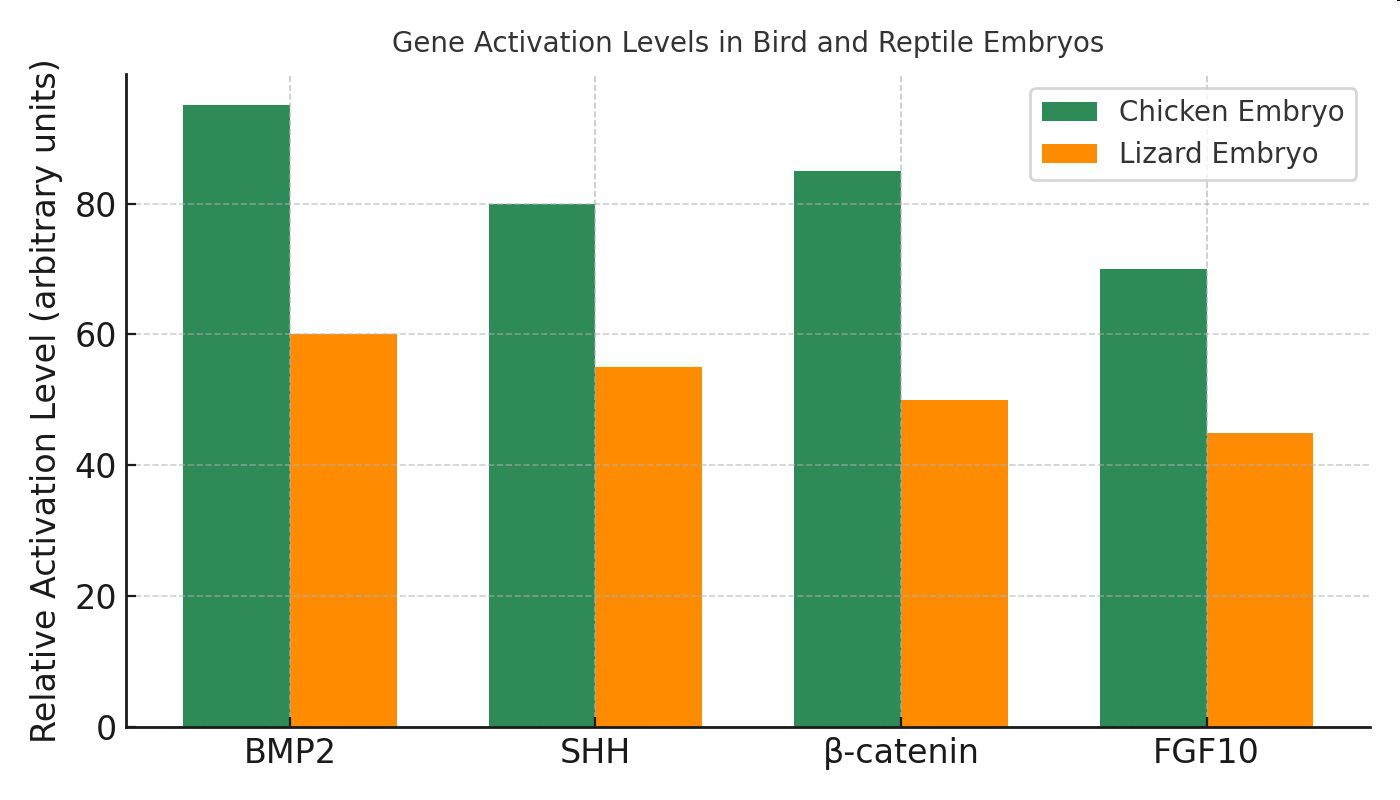
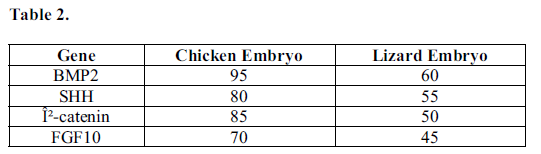
Graph of Information - Figure 2.
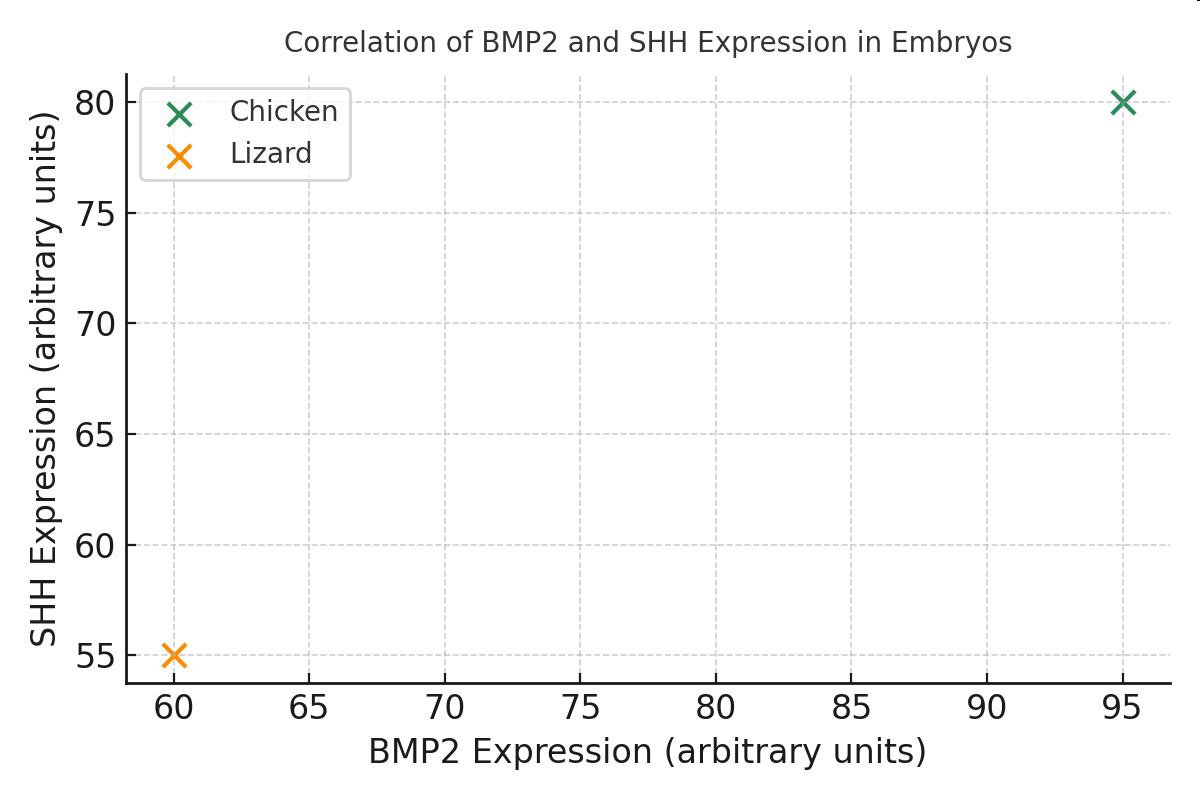
Figure 3.
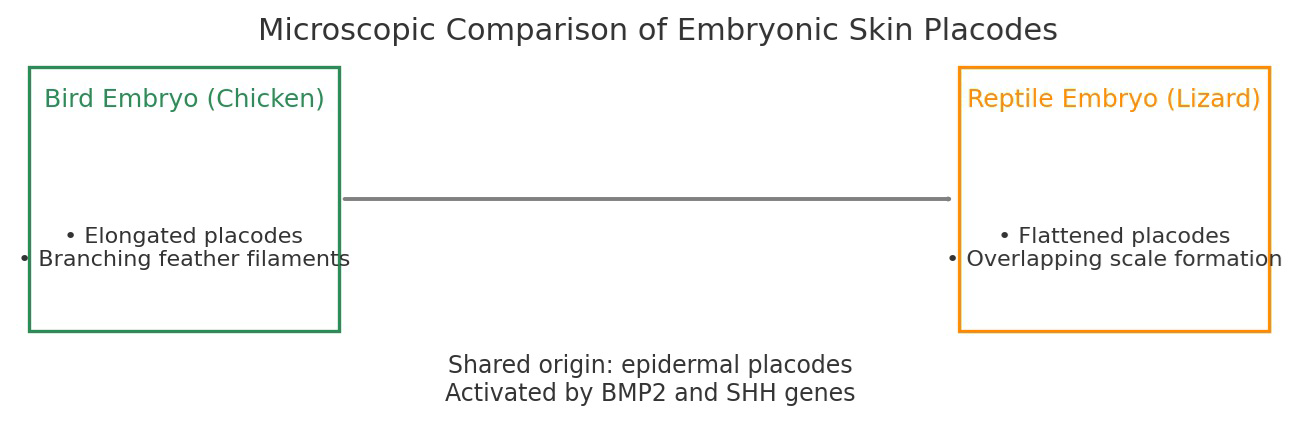
Figure 4.