Comparative Embryology
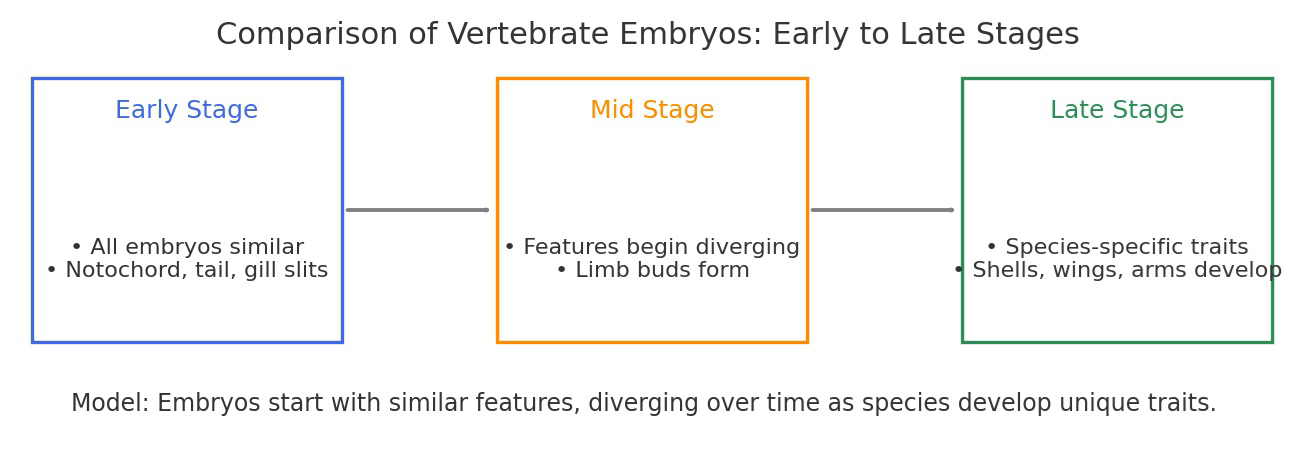
Embryology is the study of how organisms develop from fertilized eggs. When scientists compare embryos from different vertebrates - like fish, turtles, chickens, and humans - they observe remarkable similarities in their early stages.
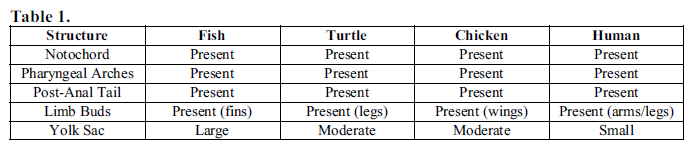
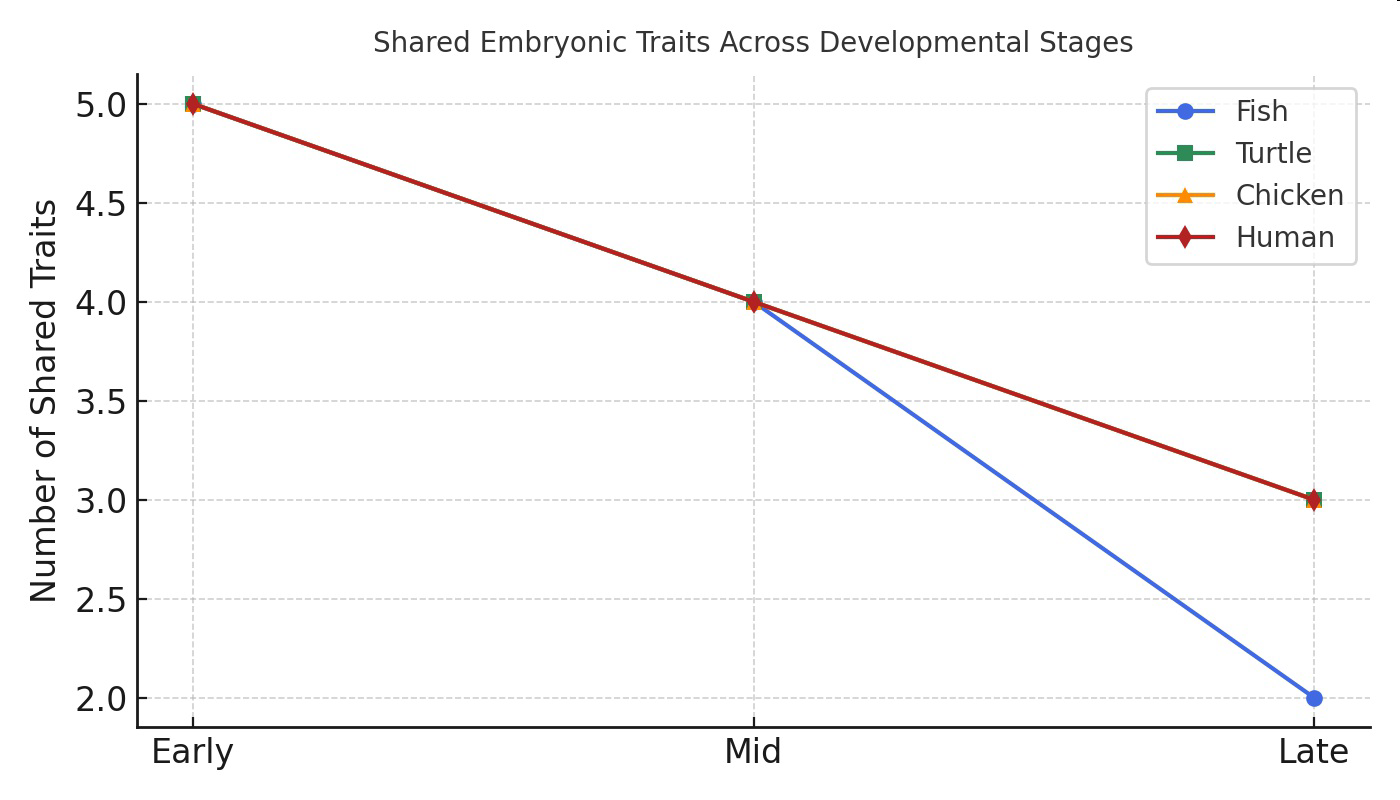
For example, all vertebrate embryos start with a notochord (a flexible rod that later becomes the spine), pharyngeal arches (gill-like structures near the throat), and a post-anal tail. Although these structures develop into different adult forms - gills in fish, ear and throat bones in humans - their presence in embryos provides evidence of shared ancestry.
In later stages, embryos diverge as species develop specialized features. A turtle embryo forms a shell, a chick forms wings, and a human embryo forms arms and legs. This progression reflects how evolution modifies a common developmental plan rather than inventing new structures from scratch.
Comparing embryos across species also shows how small genetic changes can lead to major differences. For instance, slight variations in gene expression timing can transform a limb bud into a wing, fin, or hand. This demonstrates the concept of homology at the developmental level - structures built from the same embryonic tissues, adapted for different functions.
Today, genetic evidence supports what embryology first suggested: all vertebrates share deep developmental similarities because they inherited their body plan from a common ancestor that lived over 500 million years ago.
Graph of Information - Figure 1.

Graph of Information - Figure 2.
Figure 3.
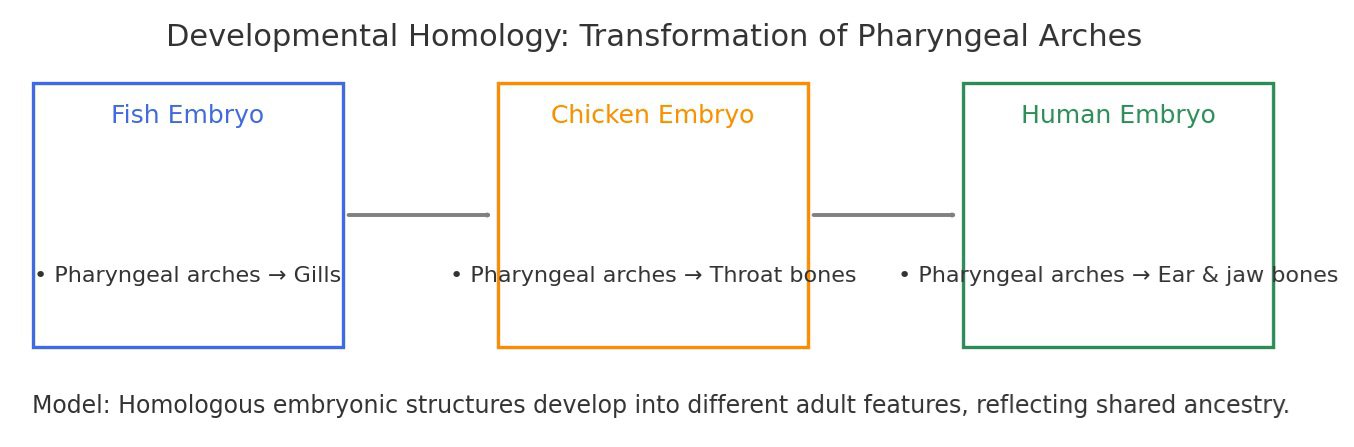
Figure 4.