Evolution of Mammals
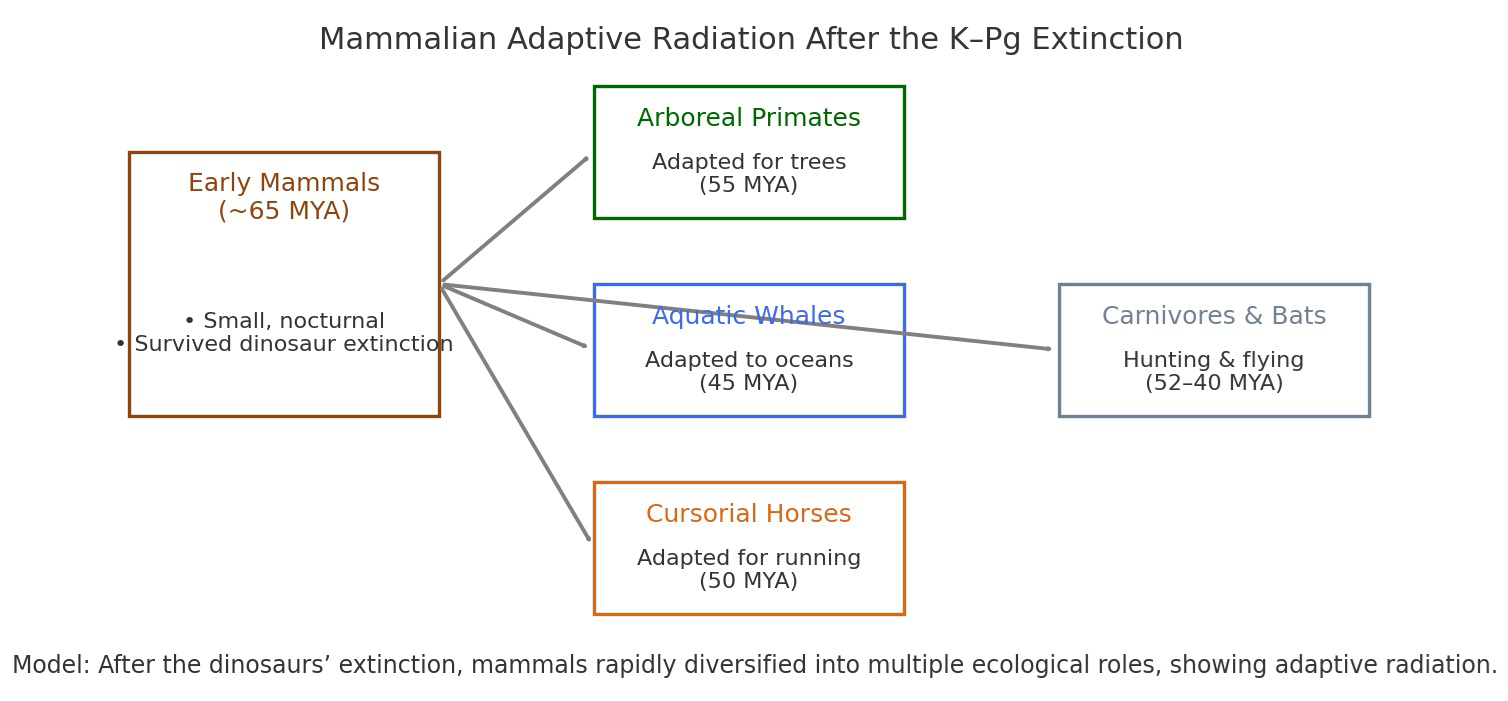
Before the asteroid impact that ended the Cretaceous Period, mammals lived in the shadows of dinosaurs. Most were small insect-eaters, adapted to nighttime activity. When the asteroid struck and dinosaurs went extinct, these mammals survived by exploiting flexible diets and burrowing behaviors, allowing them to withstand sudden environmental changes.
Within a few million years, the fossil record reveals an explosion of mammalian diversity. Species evolved larger body sizes and new traits suited for different habitats - some became runners on open plains, others swimmers, climbers, or gliders. This period, known as the Cenozoic Adaptive Radiation, produced many of today’s mammal groups: primates, whales, elephants, and carnivores.
Fossils from early Cenozoic deposits like the Green River Formation in North America and the Messel Pit in Germany show detailed skeletal and even fur impressions. Scientists can trace how mammal teeth, skulls, and limb bones evolved for specialized diets and movement styles.
These fossil patterns reflect a larger principle of evolution: when ecosystems change, natural selection favors organisms with traits suited to new conditions. Because the same physical and biological laws operate through time - heredity, mutation, competition - the fossil record provides direct evidence that today’s evolutionary processes also shaped life millions of years ago.
By analyzing trends in fossil diversity, scientists can connect ancient extinctions and radiations to modern biodiversity, showing that life on Earth is both resilient and ever-changing.
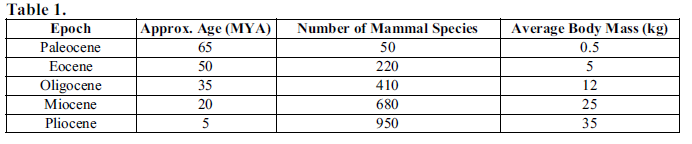
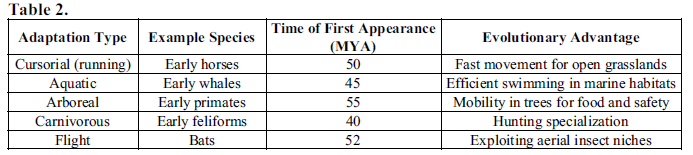
Graph of Information - Figure 1.
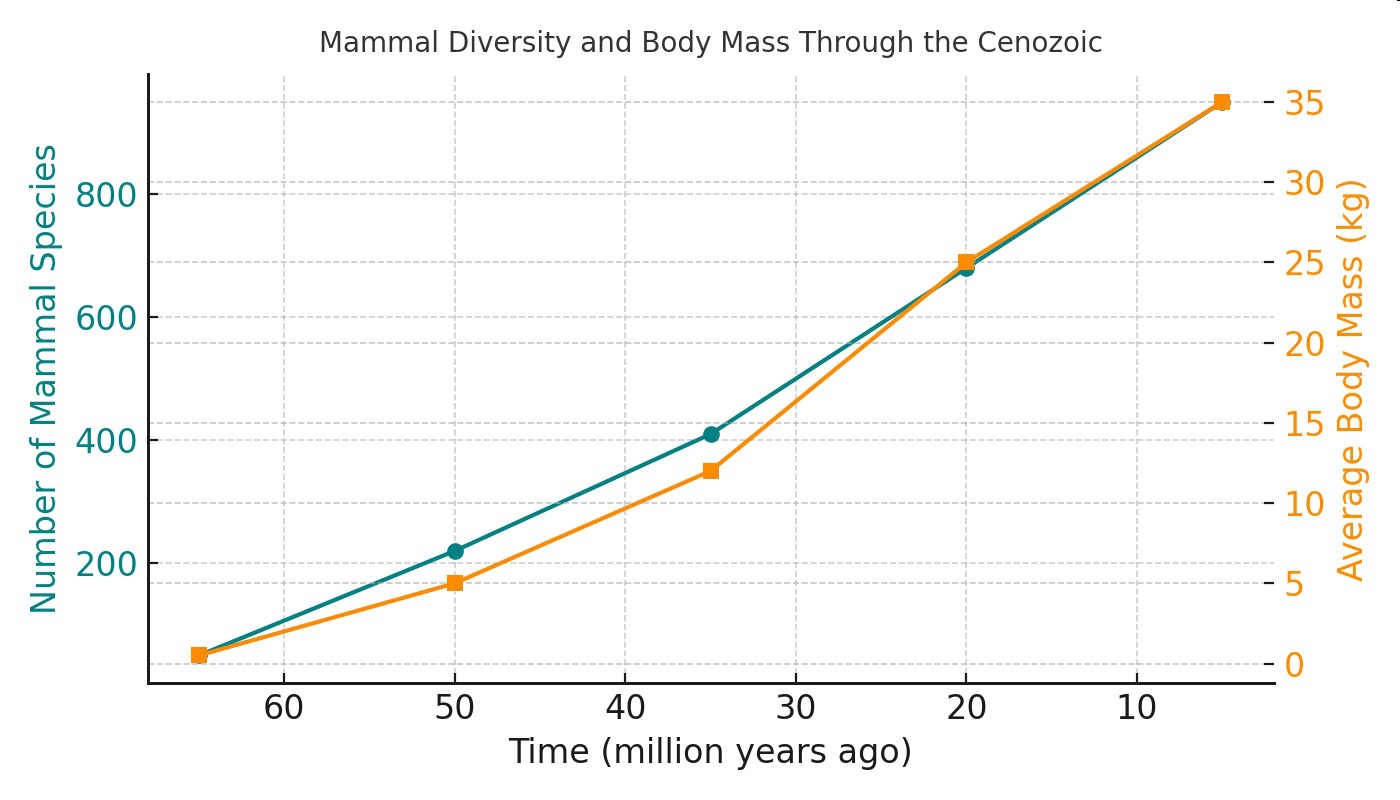
Figure 2.