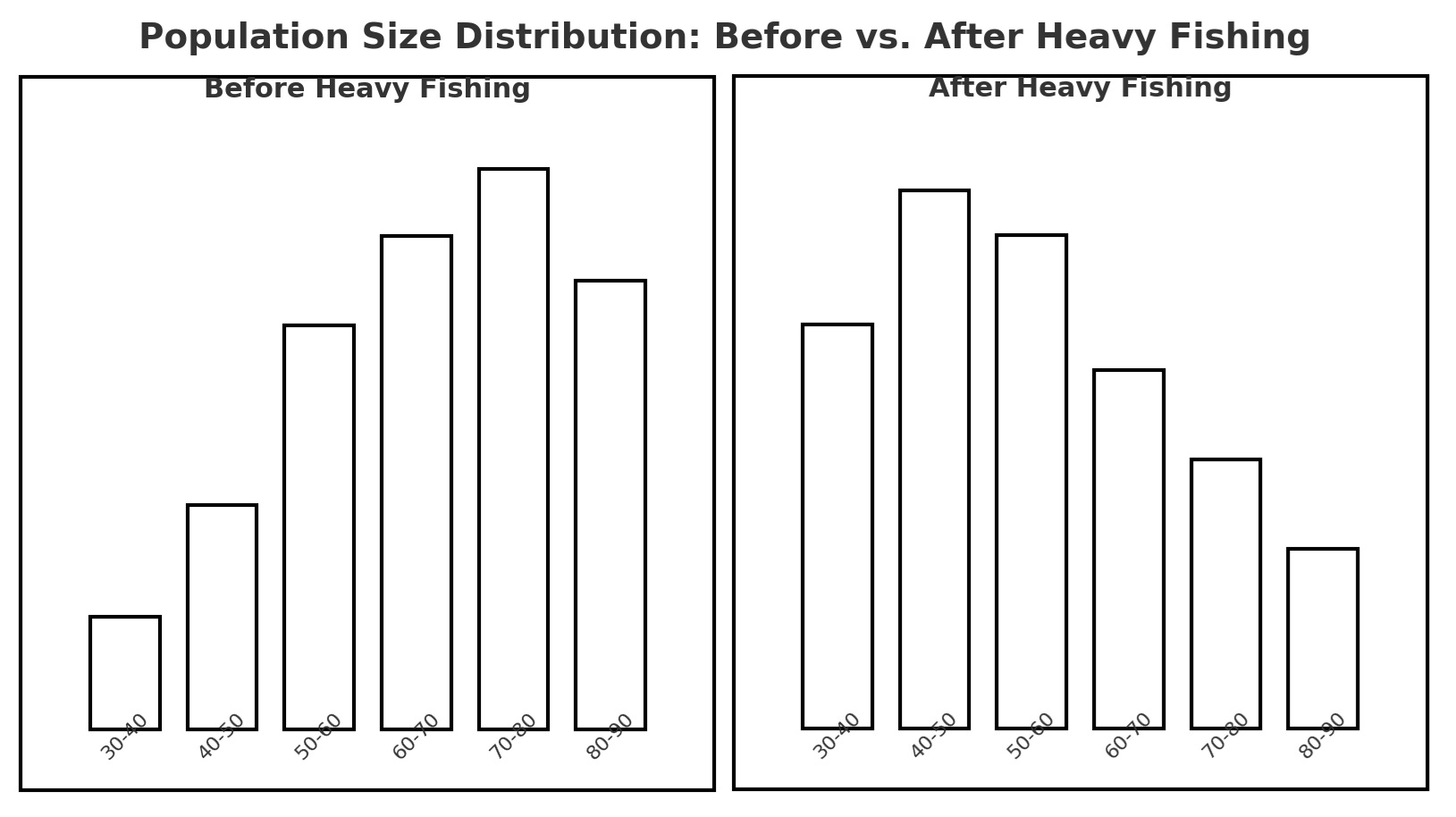
Fish Size and Overfishing Pressure
Commercial fishing has transformed marine ecosystems. Large fish are often targeted because they yield more meat, leading to intense pressure on the biggest and oldest individuals in a population. However, when large fish are consistently removed before reproducing, only smaller, faster-maturing fish pass on their genes.
This phenomenon is known as fisheries-induced evolution. In species like cod, haddock, and salmon, researchers have documented decreases in both average size and age at maturity over decades of fishing. For example, Atlantic cod that once reached reproductive age at seven years now mature as early as four.
Mathematical models help scientists describe this shift. They track the mean size and age distribution of a population, calculate selection differentials, and model how trait frequencies change from generation to generation. The results are clear: when fishing selectively removes large individuals, alleles for smaller body size or earlier reproduction become more common.
Even when fishing stops, populations can take decades to recover. Because these changes are genetic and not just environmental, reversing them requires many generations of natural selection in the opposite direction - favoring larger individuals again.
This example shows how quantitative data can make natural selection visible. Over time, the mean size of fish decreases, the variance narrows, and the proportion of smaller-bodied individuals increases. These mathematical trends reveal how human activity can act as a powerful selection force, shaping evolution within a single human lifetime.
The key lesson is that natural selection doesn’t just happen in the wild — it also occurs wherever environmental or human pressures favor certain traits. In this case, “survival of the smallest” replaces “survival of the fittest,” illustrating evolution in real time.
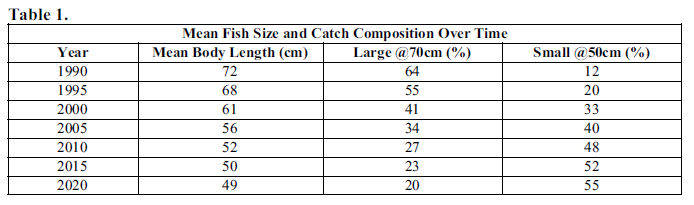
Graph of Information - Figure 1.
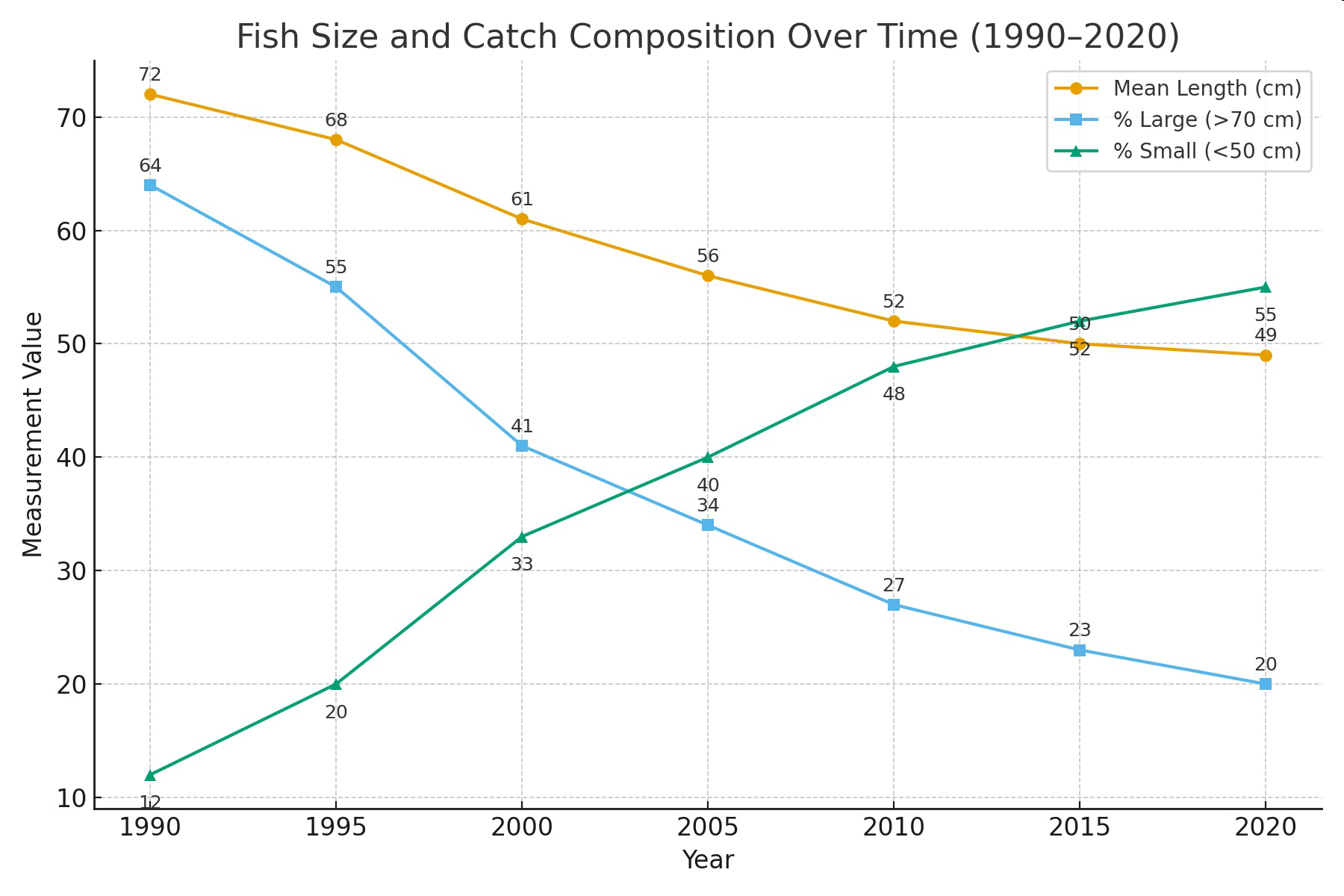
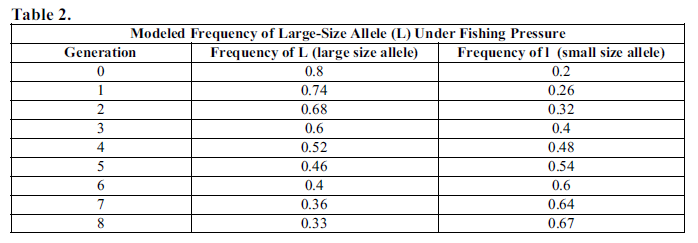
Graph of Information - Figure 2.
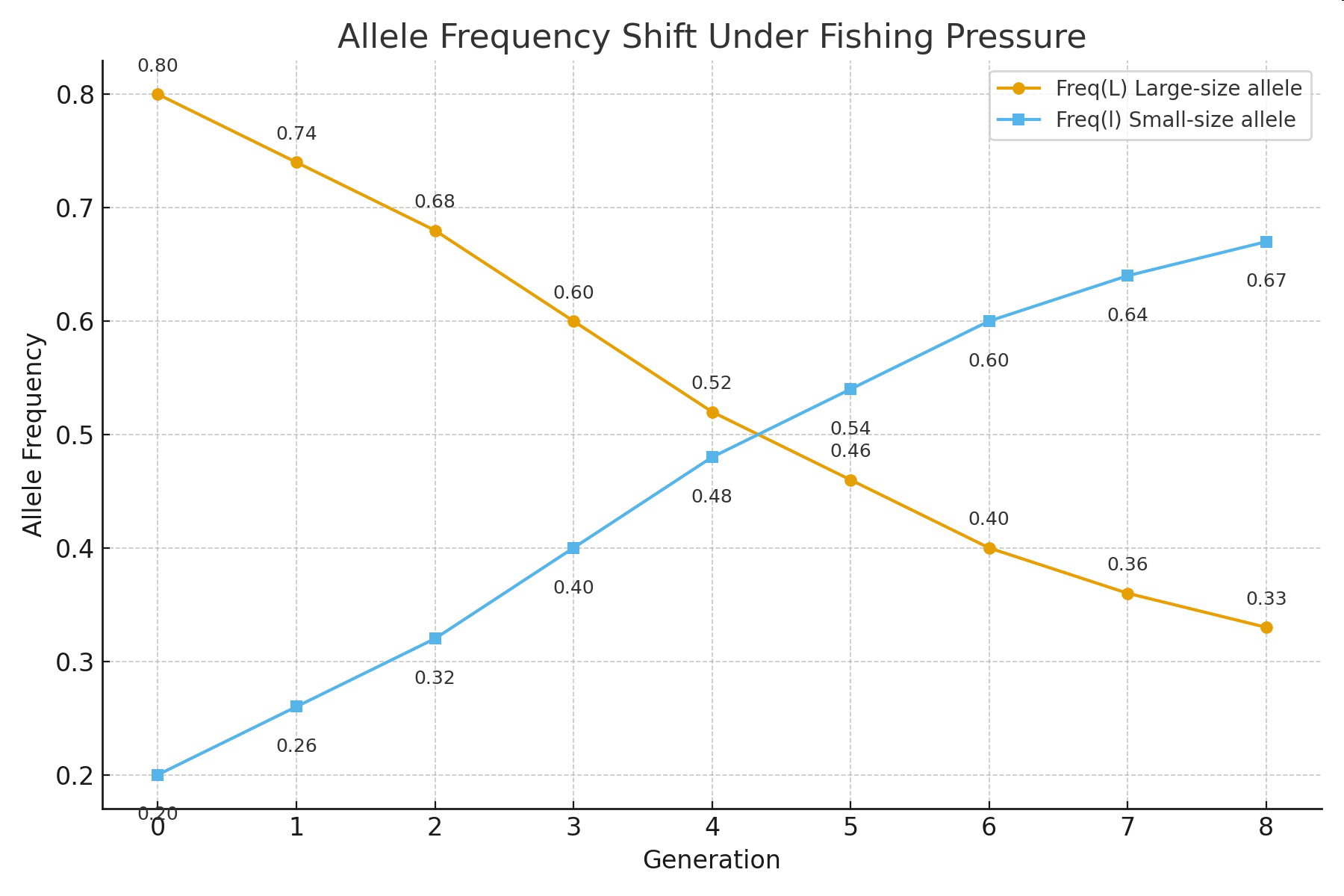
Figure 3.
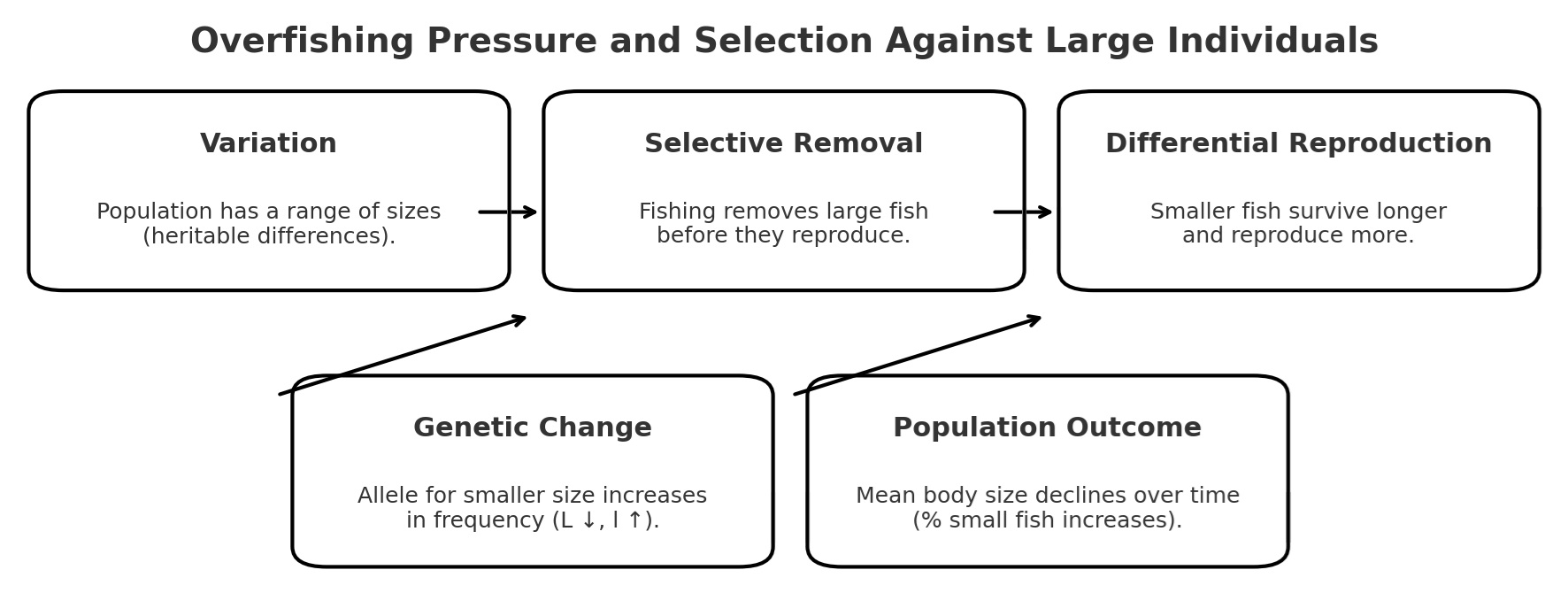
Figure 4.