Flowers and Pollinators
Pollination is one of nature’s most important partnerships. Most flowering plants rely on animals to move pollen from one flower to another, a process that allows fertilization to occur. To ensure pollen transfer, plants use visual and chemical signals designed to attract specific pollinators.
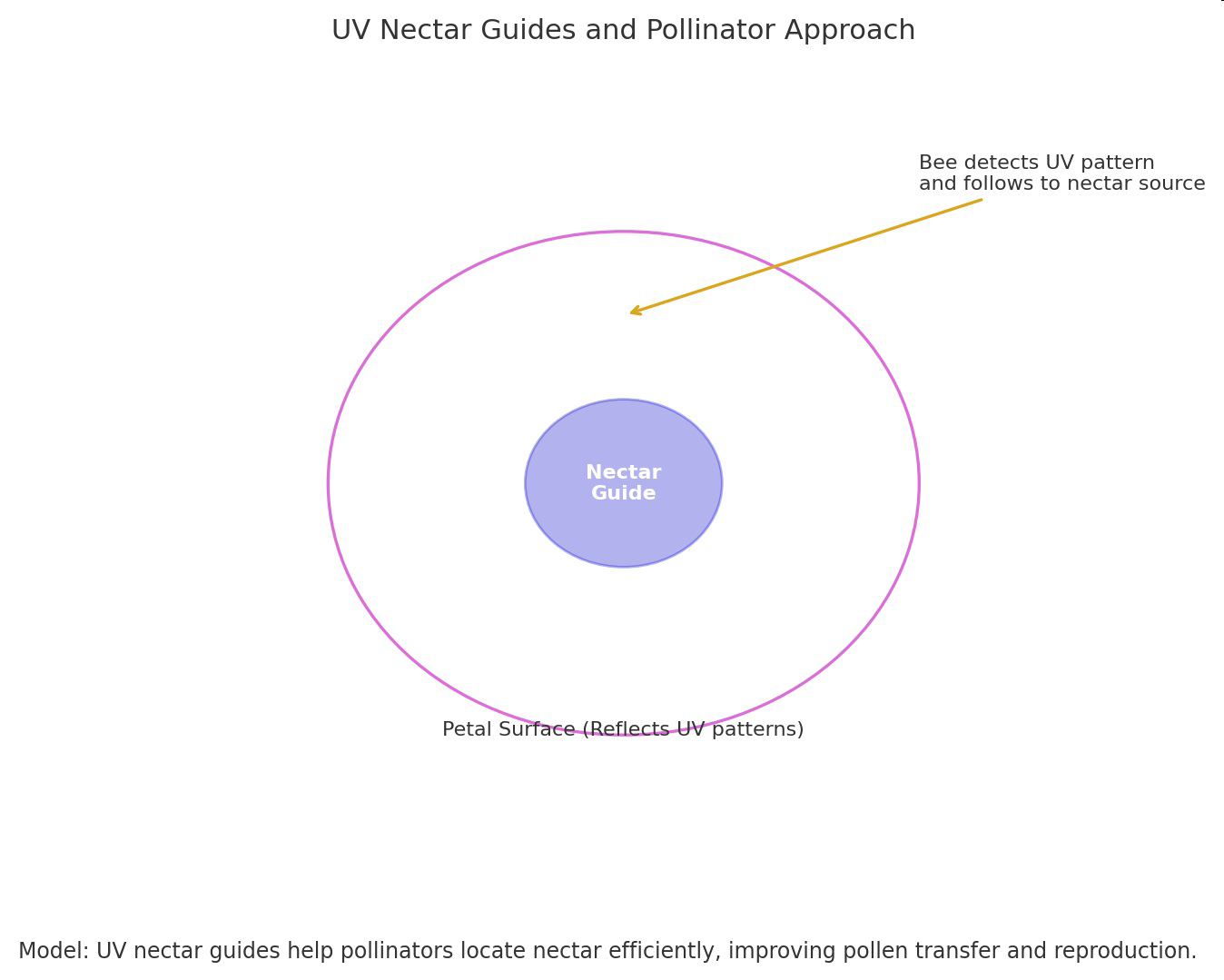
Color is one of the most noticeable adaptations. Different pollinators perceive colors differently. Bees, for example, see ultraviolet (UV) light that humans cannot. Many flowers, like black-eyed Susans or sunflowers, have UV patterns that form circular “bull’s-eyes,” guiding bees toward the center where nectar and pollen are found. Birds, which are attracted to red and orange hues, often visit tubular flowers like trumpet vines and hibiscus that match their long beaks.
Scent is another critical signal. Floral scents are produced by specialized oil glands that release volatile compounds into the air. Sweet-smelling flowers, like jasmine and honeysuckle, attract day-flying insects, while musky or fermented odors lure moths or bats that pollinate at night. These chemical signals help pollinators find flowers efficiently and ensure pollen is carried to another plant of the same species.
Nectar guides are visual markings - sometimes only visible in UV light - that act like runway lights directing pollinators to the nectar. By following these patterns, pollinators increase the precision of pollen transfer, ensuring the flower’s reproductive parts are contacted.
All of these traits - color, scent, and nectar placement - are adaptations that evolved through natural selection. Plants with structures that better attract pollinators reproduce more successfully, passing on those advantageous traits to future generations.
Modern research uses digital imaging and motion sensors to quantify pollination success. Studies show that flowers with strong color contrast and scent intensity have 20–40% more pollinator visits and higher fruit set. These findings provide direct evidence that structural traits in plants play a measurable role in reproductive success.


Graph of Information - Figure 1.
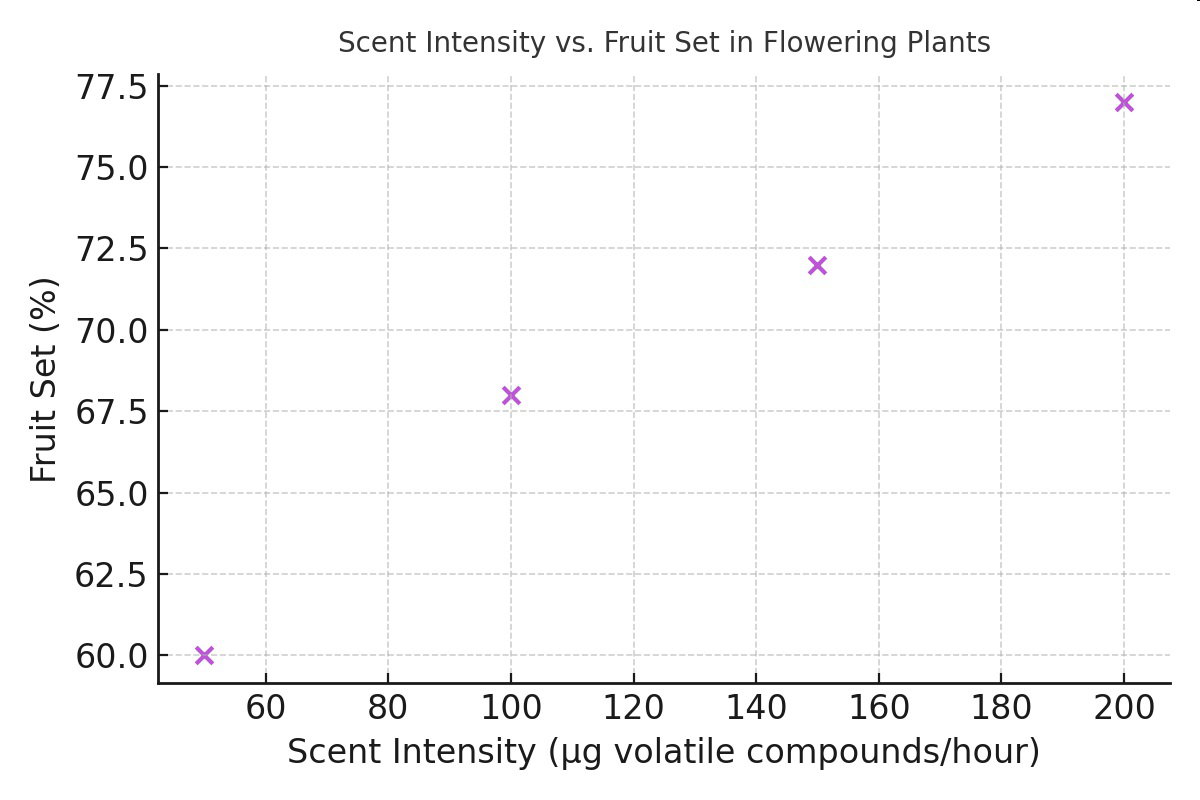
Graph of Information - Figure 2.
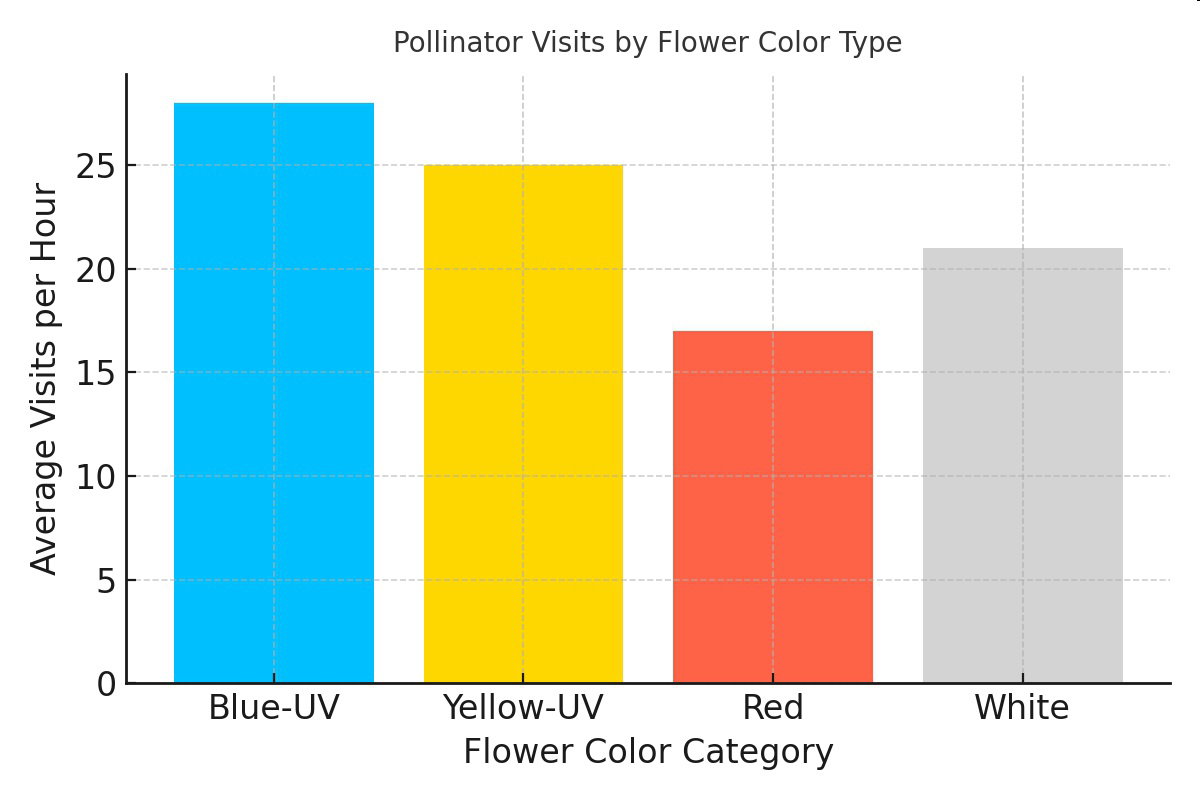
Figure 3.