Fossil Evidence of Transitional Forms
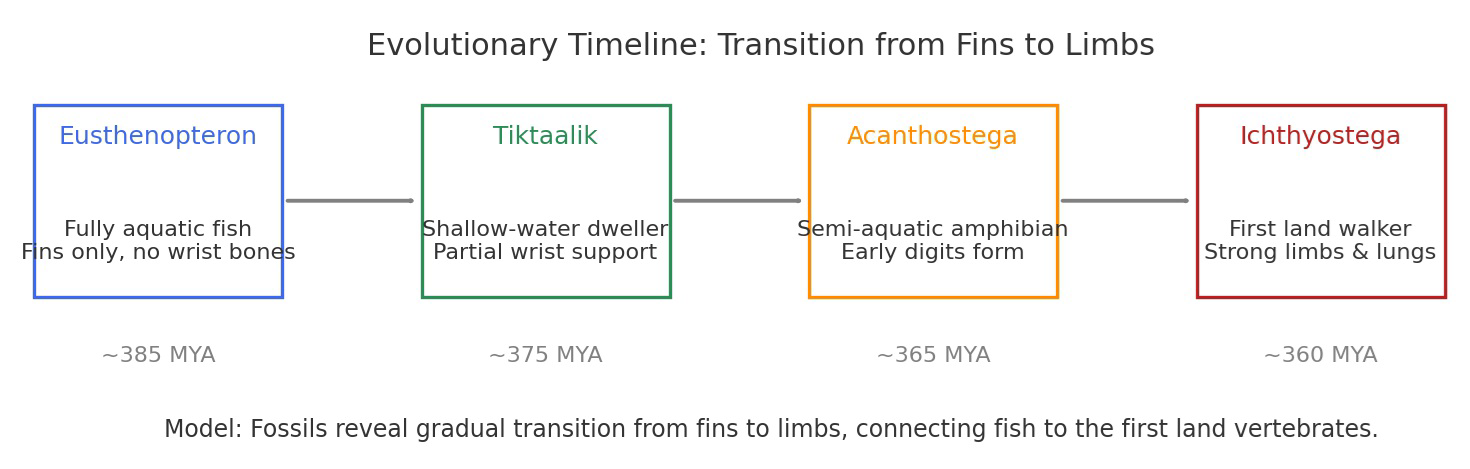
Before about 375 million years ago, all vertebrates lived in the water. But fossils reveal that around this time, certain fish began to adapt to shallow, swampy environments. Tiktaalik, discovered in 2004, lived during this period and combines traits of both fish and amphibians.
Like a fish, Tiktaalik had scales, gills, and fins. But its fins contained bones arranged like the upper arm (humerus), forearm (radius and ulna), and wrist of land animals. It even had a neck, which fish do not have, and flat eyes on top of its head, ideal for peering above water.
Comparing Tiktaalik’s fossils to earlier and later species helps scientists reconstruct how limbs evolved:
Earlier species like Eusthenopteron had fin bones with limited mobility.
Tiktaalik’s fin bones could support partial body weight in shallow water.
Later amphibians like Acanthostega and Ichthyostega had fully formed limbs for walking.
These fossils provide concrete evidence that evolutionary change happens gradually, following natural laws observable today - variation, adaptation, and selection. Tiktaalik’s discovery filled a critical “missing link” between fish and the first amphibians, proving that evolutionary predictions can be tested and confirmed with real data.
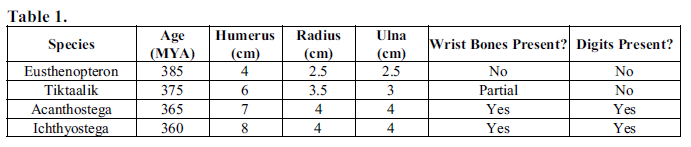
Graph of Information - Figure 1.


Graph of Information - Figure 2.
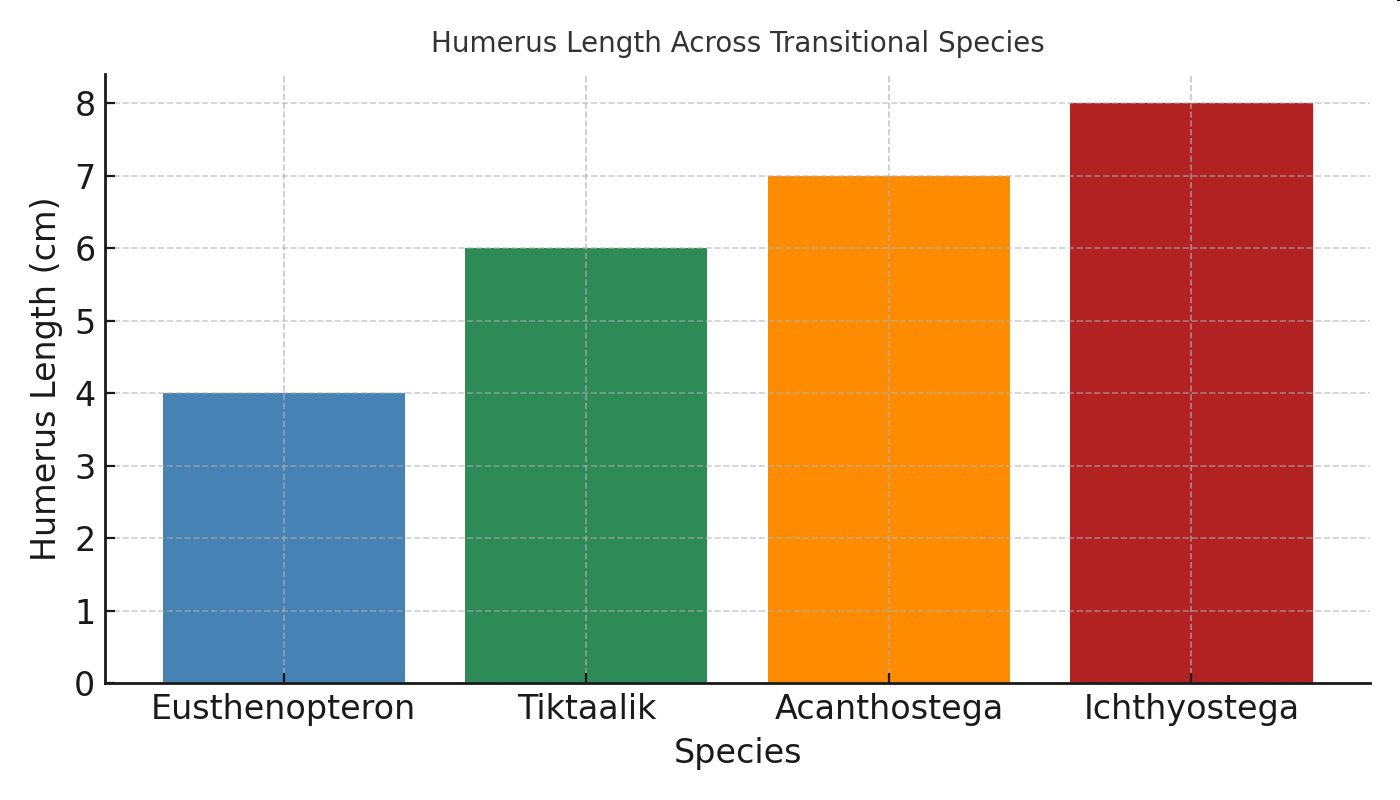
Figure 3.
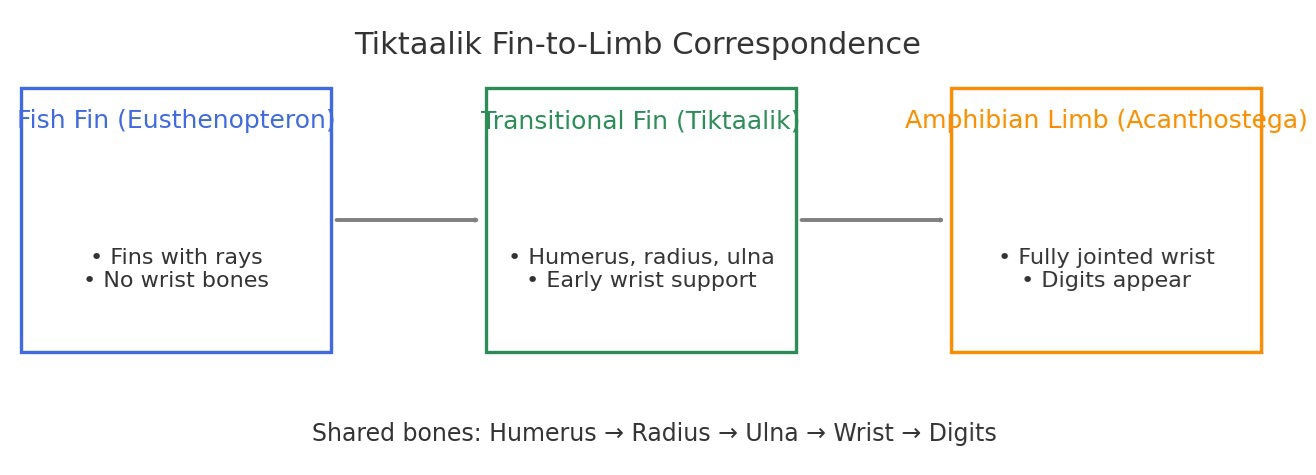
Figure 4.