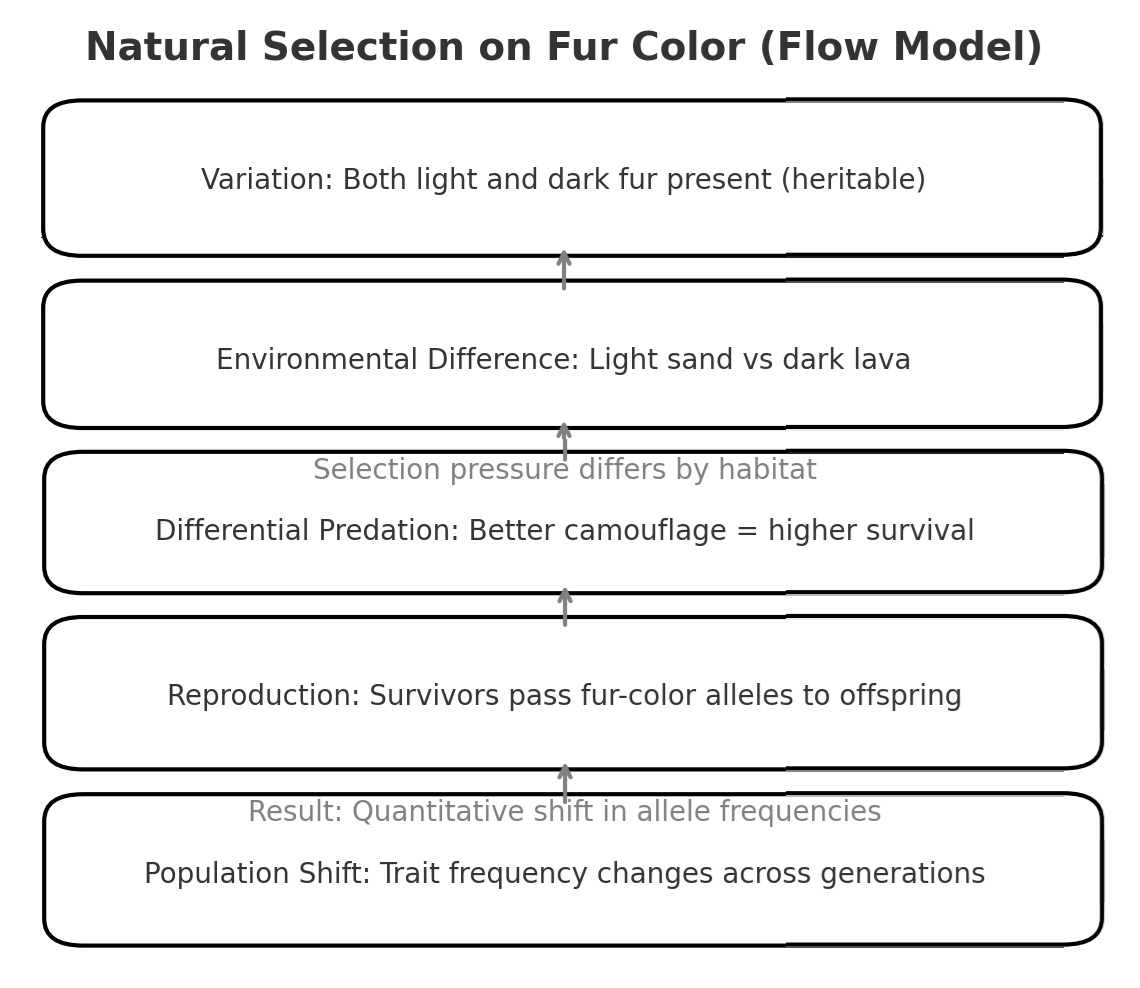
Fur Color and Lava Flow Environments
Rock pocket mice ($Chaetodipus intermedius$) live in rocky desert regions across Arizona and New Mexico. Most populations have light, sandy-colored fur that helps them blend in with the ground and avoid being spotted by predators such as owls and snakes. But in areas covered by ancient lava flows, the mice look completely different: they have dark fur that matches the black volcanic rock.
This difference is a powerful real-world example of natural selection. The color of a mouse’s fur is controlled by several genes, including one called $MC1R$, which influences pigment production. A genetic mutation in $MC1R$ produces dark fur. On lava flows, this mutation gives mice a clear survival advantage - dark mice are less visible to predators and are more likely to live long enough to reproduce.
Researchers have tracked these populations for decades and used mathematical models to analyze how trait frequencies change over time. On the lava, the percentage of dark-furred mice increased from about 20% in the 1990s to over 85% today. The same mutation is rare in nearby sandy habitats, where light-colored mice remain well camouflaged.
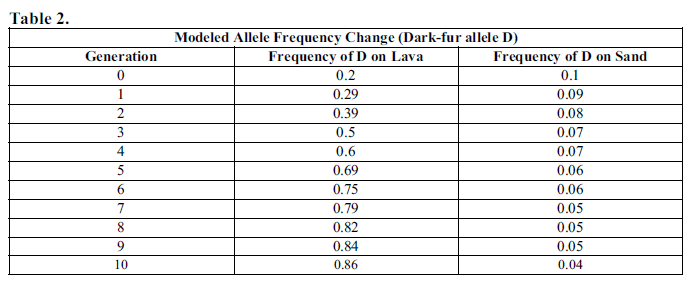
Allele frequency models show this change is predictable. When one fur color provides better camouflage, mice with that coloration survive longer, pass on their genes, and gradually increase that trait’s frequency in the population. Over several generations, the frequency of the dark-fur allele rises sharply on dark surfaces, while remaining low on light sand - a textbook demonstration of how environmental pressures drive evolutionary change.
The rock pocket mouse reveals that evolution is not just something from the distant past. It’s an ongoing, measurable process happening all around us — one that scientists can observe, model mathematically, and use to explain how specific traits increase or decrease in populations over time.
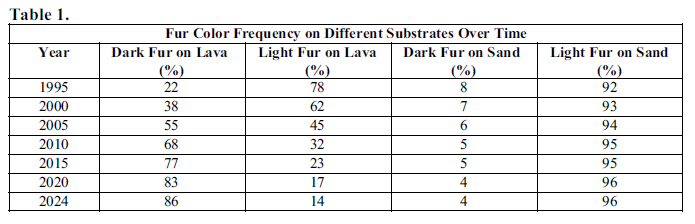
Graph of Information - Figure 1.
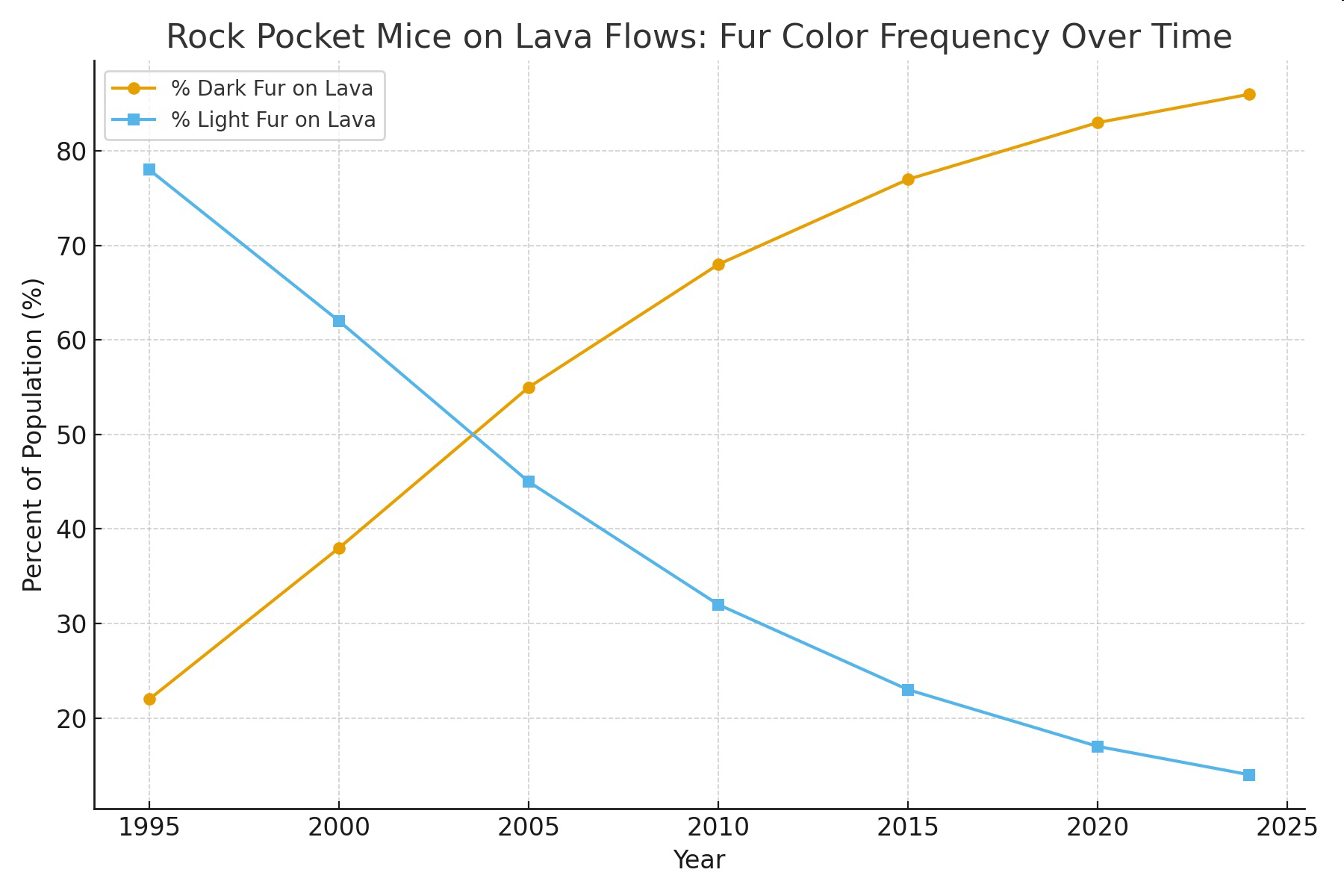
Graph of Information - Figure 2.
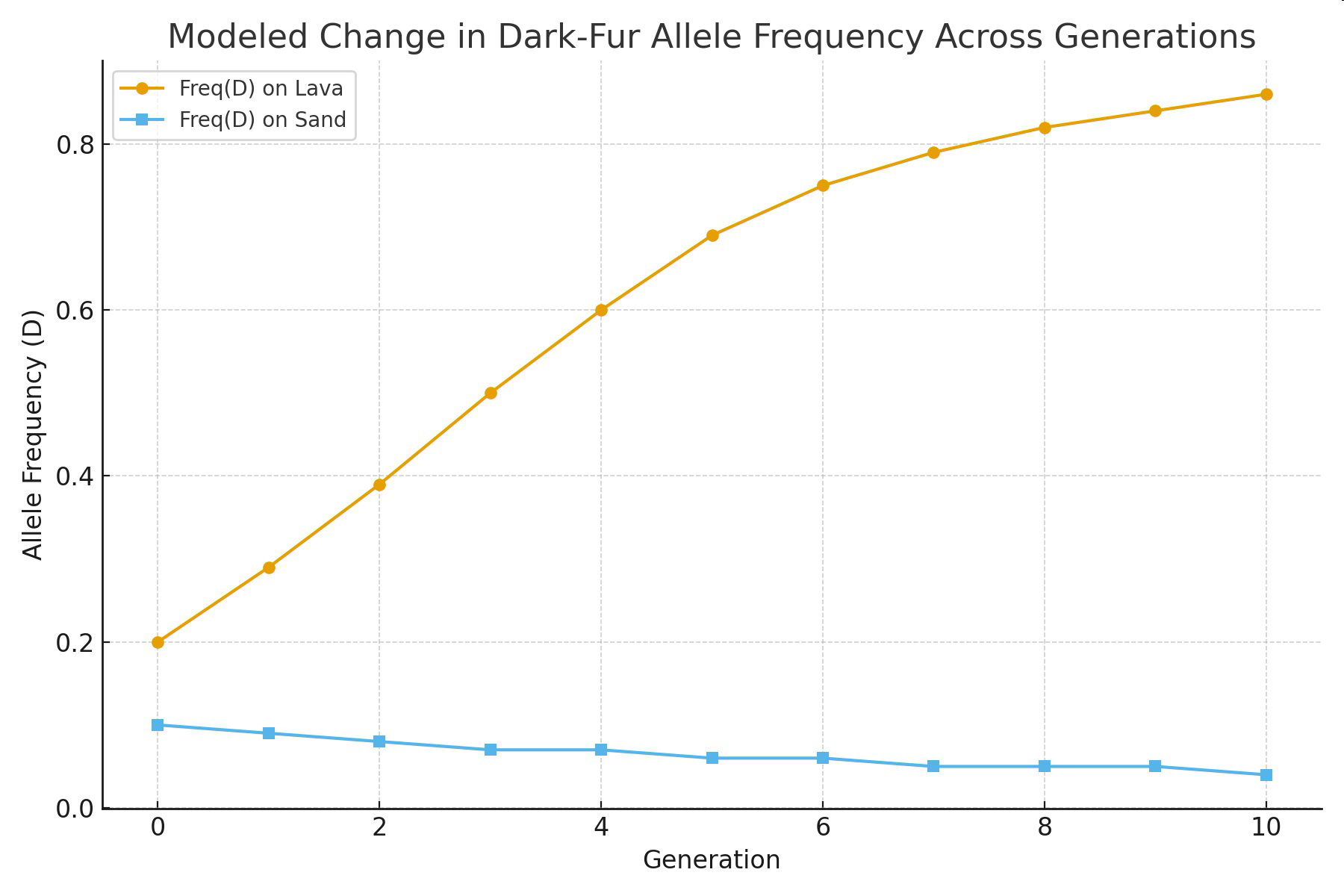
Figure 3.
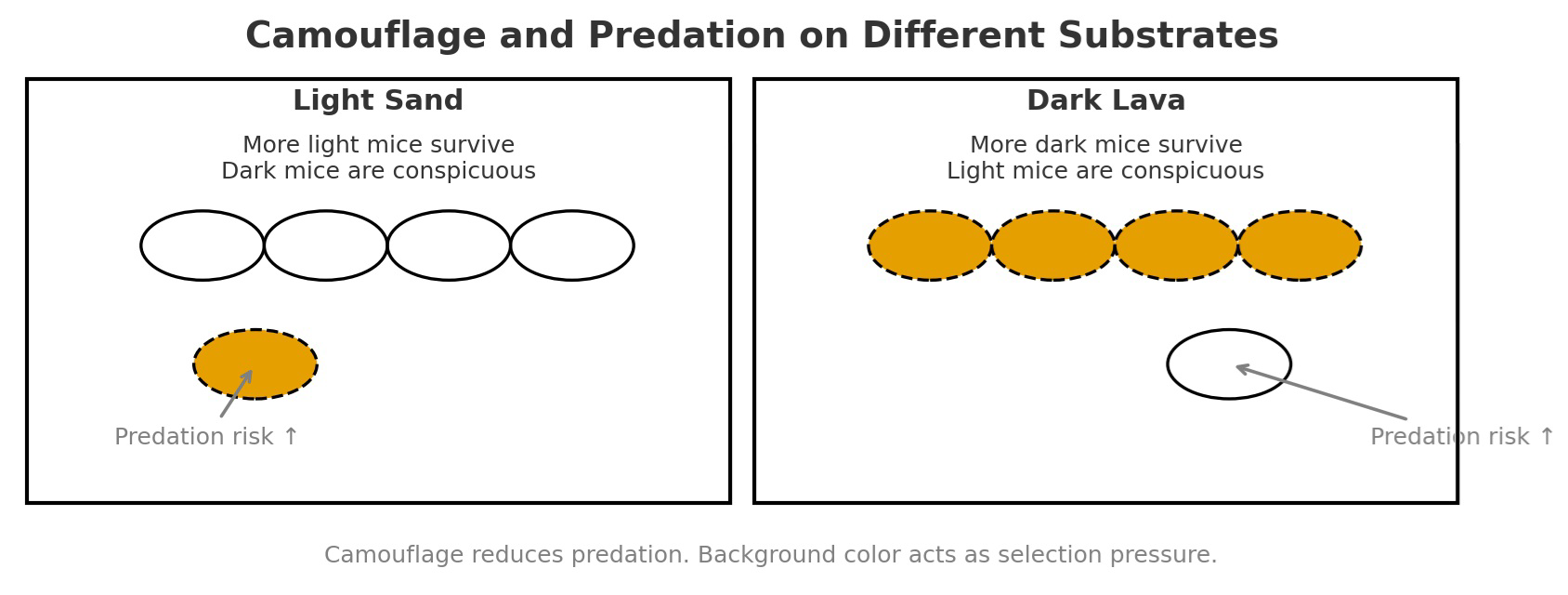
Figure 4.