Fur Color Variation in Arctic Hares
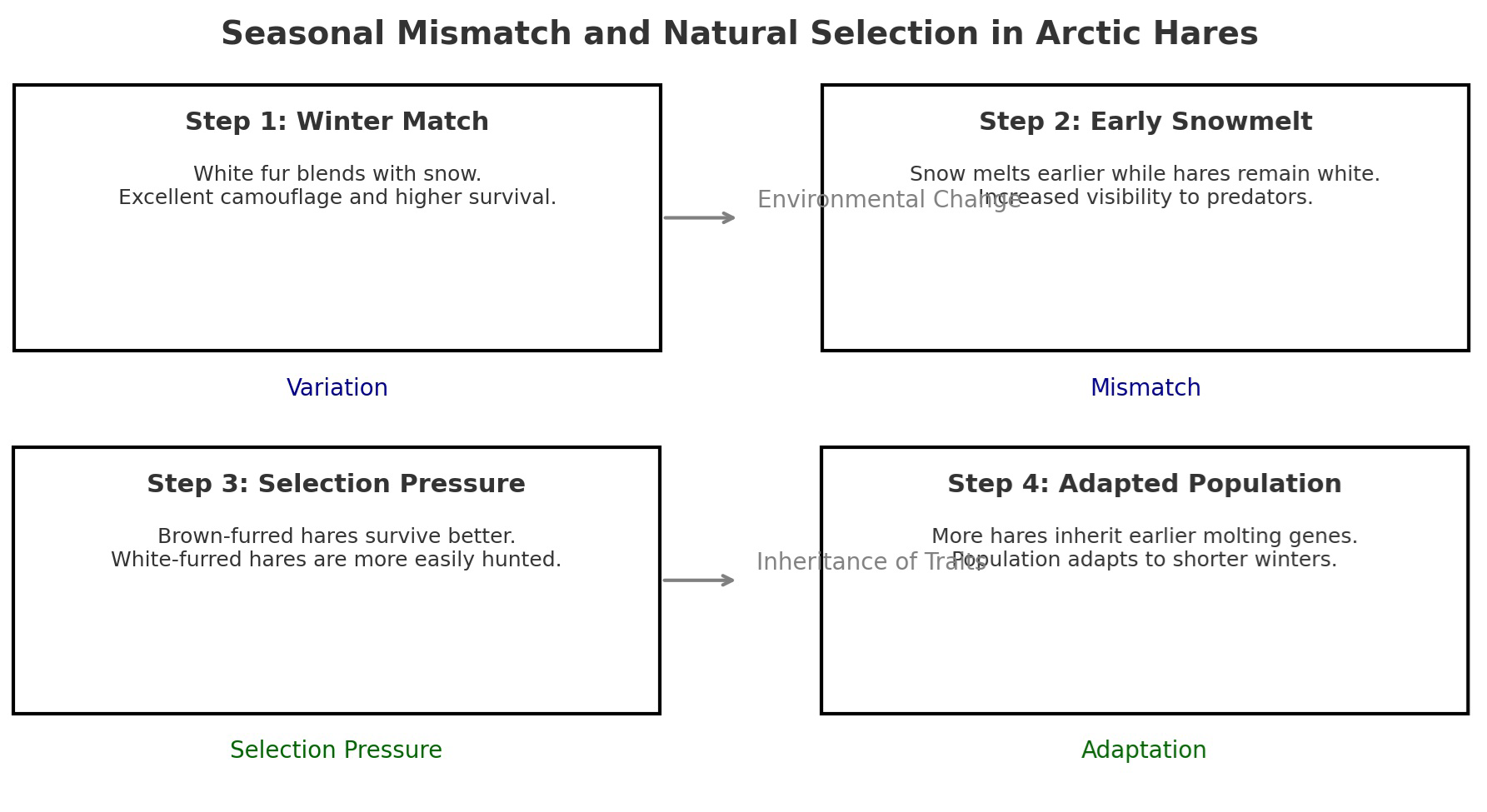
In the Arctic tundra, Arctic hares (Lepus arcticus) face extreme cold, predators like foxes and wolves, and dramatic seasonal changes in daylight and snow cover. One of their key survival traits is seasonal fur color: white in the winter to blend with snow and brown in the summer to blend with rocks and plants.
This fur color change is controlled by genes that respond to day length and temperature. However, there’s genetic variation among hares - some individuals begin molting earlier or later than others. Under stable seasonal conditions, this variation doesn’t make a big difference. But as climate patterns change, the timing of snow cover is becoming unpredictable.
In years with shorter winters and early snowmelt, hares that stay white longer stand out against bare ground, making them easy targets for predators. Conversely, hares that shift to brown fur sooner have a higher chance of survival. Over many generations, natural selection can favor these individuals, leading to a population better adapted to reduced snow seasons.
Similar changes have been observed in other species such as snowshoe hares in Canada and Alaska, where researchers have documented increased mismatch between fur color and background due to climate change. This example shows how variation within a species can help populations adapt to a changing environment—some individuals’ traits simply match new conditions better, improving their odds of survival and reproduction.
Table 1.
Year | White Fur in April (%) | Snow Cover in April (%) | Survival Rate (%) |
|---|
2000 | 90 | 85 | 80 |
2005 | 85 | 70 | 75 |
2010 | 75 | 55 | 65 |
2015 | 60 | 35 | 50 |
2020 | 50 | 25 | 42 |
2024 | 45 | 20 | 38 |
Graph of Information - Figure 1.
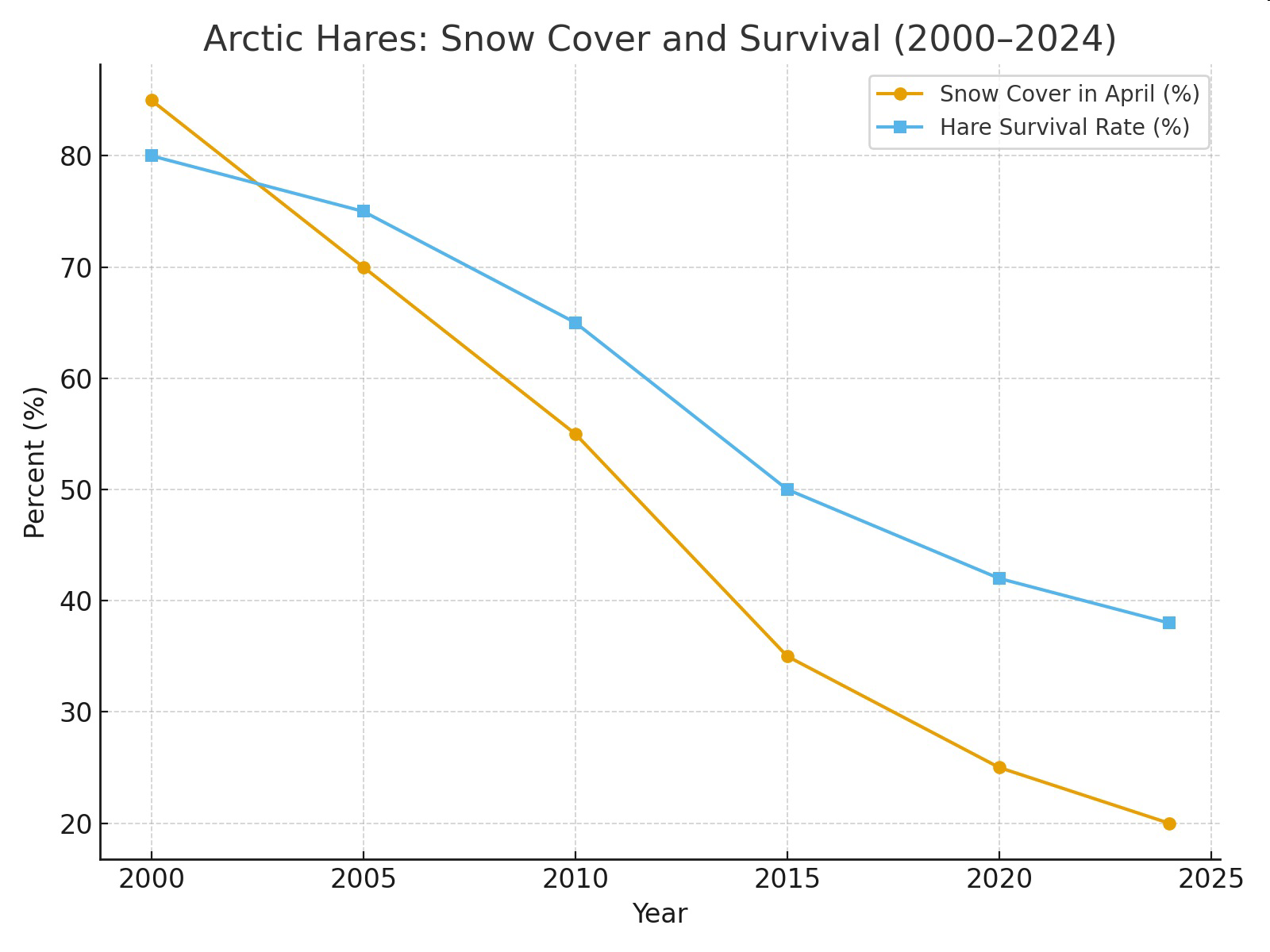
Figure 2.