Homologous Structures
Homologous structures are body parts in different species that have similar internal anatomy but serve different functions. They are key evidence that species can share a common ancestor, even if their modern lifestyles and appearances are very different.
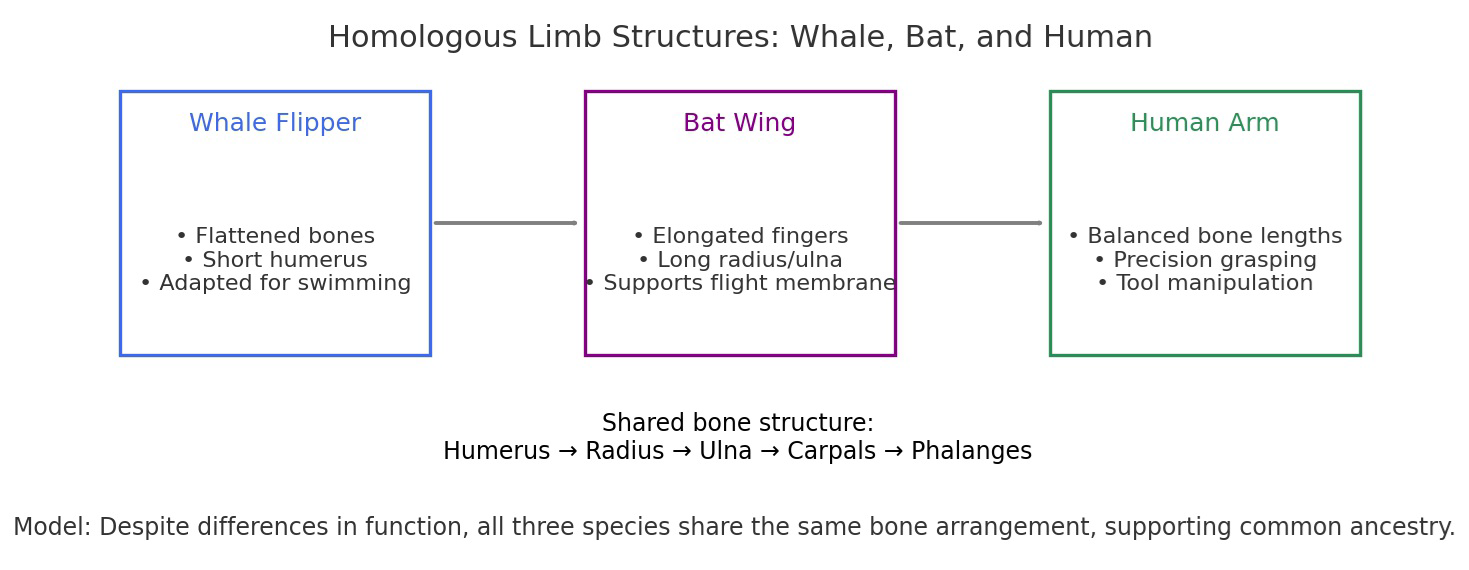
For example, the human arm, bat wing, and whale flipper each contain the same set of bones:
The humerus (upper arm bone)
The radius and ulna (forearm bones)
The carpals and metacarpals (wrist and hand bones)
The phalanges (finger bones)
However, these bones have been reshaped through evolution to suit different tasks:
Humans use their arms for grasping and tool use.
Bats have elongated fingers that support thin membranes for flight.
Whales have shortened, flattened bones that form flippers for swimming.
This pattern suggests that all three species inherited their forelimb structure from an ancient four-limbed vertebrate ancestor that lived hundreds of millions of years ago. Over time, natural selection modified the limb’s proportions and shapes to fit new ecological roles.
In contrast, analogous structures - like a bird’s wing and an insect’s wing - serve similar functions but evolved independently. They show convergent evolution, not shared ancestry.
By comparing bone measurements and fossil records, scientists can trace how limb shapes changed through time. This type of evidence demonstrates that the same natural laws of heredity, variation, and adaptation operate across all species, linking modern anatomy with ancient fossils.

Graph of Information - Figure 1.
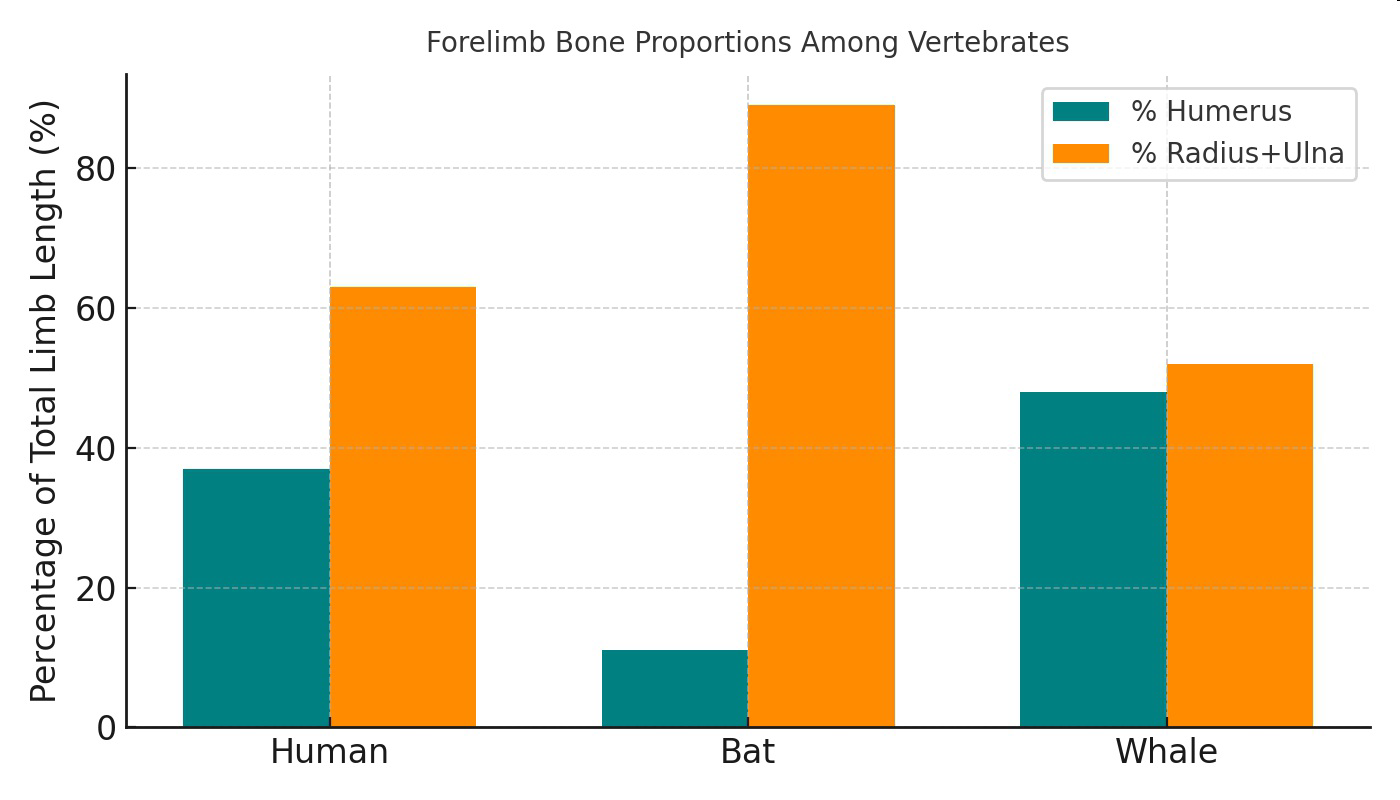
Figure 2.