The Age of Dinosaurs and the Cretaceous Extinction
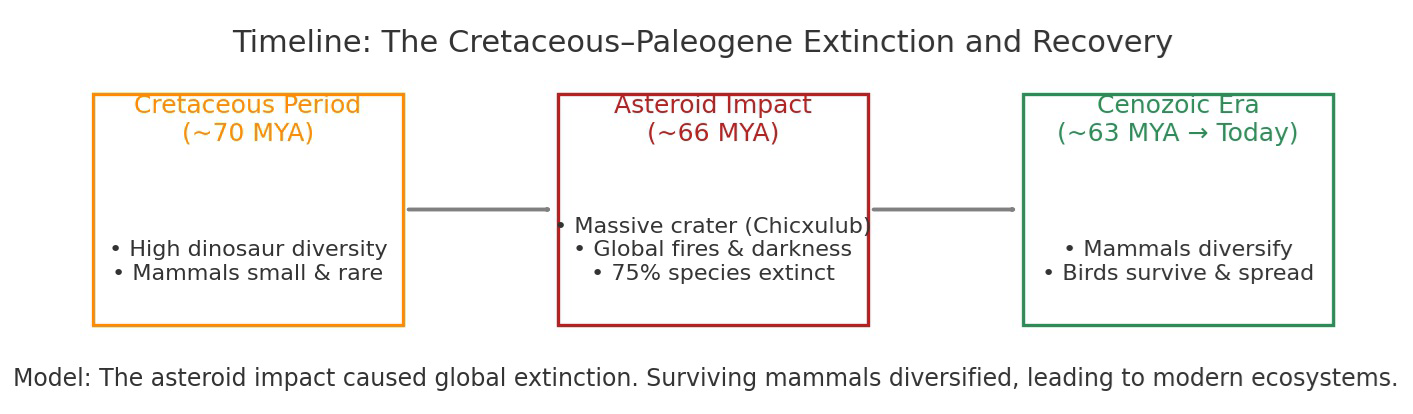
During the Cretaceous Period (145–66 million years ago), dinosaurs were the dominant land animals. Fossils show a rich variety of species - from enormous sauropods to small feathered theropods. At the same time, early mammals lived in the shadows, small and nocturnal, avoiding competition with large reptiles.
However, around 66 million years ago, a sudden and catastrophic event changed life on Earth forever. A 10-kilometer-wide asteroid struck near present-day Chicxulub, Mexico, forming a massive crater. Evidence for this impact includes a global layer of iridium, a rare metal more common in meteorites than in Earth’s crust. This “iridium layer,” found in rock strata around the world, marks the Cretaceous–Paleogene (K–Pg) boundary.
The impact threw dust and debris into the atmosphere, blocking sunlight and cooling the planet. Photosynthesis nearly stopped, food chains collapsed, and most dinosaurs - along with many marine species - became extinct. Fossil evidence shows that about 75% of all species disappeared. However, small mammals and birds survived and rapidly diversified in the following millions of years.
By studying these patterns, scientists understand how natural events - whether slow (climate change) or sudden (asteroid impact) - shape the diversity and evolution of life. The same physical and chemical laws that govern asteroid impacts today operated in the past, giving us insight into both Earth’s history and its future.
Table 1.
Time Period | Approx. Age (MYA) | Dinosaur Fossil Count | Mammal Fossil Count |
|---|
Late Cretaceous | 70 | 240 | 15 |
End-Cretaceous | 66 | 25 | 10 |
Early Paleogene | 63 | 0 | 40 |
Eocene | 50 | 0 | 110 |
Oligocene | 35 | 0 | 150 |
Table 2.
Stage | % of Species Extinct | Time to 50% Biodiversity Recovery (million years) |
|---|
End-Cretaceous Event | 75 | 5 |
Early Paleogene | 40 | 10 |
Late Paleogene | 20 | 20 |
Graph of Information - Figure 1.
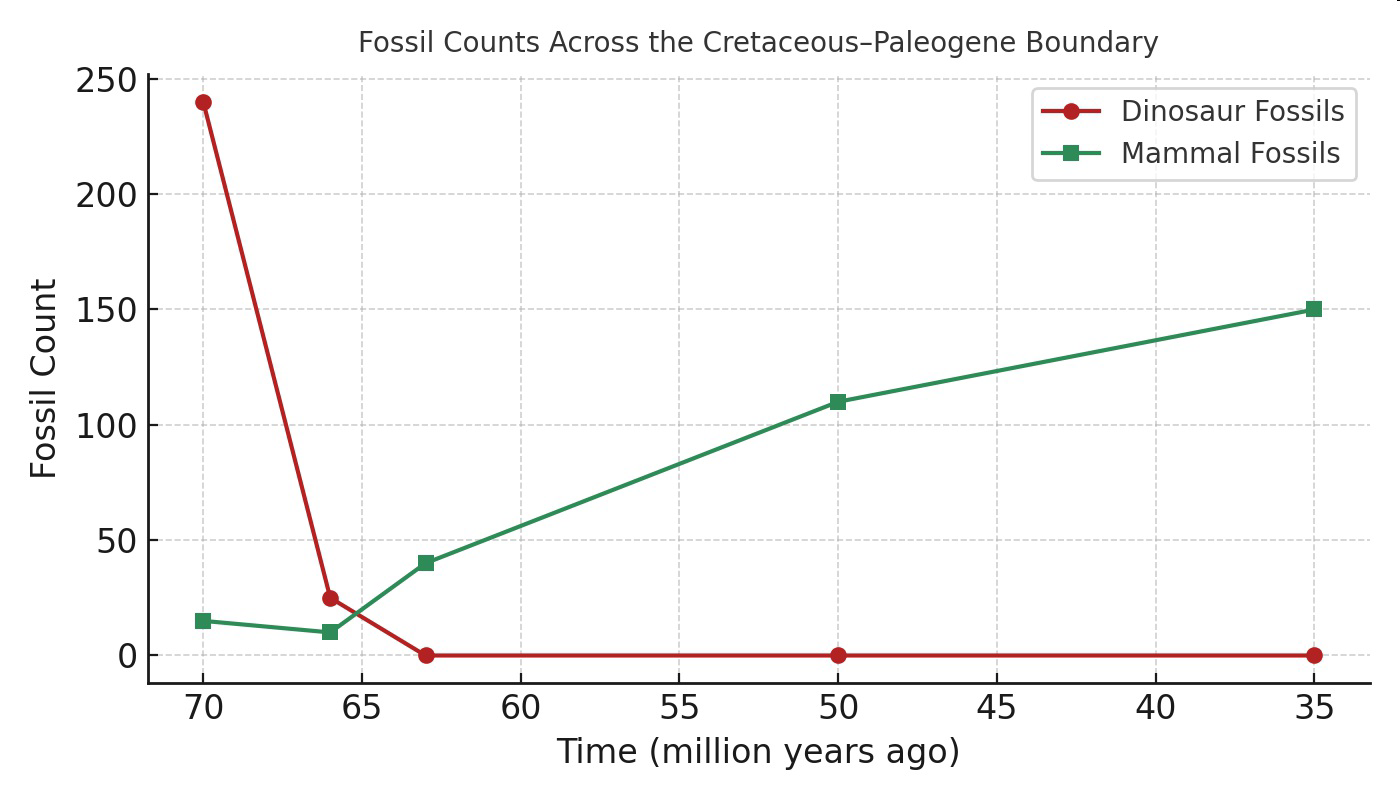
Figure 2.