Mammalian Embryos Cluster
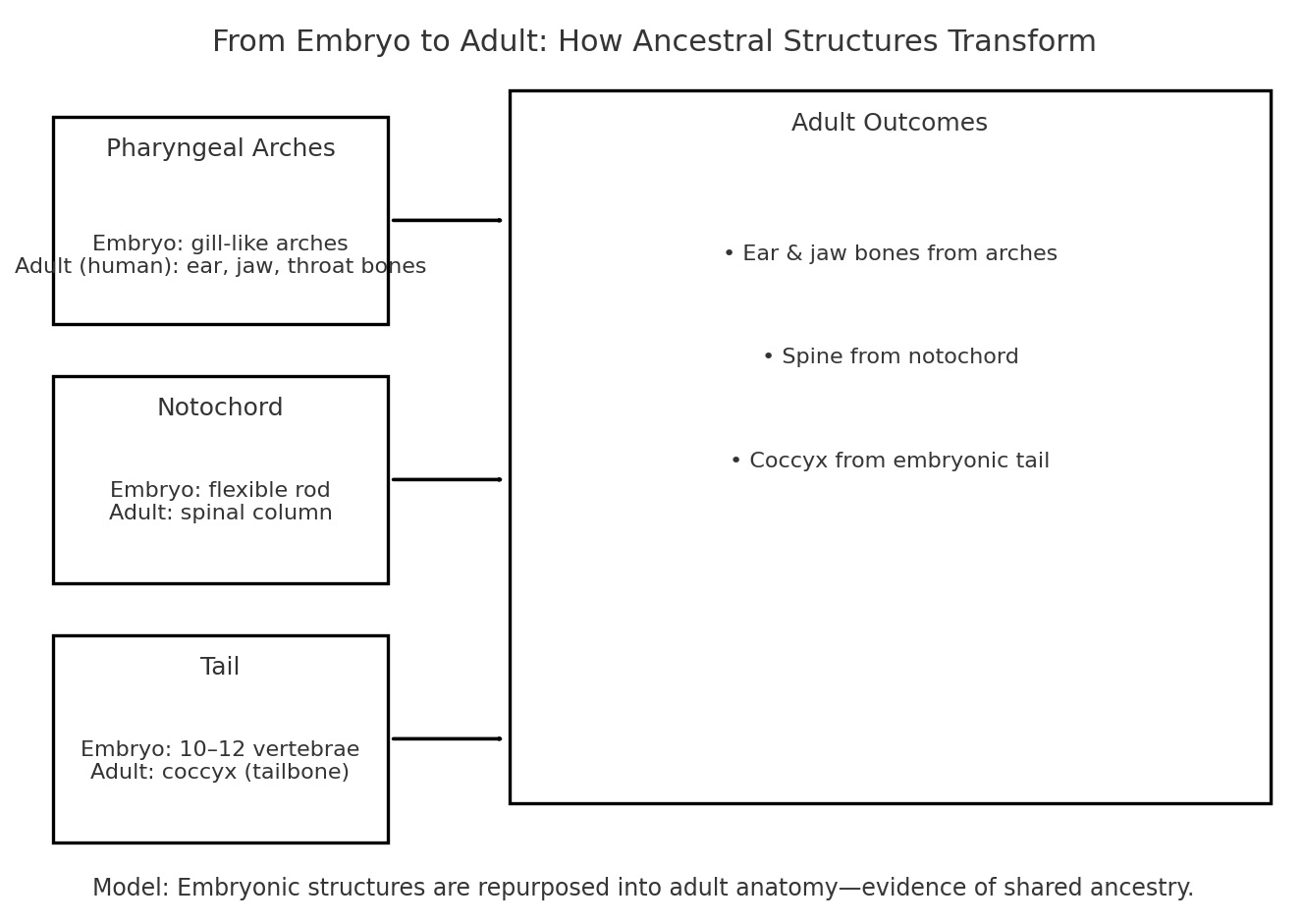
Human and other mammal embryos reveal surprising patterns that connect us to the rest of the animal kingdom. In the earliest weeks after fertilization, mammalian embryos form structures identical to those in fish embryos: a notochord, pharyngeal arches, and a tail extending beyond the body.
These pharyngeal arches are often called “gill arches,” though in mammals they never form actual gills. Instead, they develop into parts of the jaw, throat, and middle ear. The tail, which consists of 10–12 small vertebrae, eventually shortens as development continues - though in rare cases, babies are born with a small, harmless vestigial tail, a living reminder of our evolutionary past.
Comparing embryonic images of fish, mice, and humans shows that all three species share similar body organization in early stages. Even the arrangement of major organs follows the same pattern: the heart, spinal cord, and digestive tract begin forming in the same sequence. These shared features fade as the embryos mature, but their presence reveals how evolution conserves developmental blueprints across species.
Modern molecular biology supports these observations. Genes that guide early body patterning, such as Hox, Pax, and FGF genes, function almost identically in mammals, reptiles, and fish. By comparing pictorial and genetic data, scientists can reconstruct how evolution modifies old structures to serve new purposes - transforming gill arches into ears, and tails into spines.
Embryology provides a visual record of these relationships - a living snapshot of evolution unfolding within every vertebrate embryo.
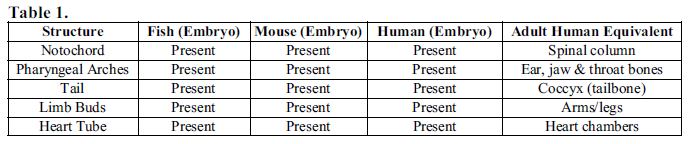
Graph of Information - Figure 1.
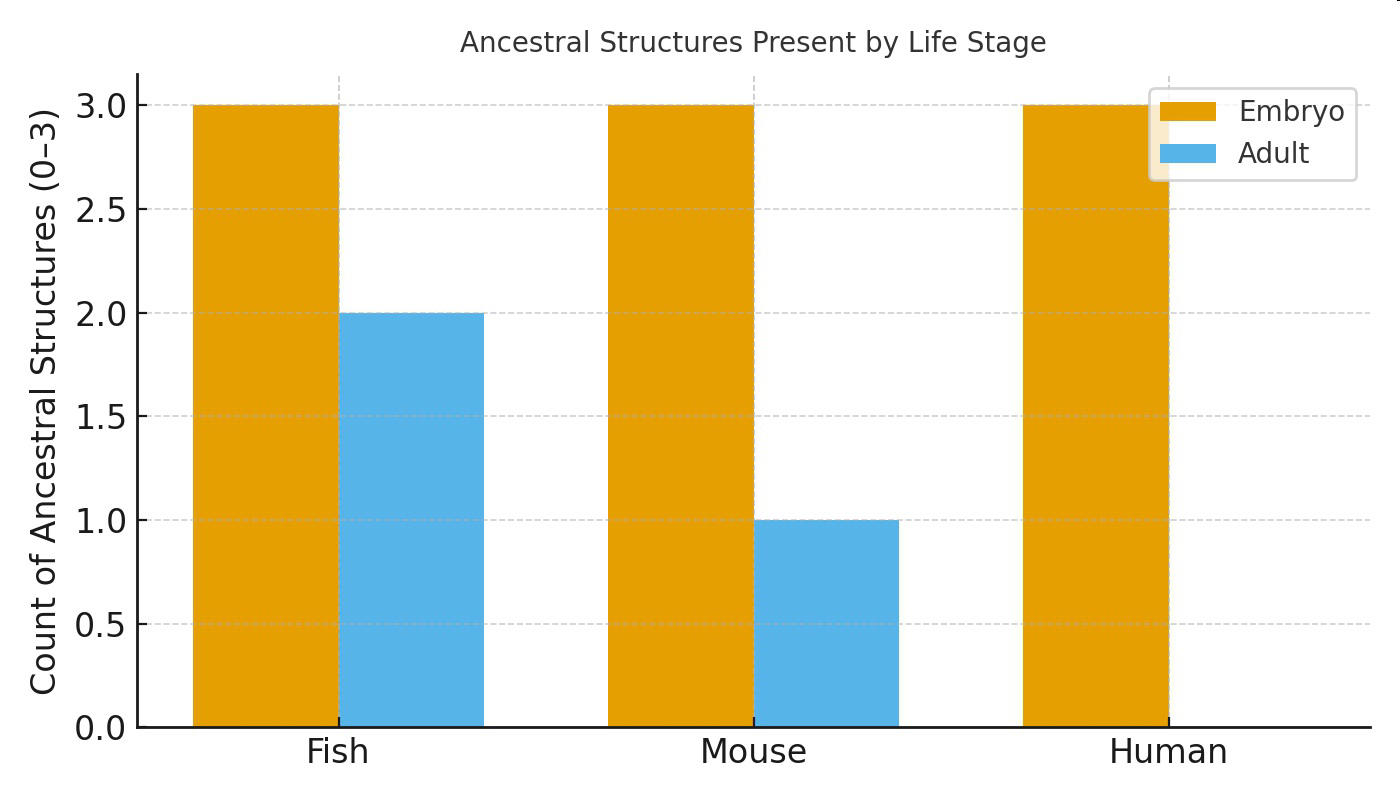
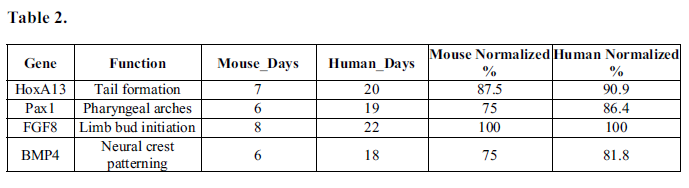
Graph of Information - Figure 2.
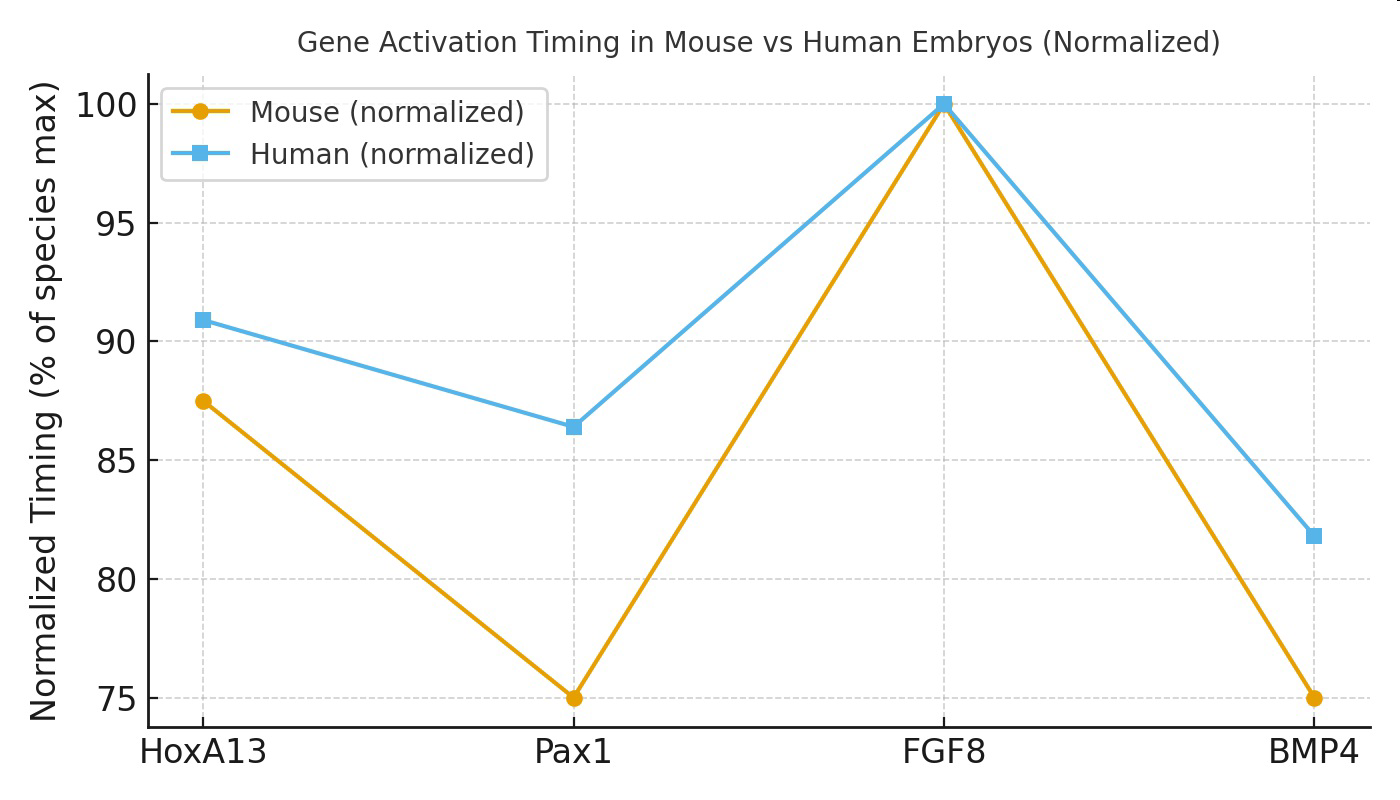
Figure 3.
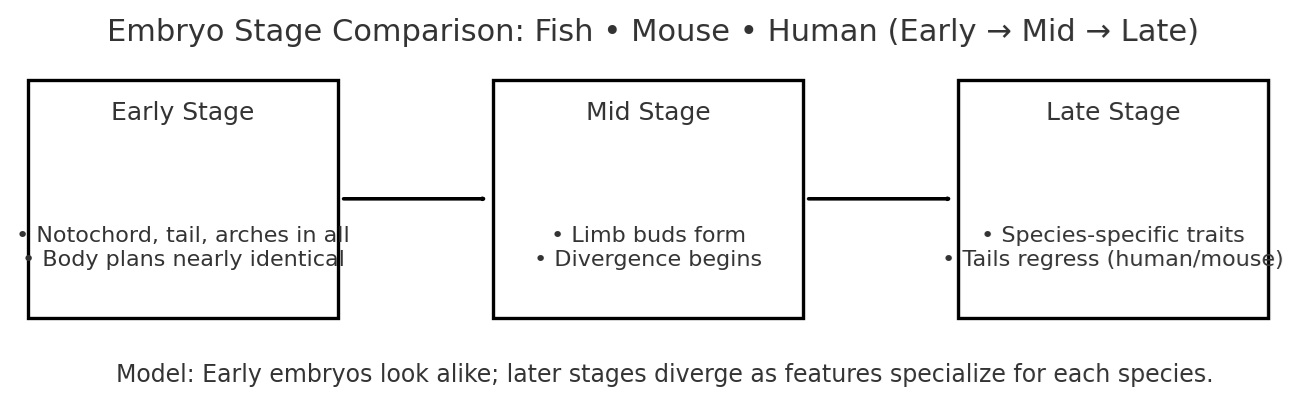
Figure 4.