Urban Lizards: Toe Pad Size and Smooth Surface
When Anolis lizards were first studied in forests, they were seen darting easily along bark, branches, and leaves. Their small, scaly toe pads, covered in microscopic hairs called lamellae, gave them traction on rough natural surfaces. But as cities expanded, some lizard populations began living among buildings, fences, and smooth metal poles.
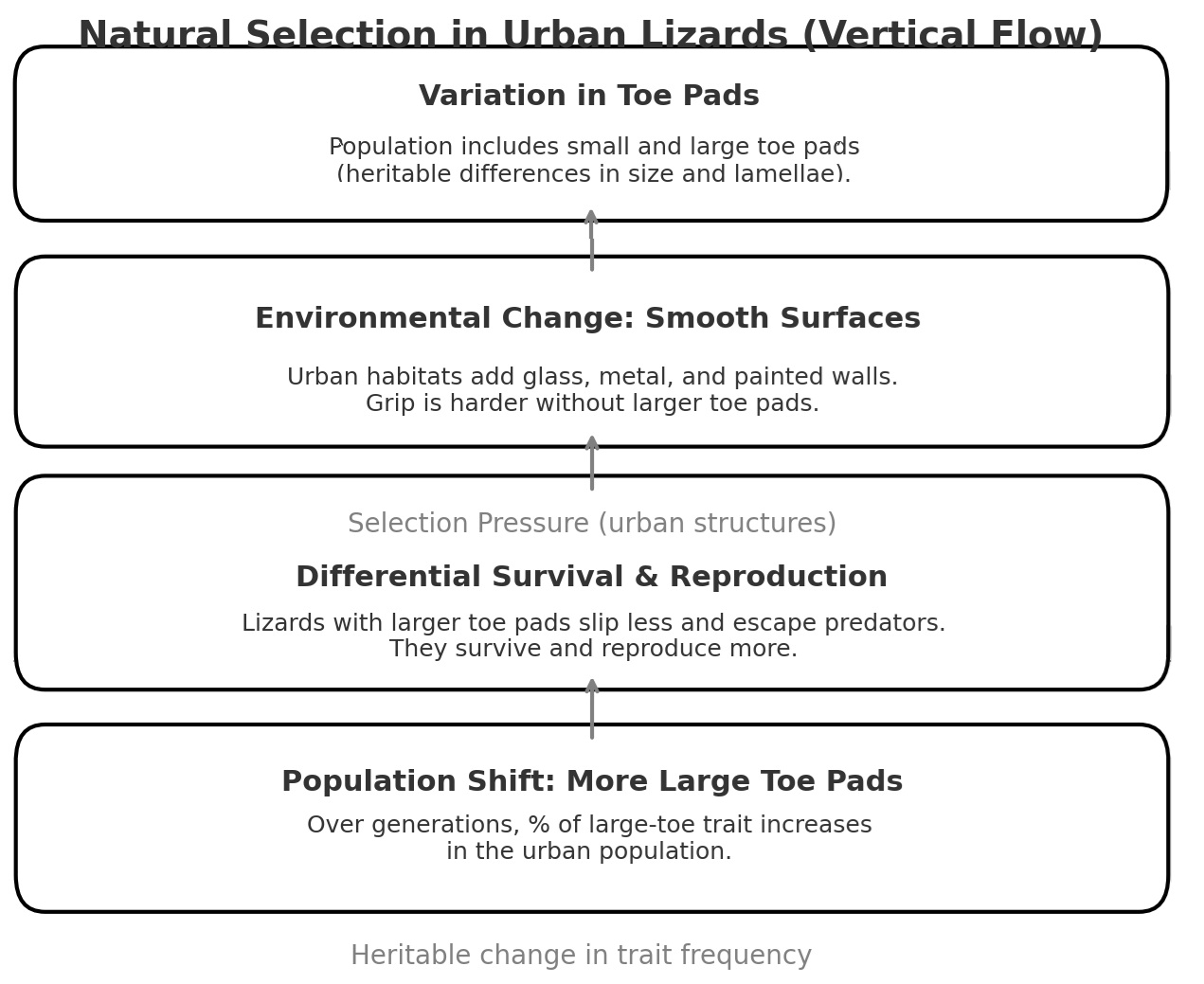
Researchers noticed these urban lizards didn’t slip the way forest lizards did. When they compared individuals, they found that urban lizards had noticeably larger toe pads with more lamellae. These differences weren’t caused by practice or behavior - they were heritable genetic variations that became more common because they improved survival in the city environment.
In one long-term study, scientists captured and measured hundreds of lizards in both forest and city habitats. They found that lizards living in cities were more likely to survive storms and high temperatures if they had larger toe pads, which provided better grip and stability. Lizards with smaller toe pads were more likely to fall from smooth surfaces and be caught by predators.
By tracking populations over several generations, researchers saw the frequency of large-toe traits increase in urban areas. Genetic analyses showed changes in certain genes related to toe pad growth and structure. Within a few decades, these microevolutionary changes produced measurable trait differences between urban and forest populations.
Urban lizard evolution demonstrates natural selection on a short time scale. When an environment changes - in this case, from trees to buildings - variation within a population provides the raw material for adaptation. Individuals with traits suited to new conditions survive and reproduce, passing their genes on to the next generation. Over time, the population’s traits shift, allowing it to thrive in a human-altered world.

Graph of Information - Figure 1.
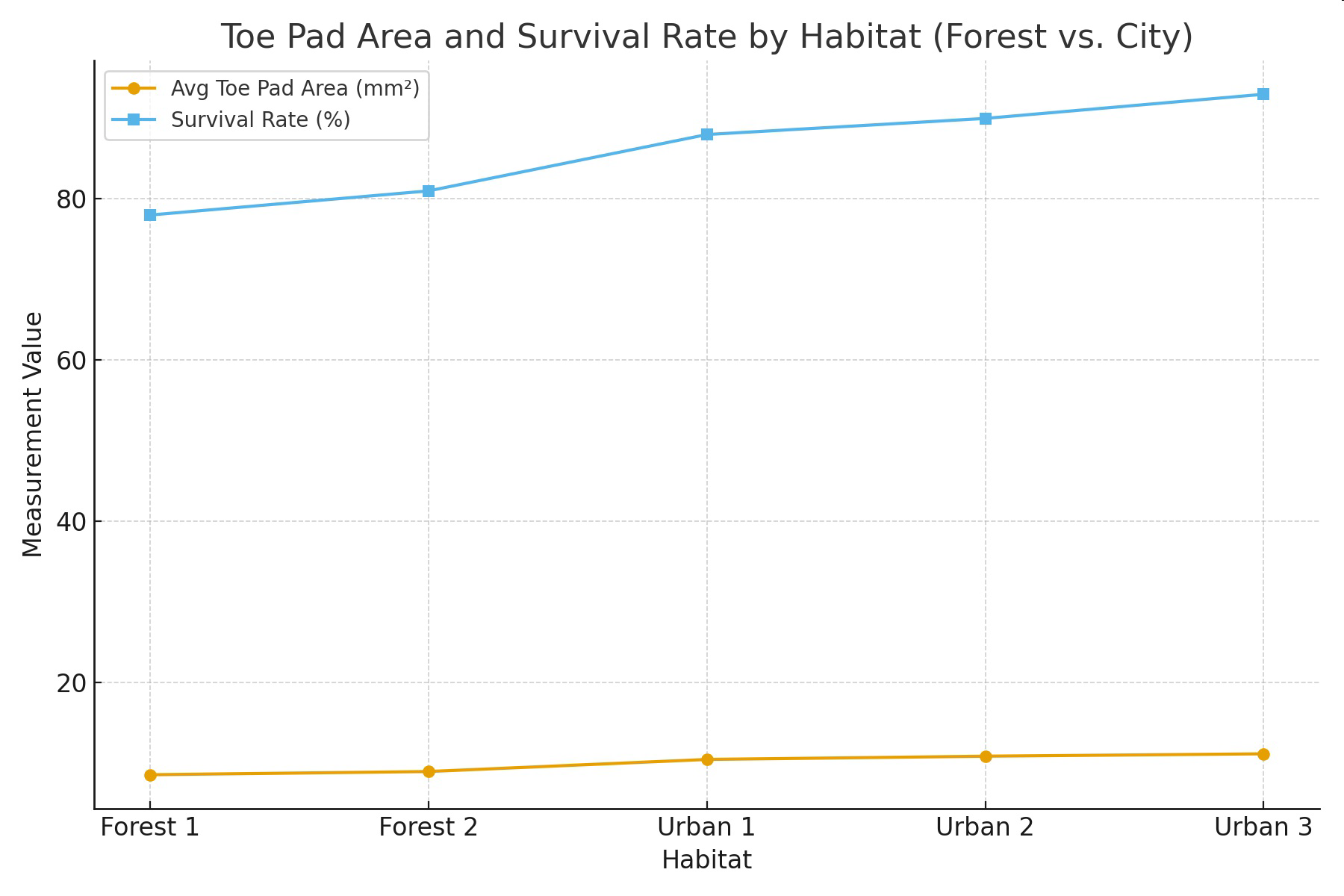

Graph of Information - Figure 2.
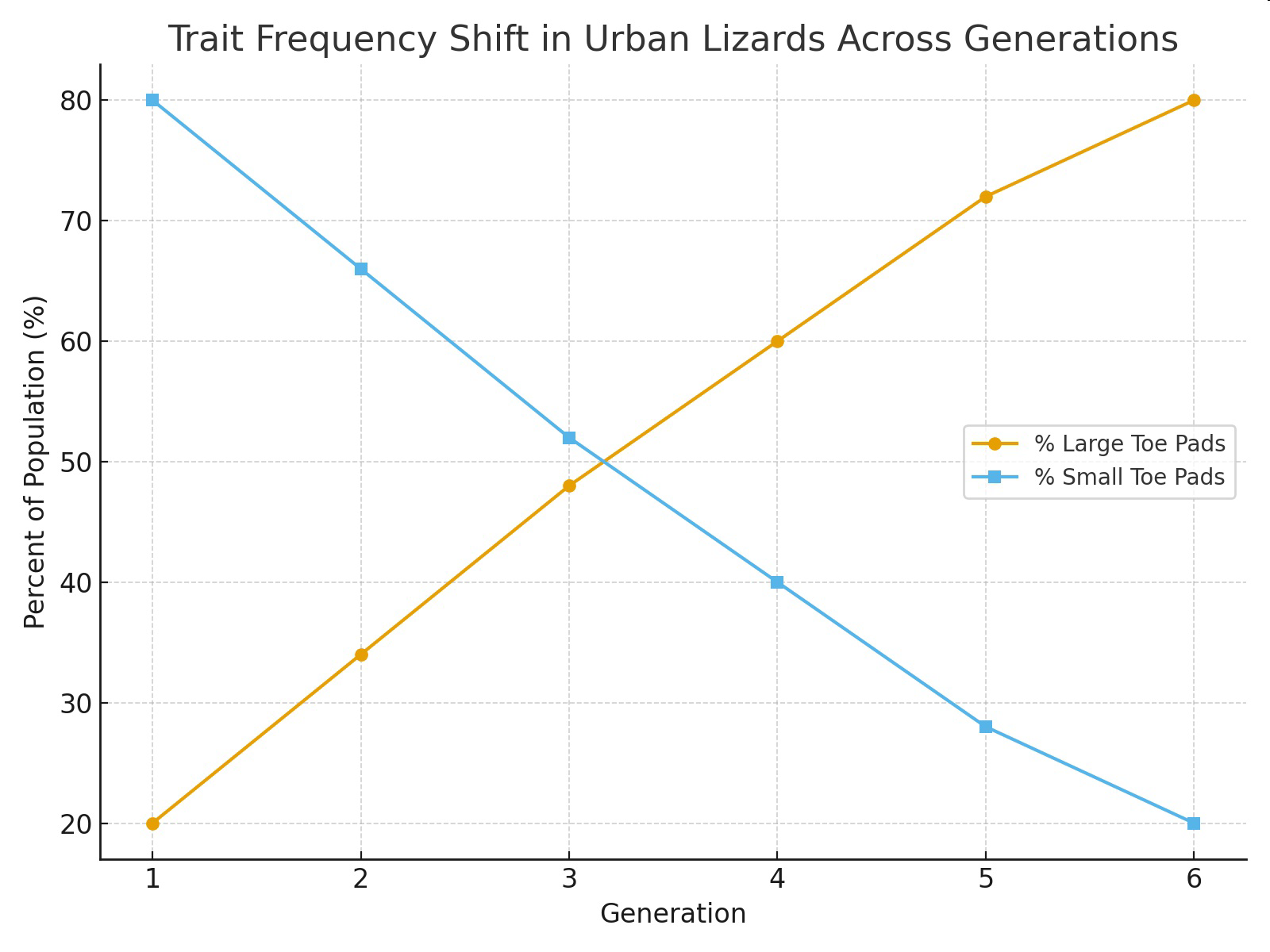
Figure 3.
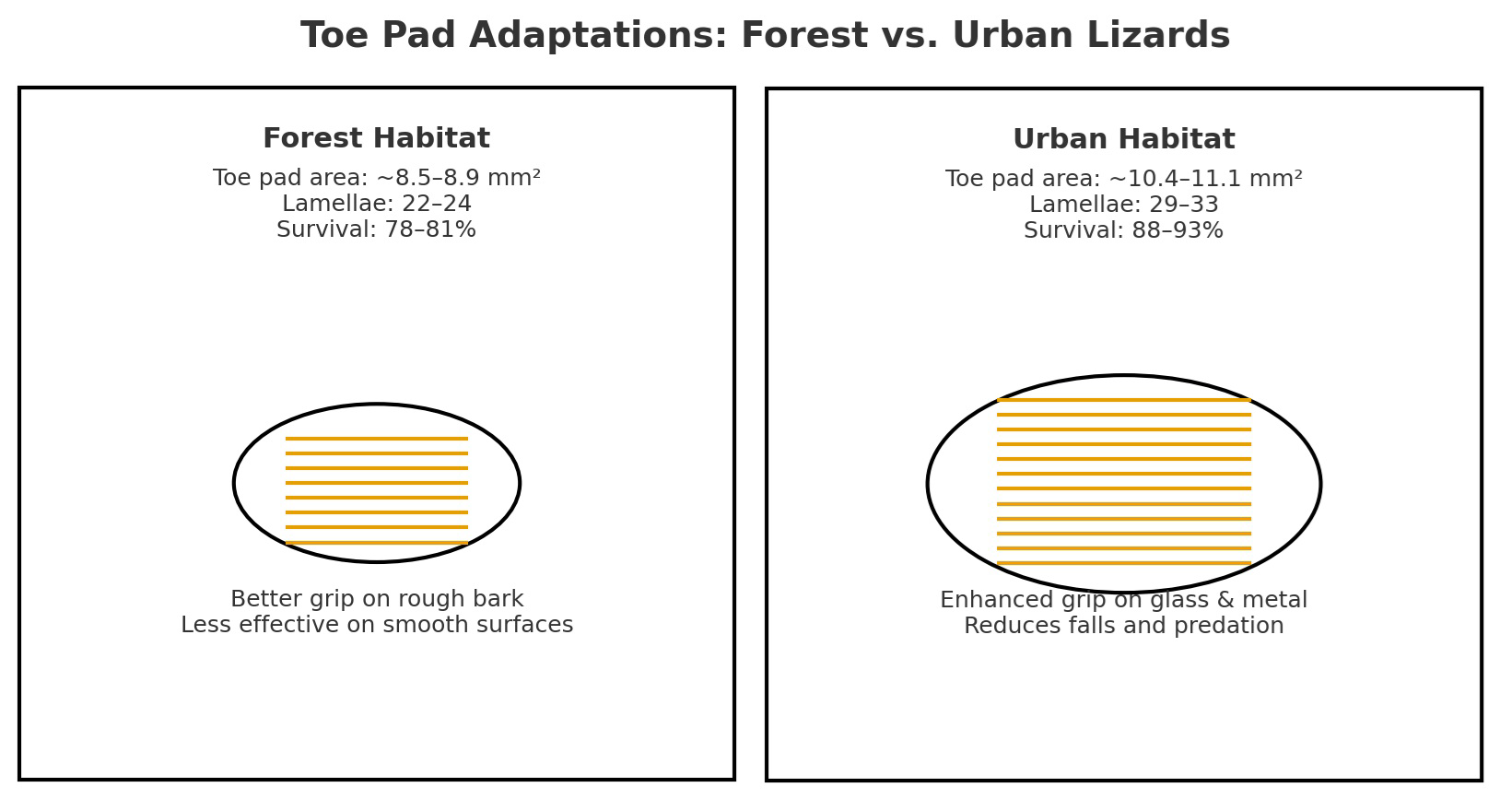
Figure 4.