Blood Sugar Regulation After Eating
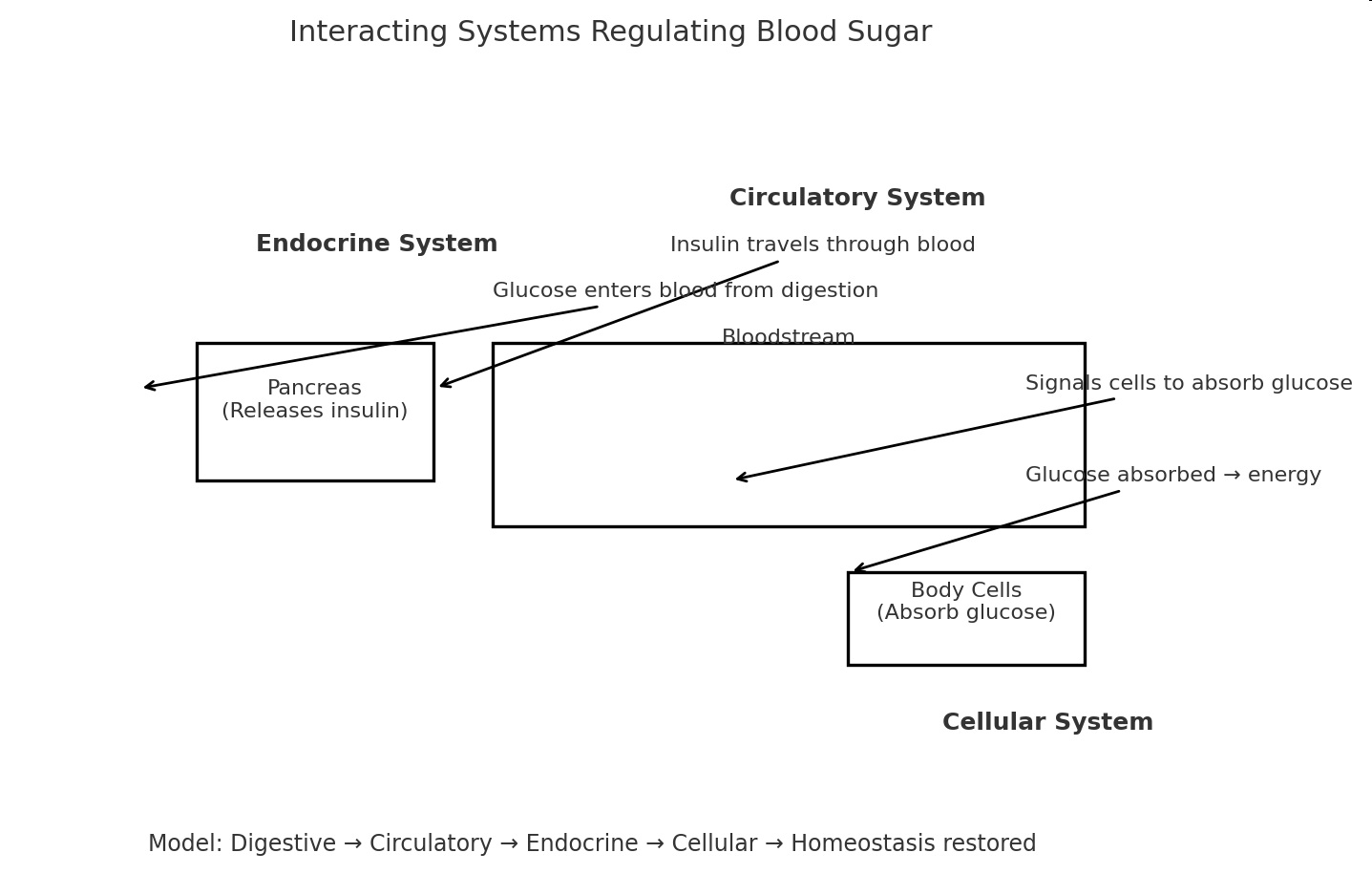
When you eat, the carbohydrates in your food are broken down into glucose, a type of sugar. This glucose is absorbed into the bloodstream through the walls of the small intestine, causing your blood sugar level to rise.
The pancreas, part of the endocrine system, detects this increase and releases a hormone called insulin into the blood. Insulin acts like a key - it unlocks the cell membranes of muscle and liver cells, allowing glucose to enter. Once inside, the glucose is used by the mitochondria to make energy (ATP), or it’s stored as glycogen for later use.
As glucose leaves the blood and enters cells, blood sugar levels return to normal. If levels drop too low, the pancreas releases another hormone, glucagon, which signals the liver to release stored glucose back into the blood.
This back-and-forth communication between the pancreas, liver, and other tissues forms a feedback loop that keeps blood glucose levels stable - an essential part of homeostasis.
When this system doesn’t work properly (as in diabetes), blood sugar stays too high, and cells can’t get enough energy. Understanding these interactions helps explain why maintaining balance between these systems is vital for health.
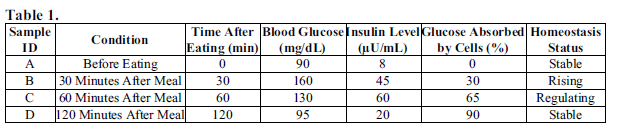
Graph of Information - Figure 1.
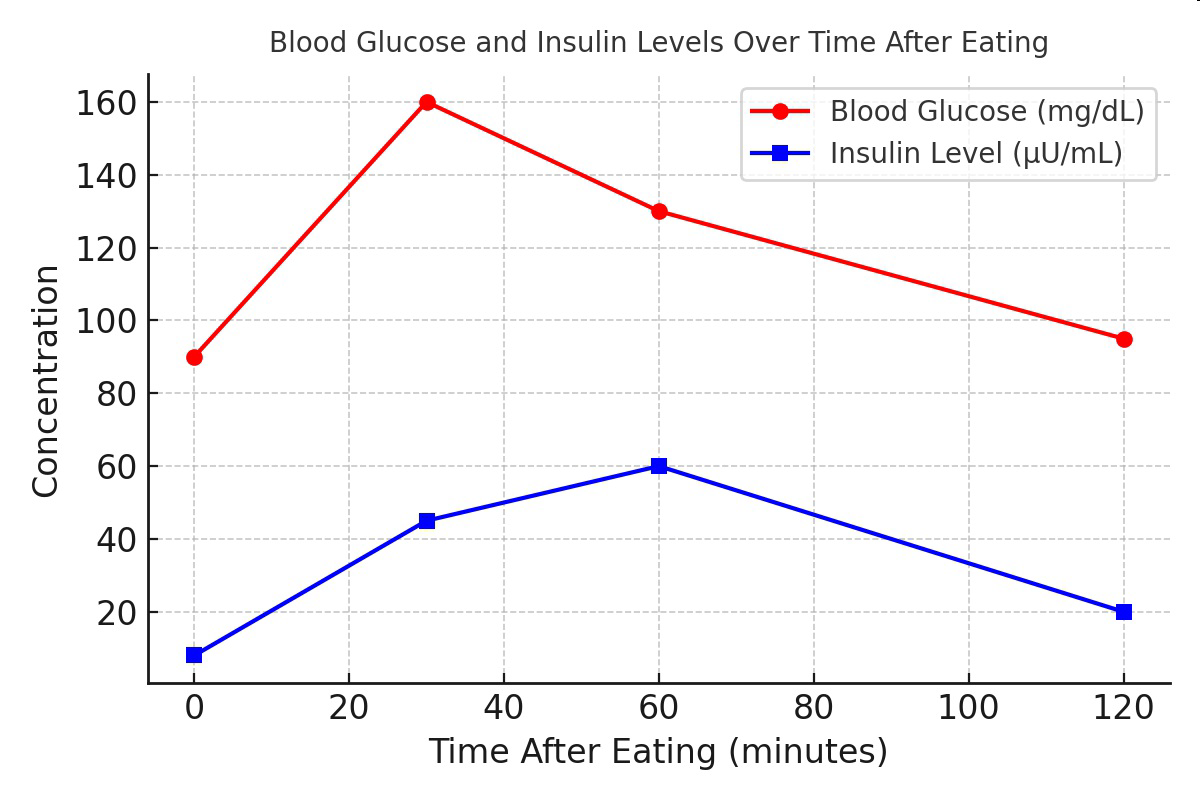
Figure 2.