Hearing and Startle Response
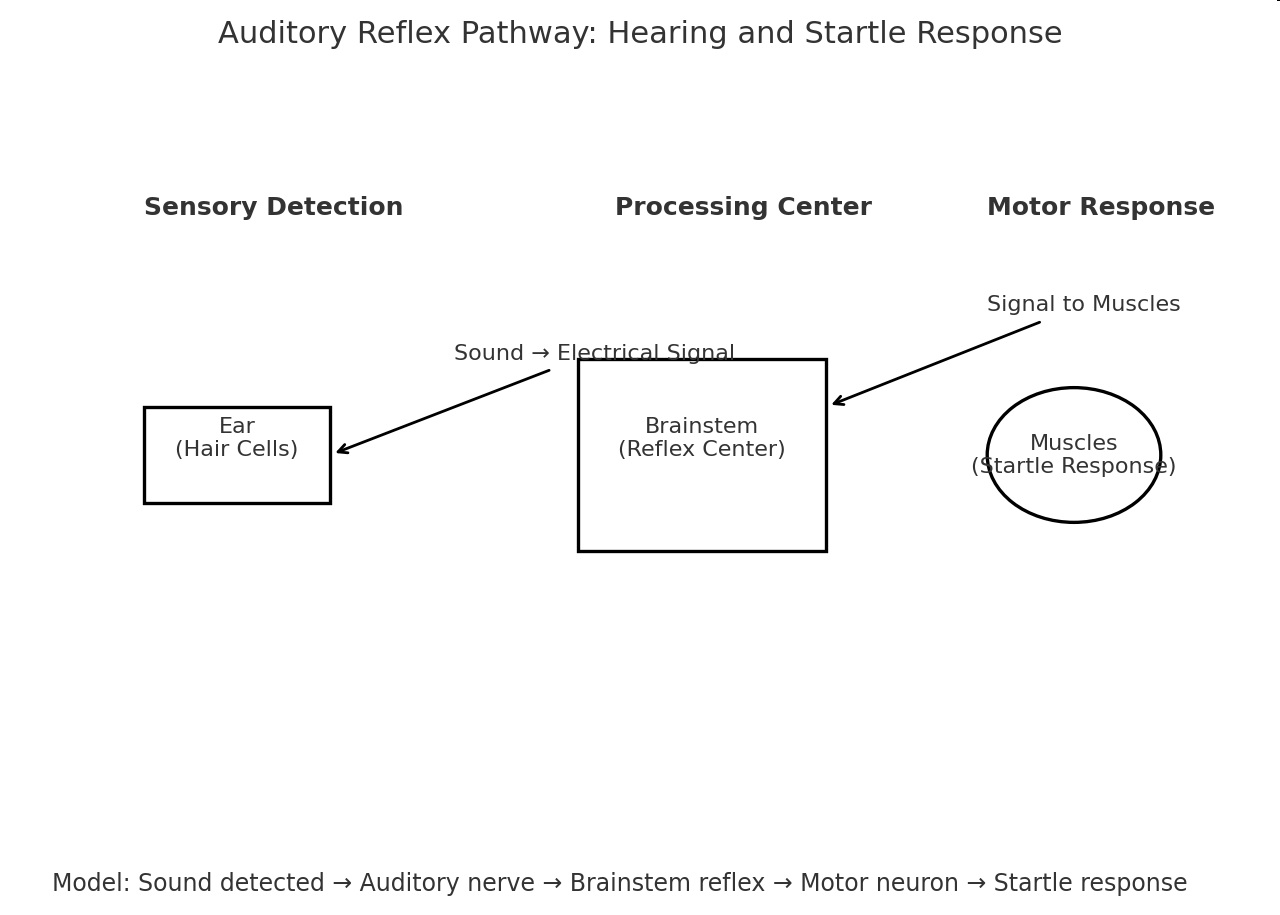
The auditory system allows humans to detect sound waves - vibrations that travel through the air. Inside the ear, sound waves enter the ear canal and vibrate the eardrum. These vibrations pass through tiny bones (the ossicles) and reach the cochlea, a spiral-shaped structure filled with fluid and lined with thousands of tiny hair cells.
These hair cells act as sensory receptors, converting sound vibrations into electrical signals. The signals travel along the auditory nerve to the brainstem, where the brain processes sound location and intensity.
When a sudden loud sound occurs, the startle reflex is triggered. The brainstem sends an immediate signal through motor neurons to muscles in the neck, shoulders, and arms, causing a quick, involuntary flinch. This rapid pathway helps protect the body from potential danger - like a loud explosion or falling object.
The brain later identifies the sound and, if necessary, stores the event as a memory of warning. This process shows how sensory receptors detect external stimuli and cause instant behavioral responses, while also engaging longer-term learning and adaptation.
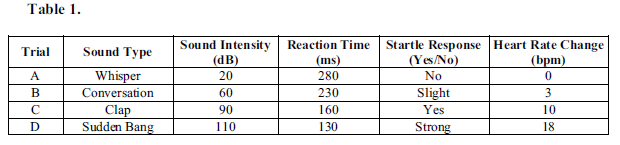
Graph of Information - Figure 1.
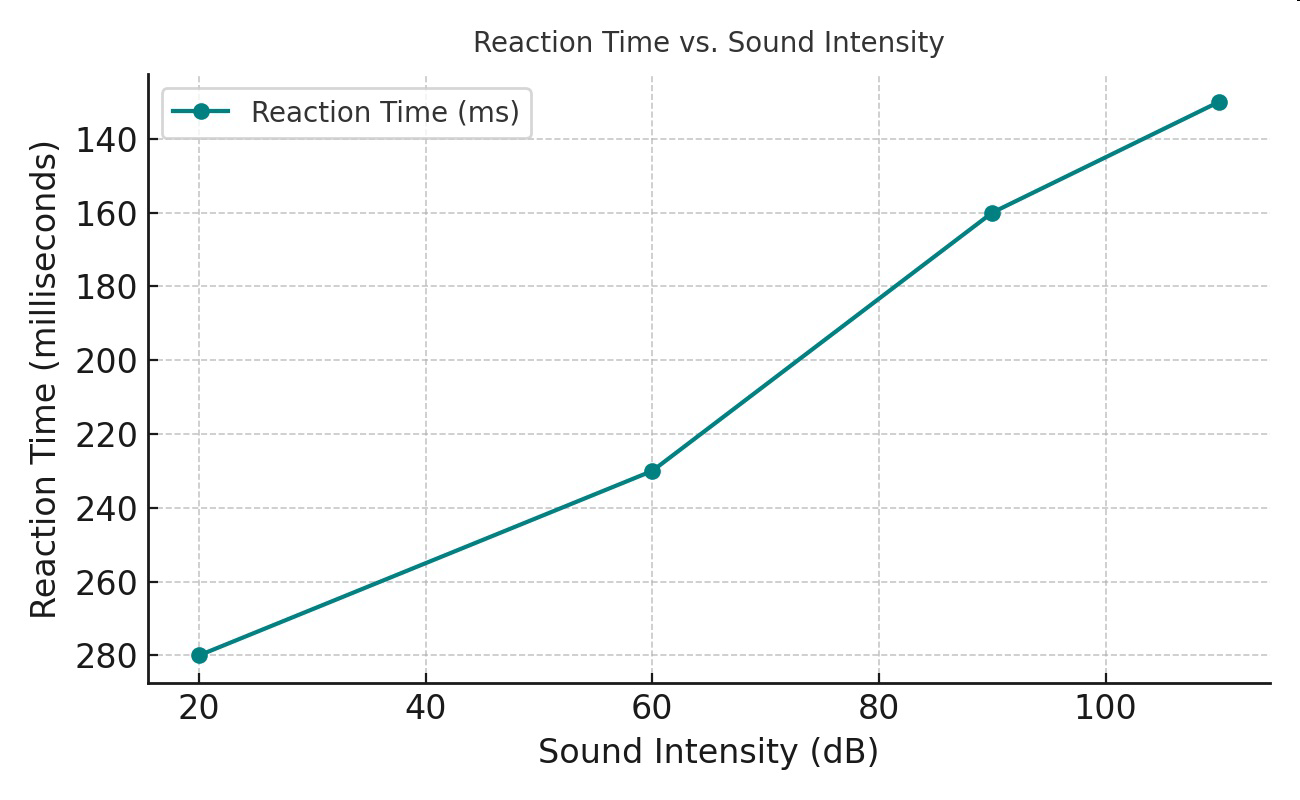
Figure 2.