How Cells Regulate Sugar
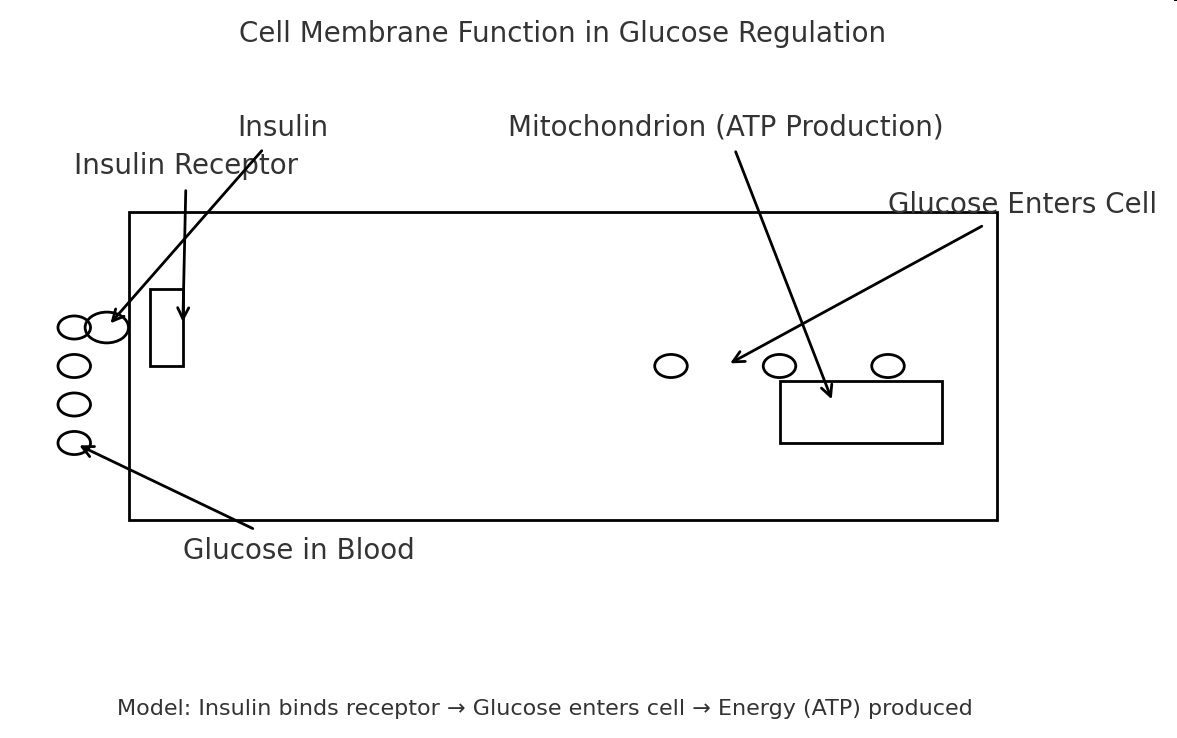
Every cell in your body needs glucose, a type of sugar, to make energy. But glucose can’t simply pass through the cell membrane on its own - it needs help from special transport proteins. These proteins act like doors that open only when they receive a chemical “signal.”
That signal comes from insulin, a hormone produced by the pancreas. When blood sugar levels rise after eating, insulin travels through the bloodstream and binds to insulin receptors on the surface of many cells, including muscle and liver cells. Once the receptor is activated, it triggers the movement of glucose transporters (GLUT proteins) to the cell surface. These transporters allow glucose to enter the cell, where the mitochondria can convert it into ATP - the energy the cell uses to function.
In people with Type 1 diabetes, the body doesn’t produce insulin, so the “signal” never arrives. In Type 2 diabetes, the receptors or transporters don’t respond properly - a condition known as insulin resistance. In both cases, glucose builds up in the blood instead of entering the cells, leading to high blood sugar and low energy at the cellular level.
This phenomenon helps students model how cell parts (membrane, receptor, mitochondria, nucleus) interact to control energy flow and maintain homeostasis.
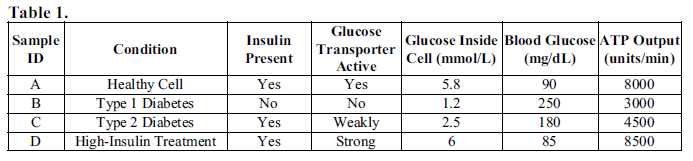
Graph of Information - Figure 1.
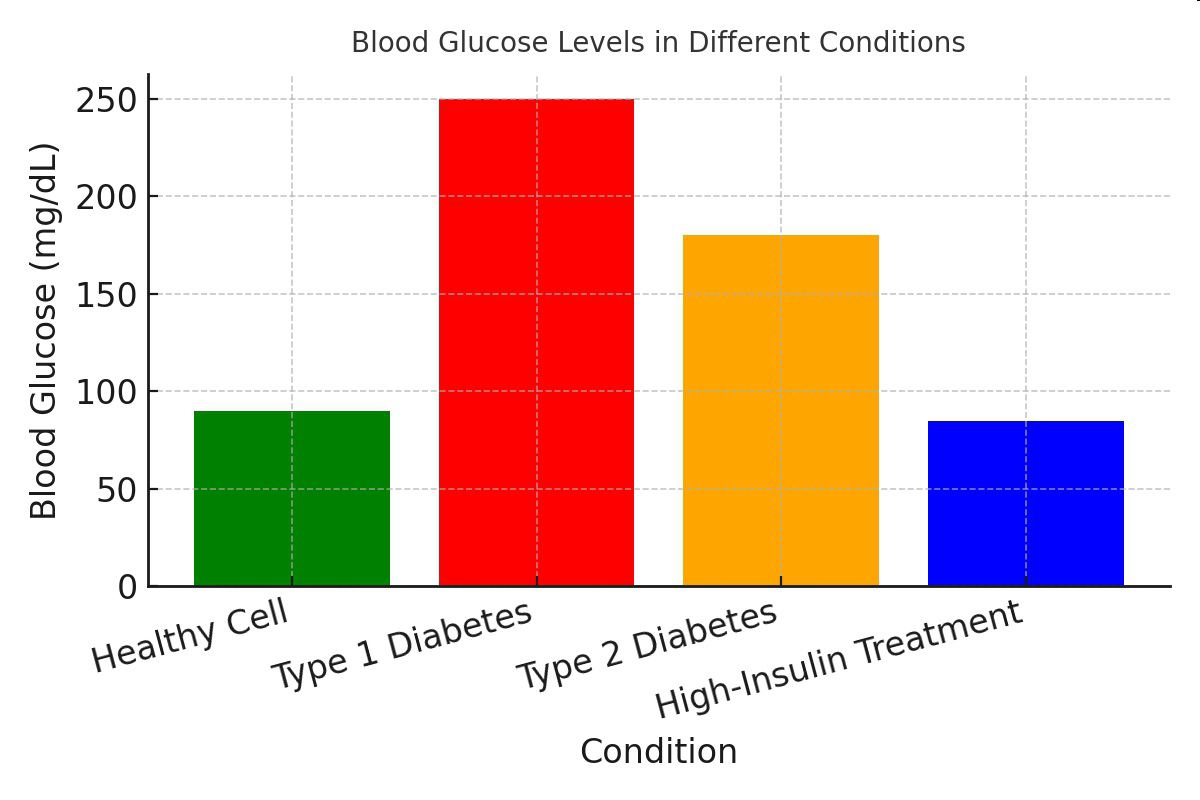
Figure 2.