Human Cheek Cells
A quick scrape from the inside of your cheek can reveal one of biology’s most important discoveries - that all living things are made of cells. When viewed under a microscope, a thin layer of cheek cells looks like a collection of overlapping, irregularly shaped, transparent ovals. Each of these tiny structures is a cell, the smallest unit of life in your body.
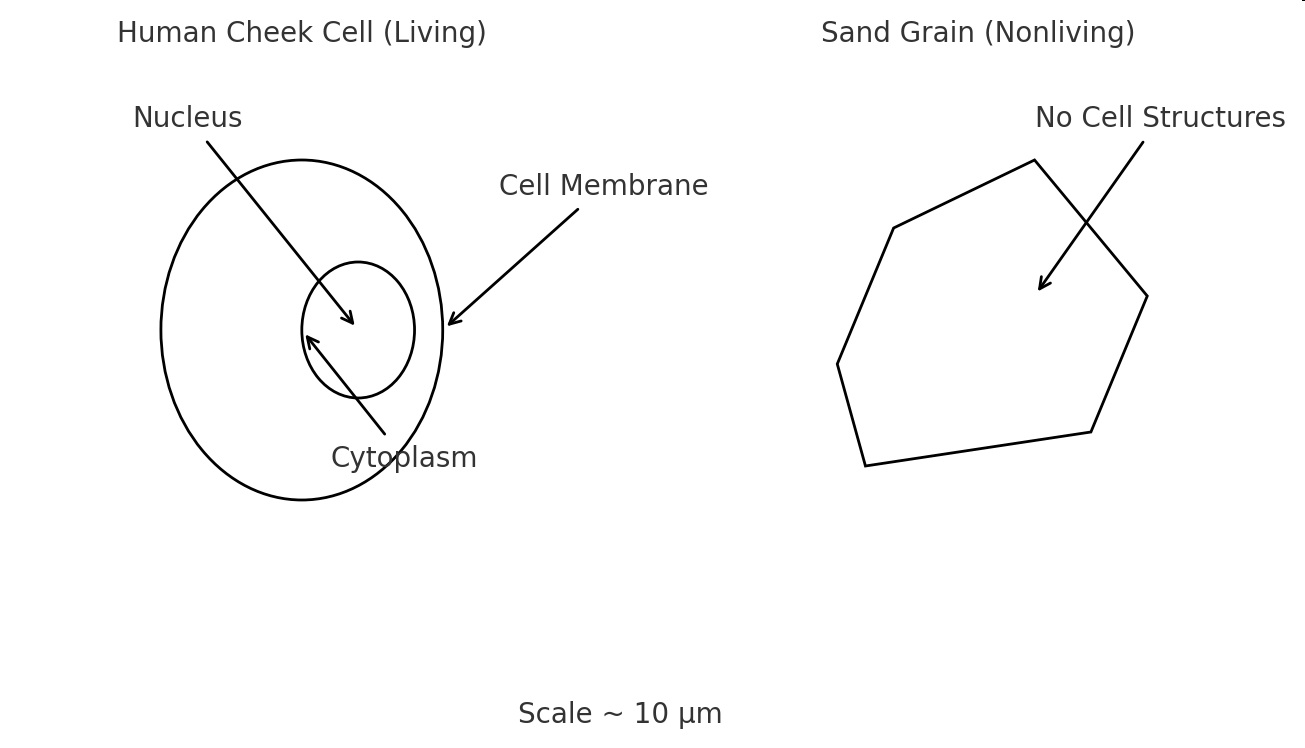
Cheek cells are animal cells, meaning they lack a rigid cell wall but have a cell membrane that holds everything inside. Within each cell is a nucleus, which contains your DNA - the genetic instructions that control how your body grows and functions. The cytoplasm fills the space inside the cell, supporting tiny organelles that perform different tasks, such as producing energy or building proteins.
Scientists use cheek cell observations to teach about the structure of eukaryotic cells — cells with a nucleus and other internal structures. Comparing cheek cells to plant cells (like onion cells) reveals clear differences: plant cells have cell walls and chloroplasts, while animal cells do not.
By examining their own cells, students directly observe evidence supporting the cell theory:
All living things are made of one or more cells.
The cell is the basic unit of structure and function in living things.
All cells come from preexisting cells.
Students can compare cell structures and identify how the presence of a nucleus and cell membrane distinguishes living cells from nonliving matter.
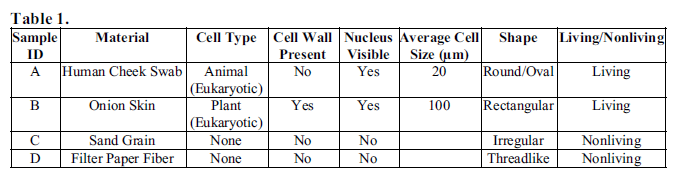
Graph of Information - Figure 1.
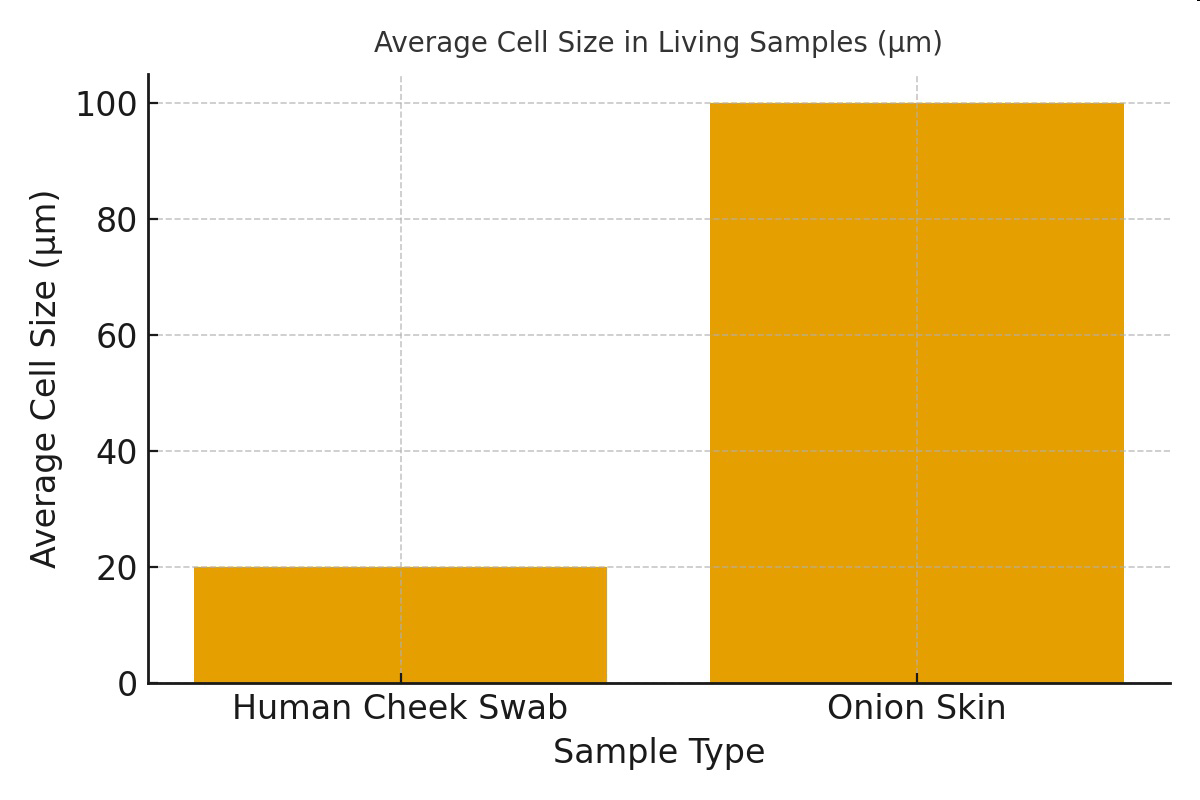
Figure 2.