Leaf Cross-Section: Plant Cells and Chloroplasts
When you look at a leaf, it might appear simple - flat, green, and thin. But under a microscope, a leaf is made of thousands of cells, each with a specific job that helps the plant survive. These cells form layers, working together to carry out photosynthesis and gas exchange.
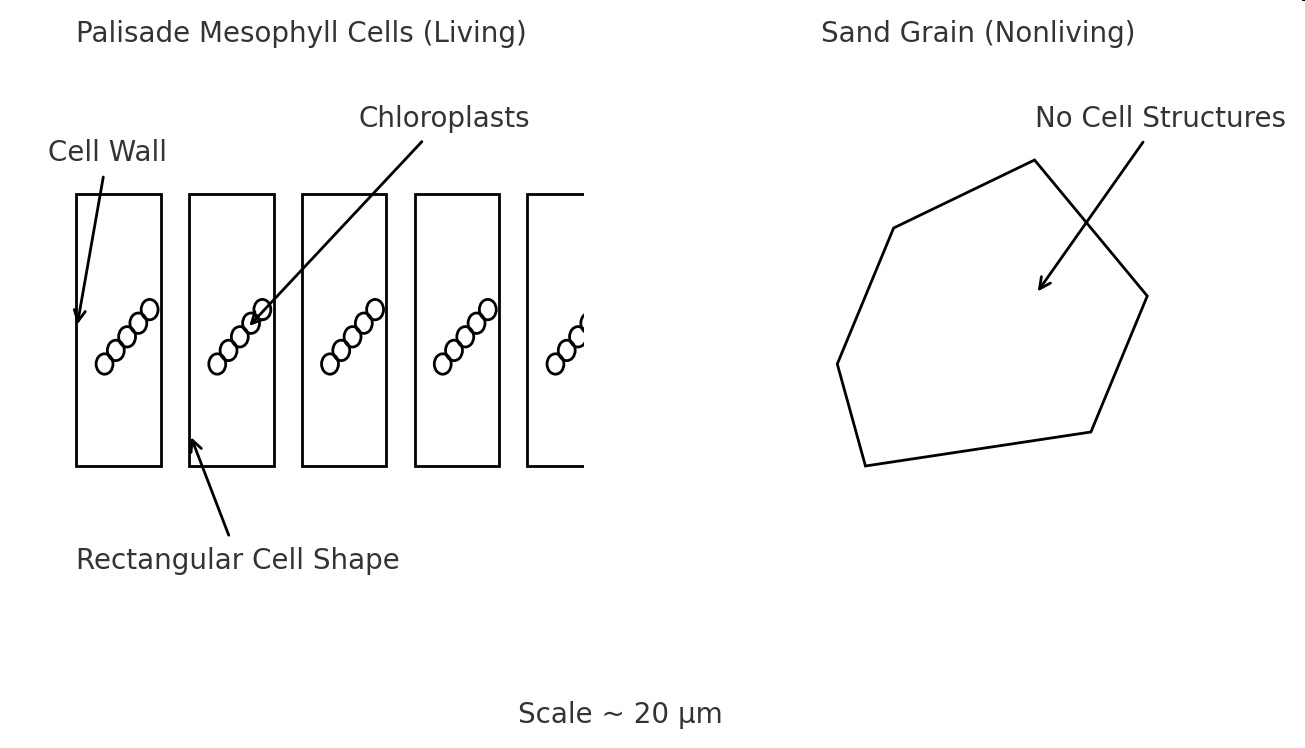
A thin cross-section of a leaf reveals several distinct regions. The upper epidermis protects the leaf and lets light pass through. Below that lies the palisade mesophyll, a dense layer of rectangular cells packed with chloroplasts. These chloroplasts capture sunlight and use it to produce glucose (sugar) for the plant. The spongy mesophyll underneath contains loosely arranged cells with air spaces that allow carbon dioxide and oxygen to move through the leaf.
Each chloroplast contains a green pigment called chlorophyll, which absorbs light energy. The presence of chloroplasts is a key difference between plant and animal cells - animal cells do not perform photosynthesis and therefore lack chloroplasts and cell walls.
When students observe a leaf cross-section under a microscope, they can see that each plant cell has a cell wall, cell membrane, cytoplasm, and often a visible nucleus, along with many green chloroplasts. This visual evidence reinforces that plants are composed of cells, each contributing to the plant’s overall function of capturing sunlight and producing food.
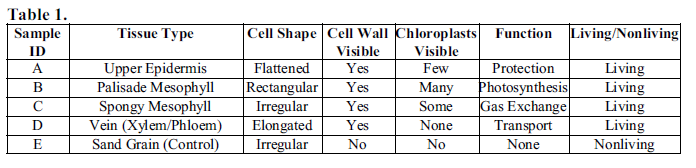
Graph of Information - Figure 1.
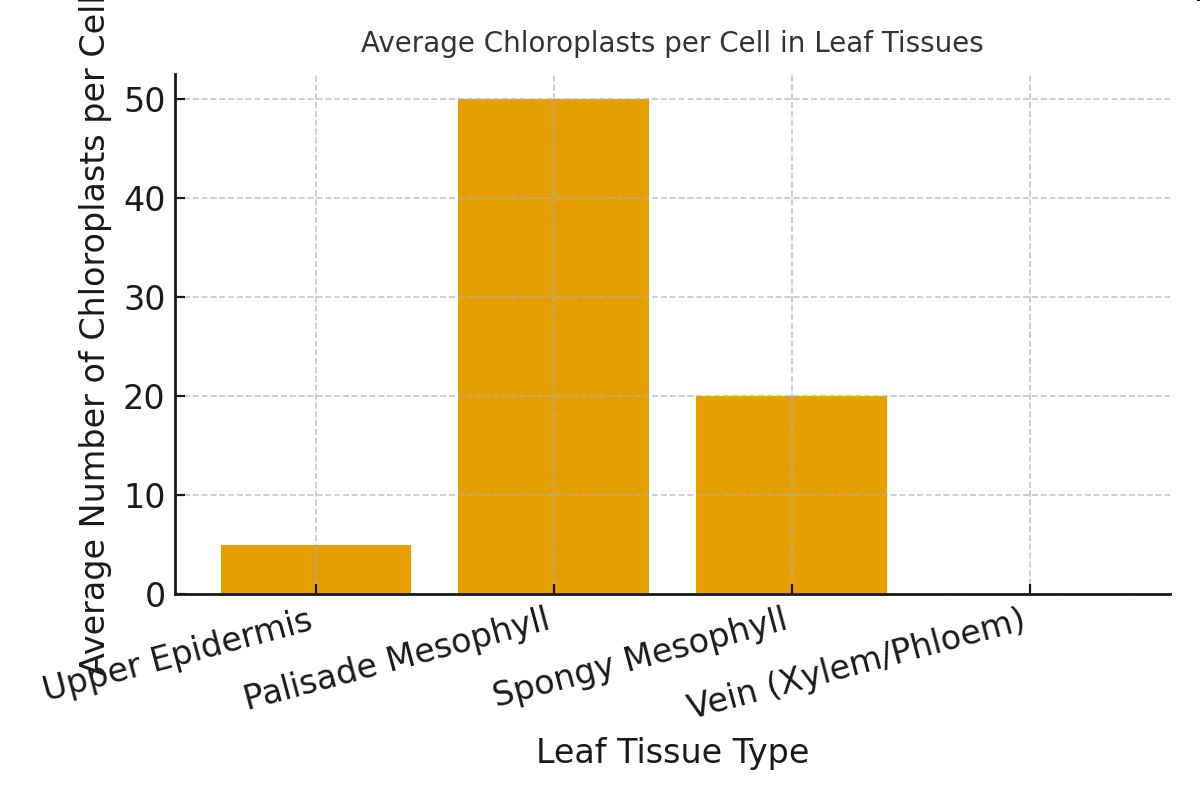
Figure 2.