Muscle Fatigue and Lactic Acid Buildup
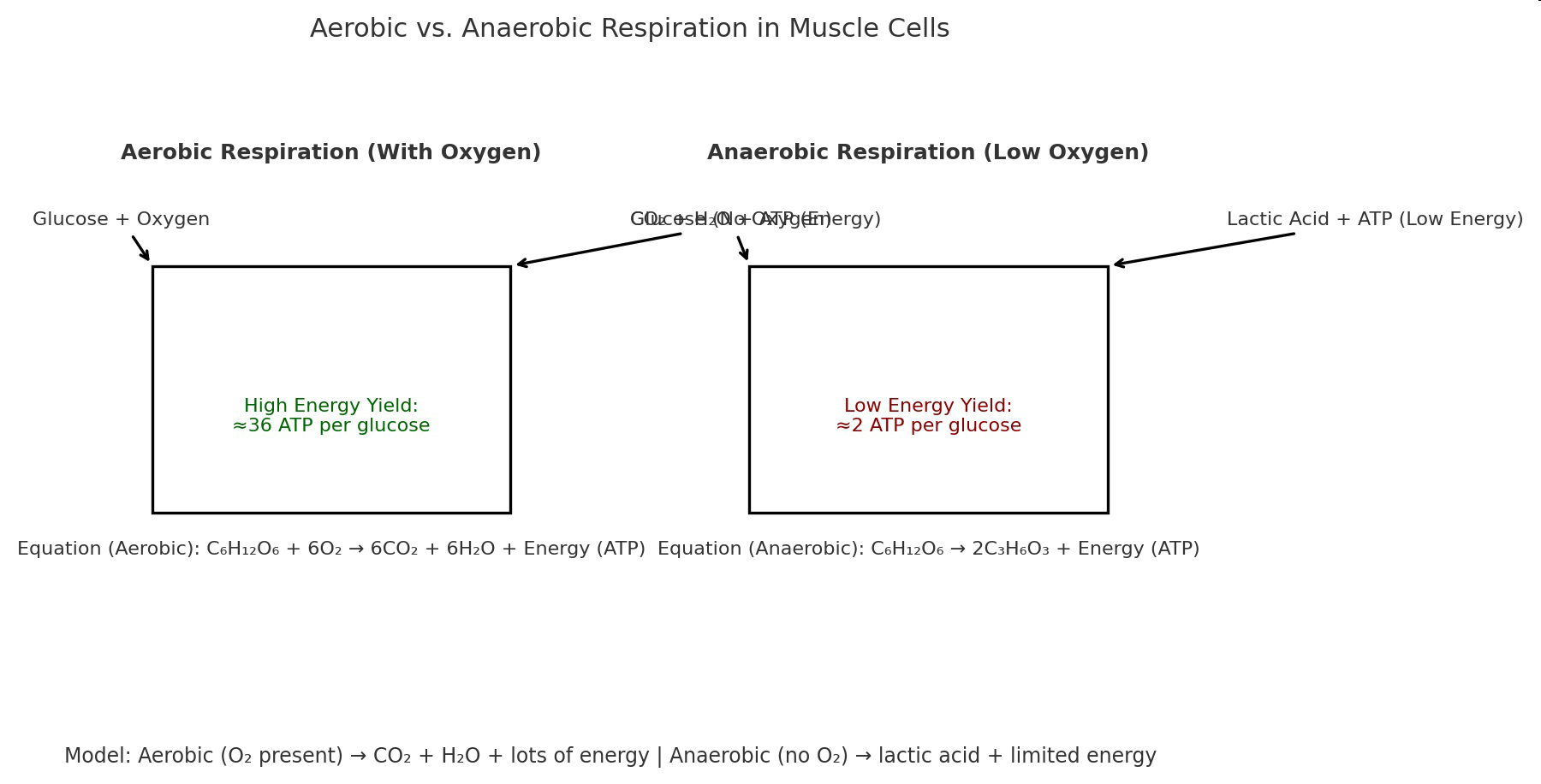
When we exercise, our muscles need more energy to move. Normally, this energy comes from aerobic respiration, where glucose reacts with oxygen to release energy, carbon dioxide, and water:
$C_6H_{12}O_6 + 6O_2 \rightarrow 6CO_2 + 6H_2O + \text{Energy (ATP + Heat)}$
But during very intense activity - like sprinting or lifting weights - the body can’t deliver oxygen to the muscles fast enough. When this happens, muscle cells temporarily switch to anaerobic respiration, which does not require oxygen.
In humans, anaerobic respiration converts glucose into lactic acid and energy:
$C_6H_{12}O_6 \rightarrow 2C_3H_6O_3 + \text{Energy (ATP)}$
This process provides quick energy but produces much less ATP. The buildup of lactic acid causes muscle fatigue and soreness. After exercise, the body uses oxygen to convert lactic acid back into energy, explaining why breathing remains heavy for several minutes after you stop moving.
This demonstrates how chemical reactions in cells rearrange matter (glucose → lactic acid) and how energy flow adjusts based on oxygen levels - maintaining life functions even under stress.
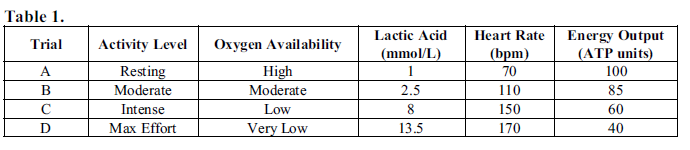
Graph of Information - Figure 1.
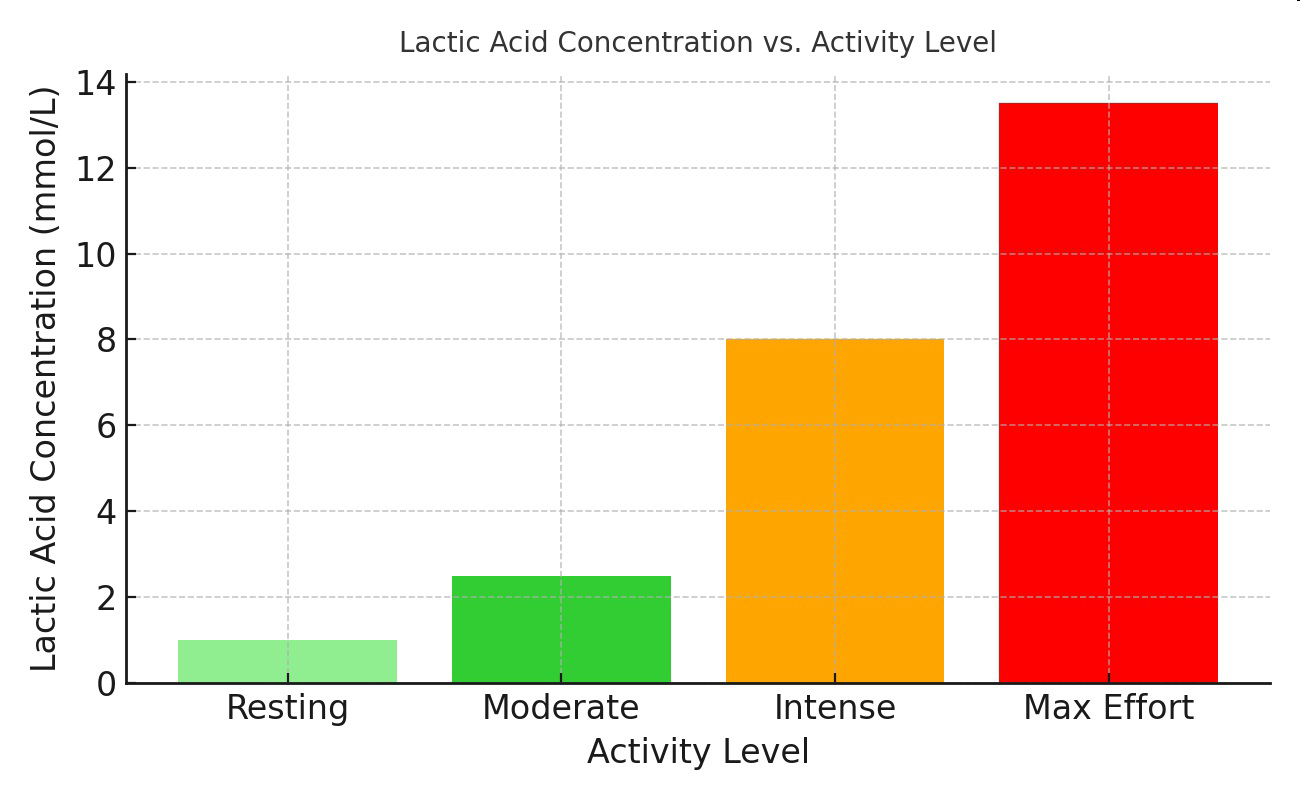
Figure 2.