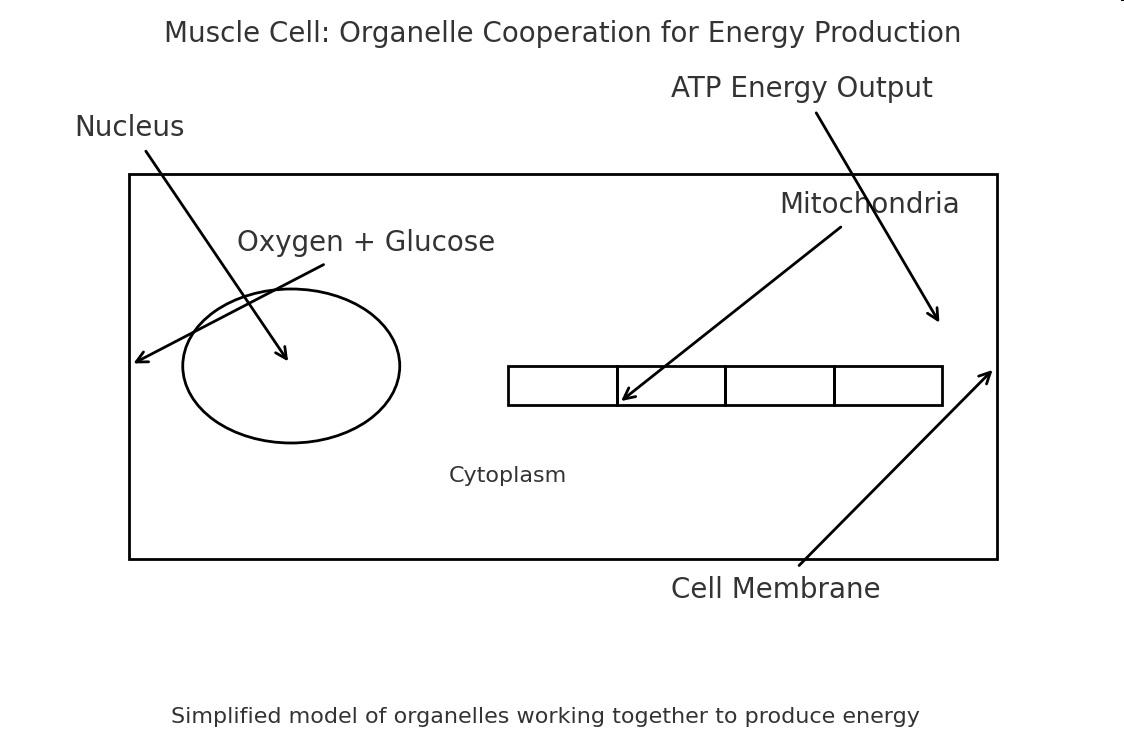
Muscle Fatigue and Mitochondria
Every cell in your body needs energy to function, and that energy comes from a molecule called ATP. ATP is produced in the mitochondria, specialized organelles that transform chemical energy from food into a usable form through a process called cellular respiration.
When you exercise, your muscle cells demand a large amount of ATP to keep contracting. The mitochondria work faster to meet this demand by using oxygen and glucose. But when the demand exceeds supply - such as during intense exercise - the cells switch to a process called anaerobic respiration, which produces ATP without oxygen but also creates lactic acid. The buildup of lactic acid leads to the burning sensation and fatigue you feel.
Athletes often train to increase the number and efficiency of mitochondria in their muscle cells. Endurance runners, for example, have more mitochondria than sprinters or non-athletes, allowing their muscles to generate more energy for longer periods of time.
This phenomenon demonstrates that the mitochondria do not act alone. They rely on the cell membrane (to bring in glucose and oxygen), the cytoplasm (where early energy reactions begin), and the nucleus (which holds the instructions for making mitochondrial enzymes). Together, these parts of the cell work as a coordinated system to maintain energy production and muscle performance.
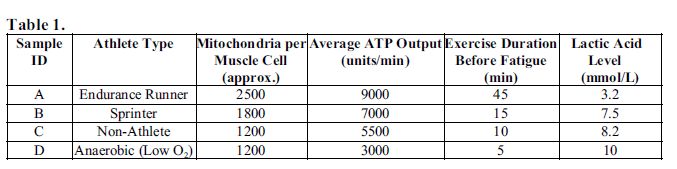
Graph of Information - Figure 1.
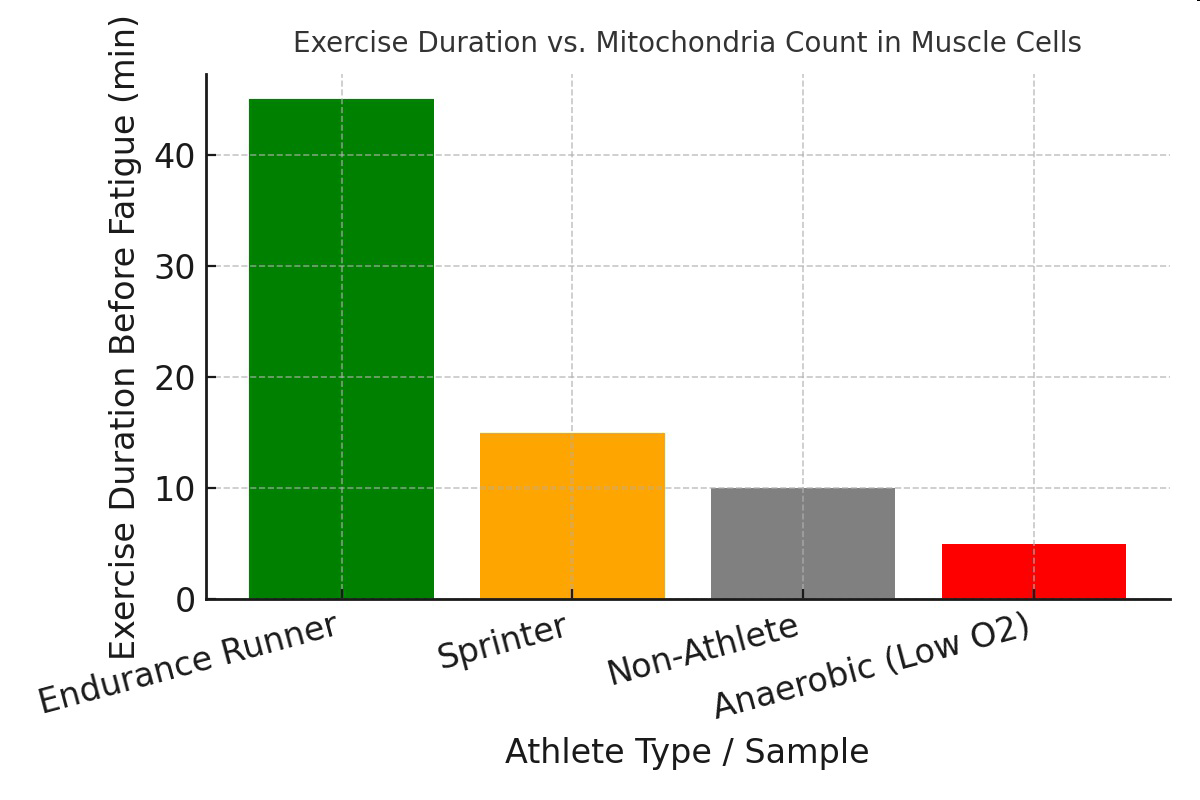
Figure 2.