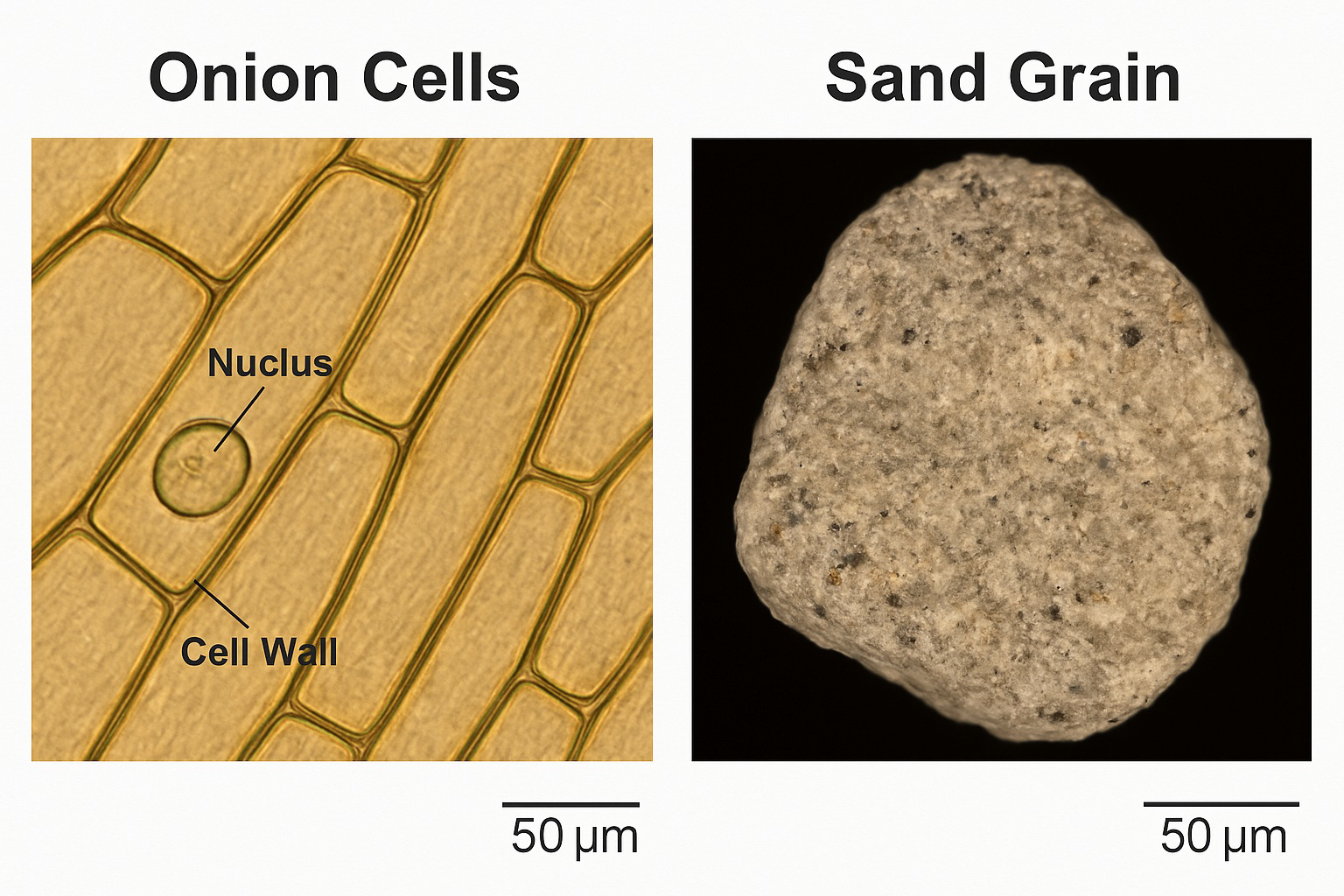
Onion Skin Under a Microscope
When you peel a thin layer of onion skin and look at it under a microscope, you can see something that’s invisible to the naked eye: tiny repeating units called cells. Each cell has a distinct shape, size, and structure. The outer edge you see is the cell wall, which gives plant cells their rigid, boxy appearance. Inside, you may see a darker round structure - the nucleus, which controls the cell’s activities.
Before microscopes were invented, no one knew that living things were made of cells. In the 1600s, scientists like Robert Hooke and Anton van Leeuwenhoek used early microscopes to examine thin slices of plants and drops of water. Hooke saw the repeating “boxes” in cork and called them cells because they reminded him of the small rooms in a monastery. Leeuwenhoek later observed living single-celled organisms, which he called “animalcules.”
Today, we know that all living things are made of one or more cells. Some organisms, like bacteria and yeast, are made of just a single cell. Others, like onions, humans, and trees, are made of many cells working together. These multicellular organisms have specialized cells for different functions - for example, leaf cells that contain chloroplasts for photosynthesis and root cells that absorb water.
The onion skin shows the repeating pattern of plant cells, giving clear evidence that plants are made of cells. This pattern of cellular organization is one of the most fundamental characteristics of life.
We can make a microscopic observation dataset, for students to analyze patterns and make evidence-based claims. This allows students to compare living vs. nonliving samples and note that only living things show organized, repeating cells.
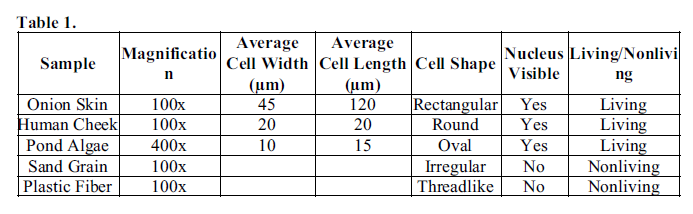
Graph of Information - Figure 1.
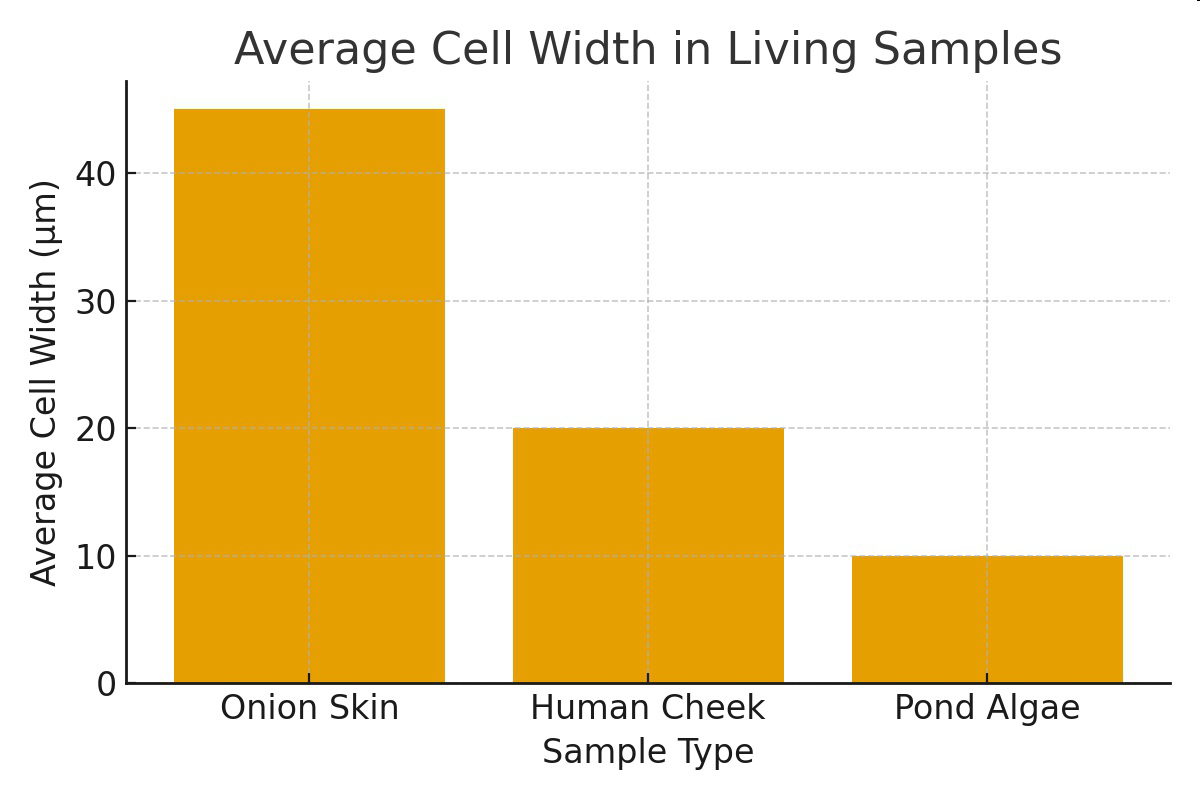
Figure 2.