Oxygen Delivery During Exercise
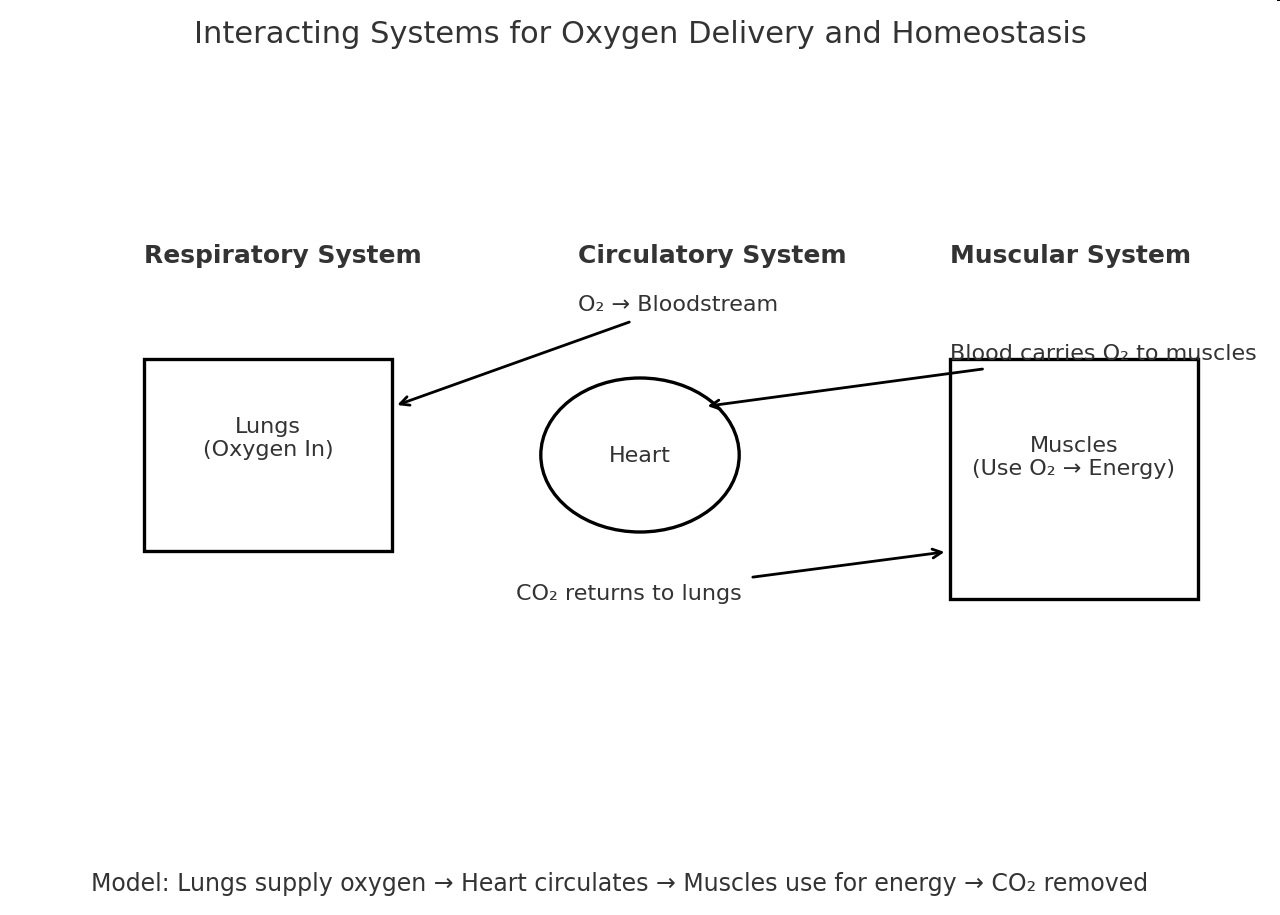
Every movement you make - from lifting a book to sprinting - requires energy. That energy comes from cellular respiration, a process that depends on oxygen. During exercise, your muscle cells need more oxygen to produce ATP, the molecule that powers movement.
The respiratory system responds first. Breathing rate and depth increase, bringing more oxygen into the lungs. Inside the lungs, oxygen passes into the bloodstream through tiny air sacs called alveoli.
Then the circulatory system takes over. The heart pumps faster, pushing oxygen-rich blood to muscles through arteries. Inside the muscles, red blood cells deliver oxygen, and the mitochondria use it to generate energy. At the same time, carbon dioxide - a waste product of respiration - is carried back to the lungs for removal.
If oxygen demand outpaces supply, muscles switch partly to anaerobic respiration, producing lactic acid and causing the familiar “burning” sensation. When you rest, your breathing and heart rate gradually return to normal, restoring balance.
This example shows how the body’s systems - respiratory, circulatory, and muscular - constantly adjust to maintain oxygen and energy balance, a key feature of homeostasis.
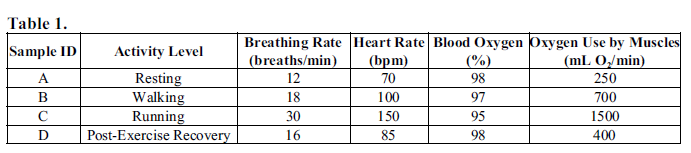
Graph of Information - Figure 1.
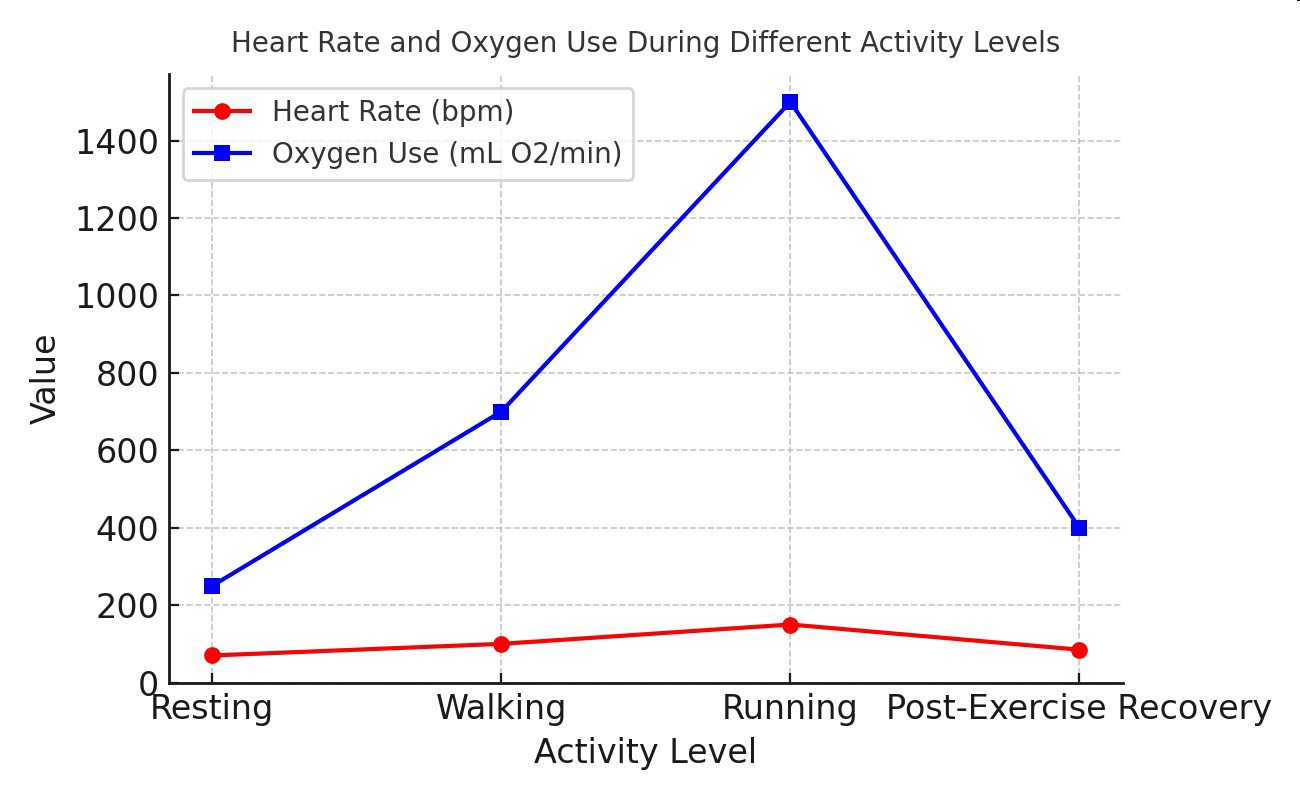
Figure 2.