Pond Water Sample
When you scoop up a drop of pond water and place it on a microscope slide, you’re not just looking at water - you’re seeing an entire microscopic ecosystem. Under low magnification, the water may appear full of moving dots or tiny shapes gliding and spinning around. Each of these tiny living things is made of cells.
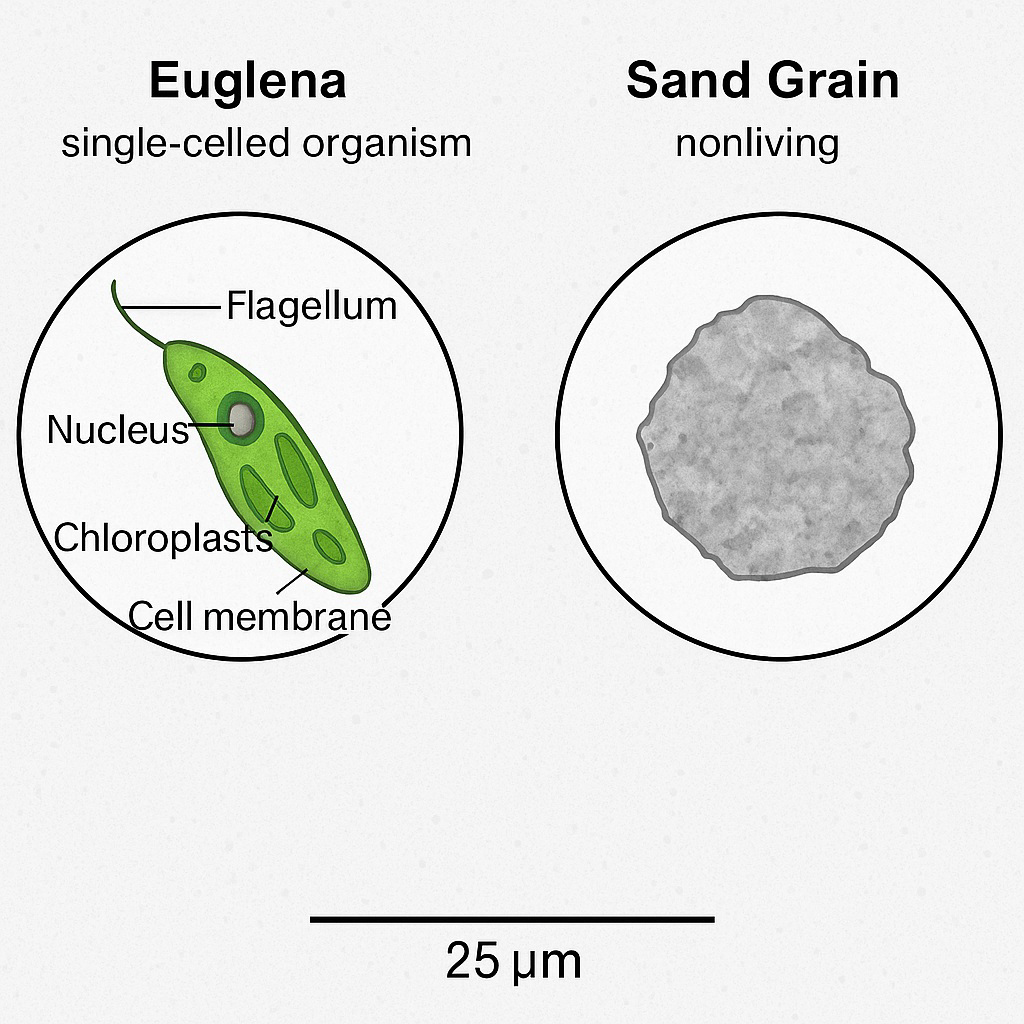
Some of the organisms you might see are protists, which are single-celled eukaryotes. This means each cell has a nucleus that contains its genetic material. Examples include Euglena, which can both eat food and photosynthesize, and Paramecium, which moves using tiny hairlike structures called cilia. You might also find green algae, such as Spirogyra, which can form long chains of cells.
Unlike multicellular organisms (like humans or plants), each protist carries out all life functions within just one cell. It can move, eat, reproduce, and respond to its environment - everything a large organism can do, but on a microscopic scale. These discoveries helped scientists realize that the cell is the basic unit of life.
In contrast, nonliving particles in pond water - like dirt or sand grains - don’t move on their own and lack internal structures. Observing both living and nonliving materials under a microscope provides clear evidence that living things are made of cells, while nonliving things are not.
This experiment connects to one of the most important principles in biology - that all living things, no matter how small, are made of one or more cells.
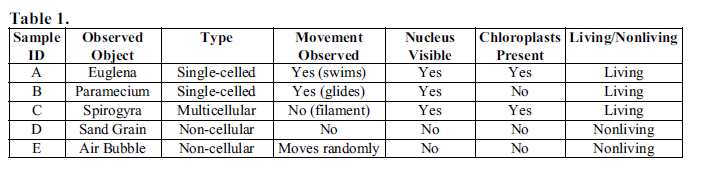
Graph of Information - Figure 1.
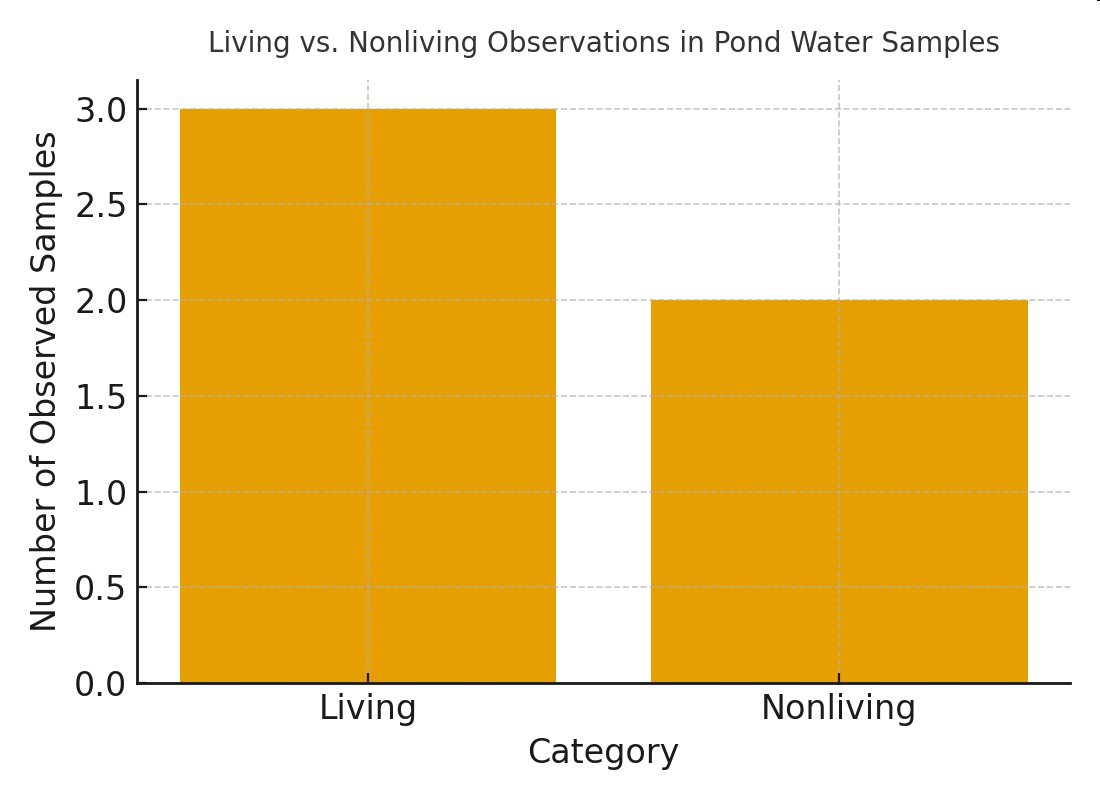
Figure 2.