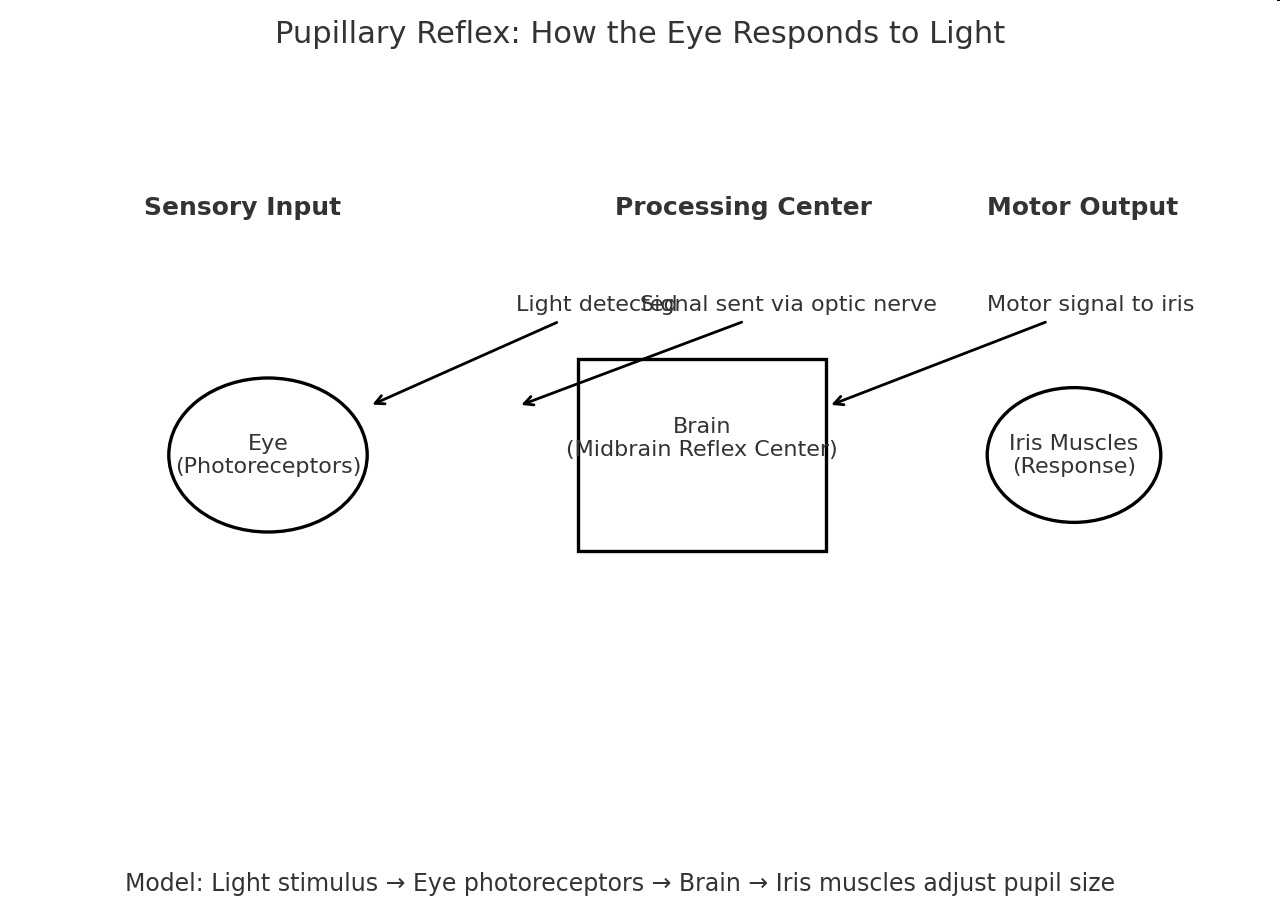
Pupil Dilation in Changing Light
Your eyes are constantly adjusting to changes in light. The pupil, the dark circle in the center of the eye, controls how much light enters. It works like a camera aperture: it widens (dilates) in low light and narrows (constricts) in bright light.
Light is detected by specialized sensory receptors called photoreceptors in the retina. These cells convert light energy into electrical signals, which travel along the optic nerve to the brain.
The brain’s midbrain region (specifically the superior colliculus and Edinger–Westphal nucleus) processes these signals and sends instructions back to the iris muscles through motor neurons.
In bright light, circular muscles of the iris contract, making the pupil smaller.
In dim light, radial muscles contract, enlarging the pupil.
This reflex happens automatically - usually within half a second - and does not require conscious thought. The ability of the eye to adjust quickly helps maintain visual clarity and protect delicate tissues, demonstrating how sensory receptors detect stimuli and trigger immediate, involuntary behavior through nervous system pathways.
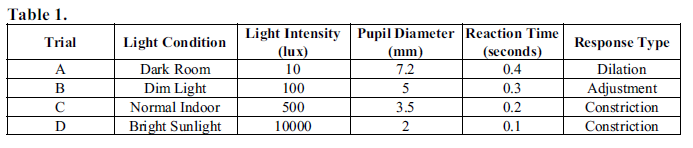
Graph of Information - Figure 1.
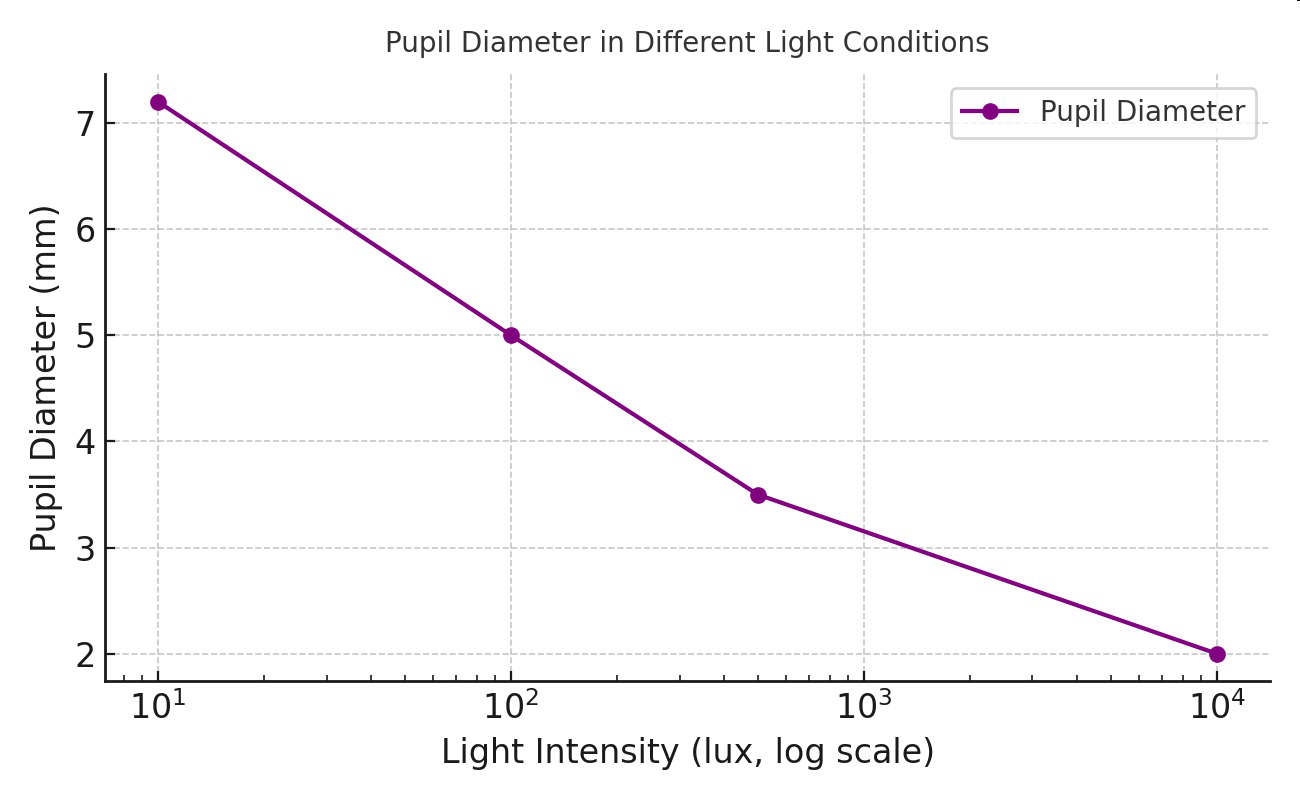
Figure 2.