Reflex Response: Touching a Hot Surface
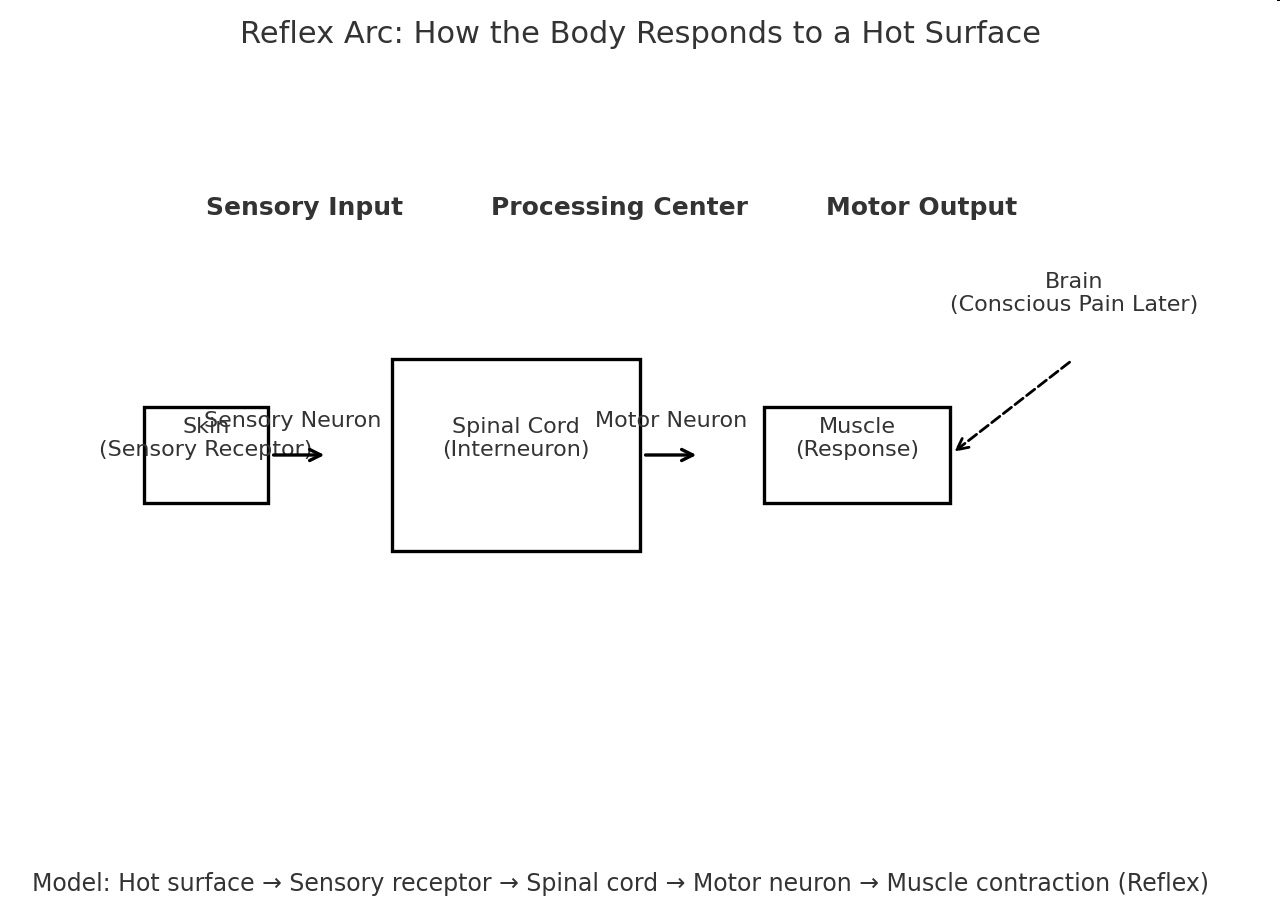
The human body has a built-in system to react quickly to danger. Reflexes are automatic, involuntary responses to a stimulus - meaning they happen without conscious thought. When you touch something hot, sensory receptors in the skin detect the extreme temperature. These receptors send electrical signals along sensory neurons to the spinal cord - not the brain.
Inside the spinal cord, the message is passed to interneurons, which immediately relay a signal to motor neurons that control the muscles in your arm and hand. Those motor neurons send the message to the muscles to contract, pulling your hand away from the hot surface. This whole process takes less than a tenth of a second - much faster than if the brain had to process the information first.
After the reflex occurs, the signal does reach the brain, allowing you to consciously feel pain and remember what happened. The brain can store that experience as a memory, helping you avoid similar danger in the future.
Reflex arcs show how sensory receptors detect stimuli, how messages travel through the nervous system, and how immediate behavior helps maintain safety and balance - a key example of the body’s coordination and survival mechanisms.
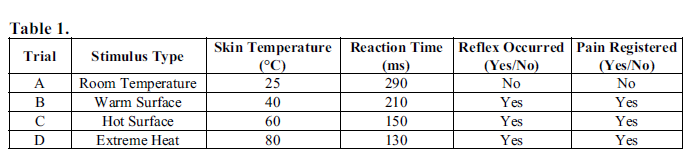
Graph of Information - Figure 1.
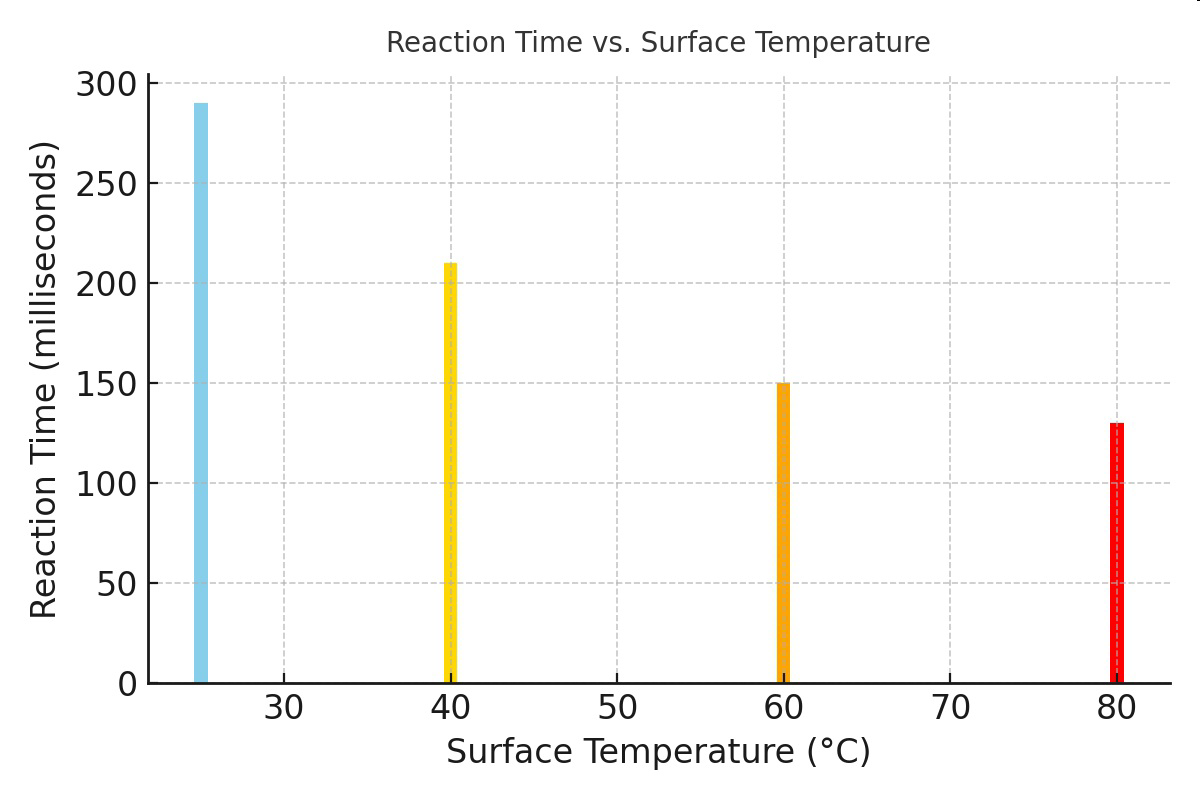
Figure 2.