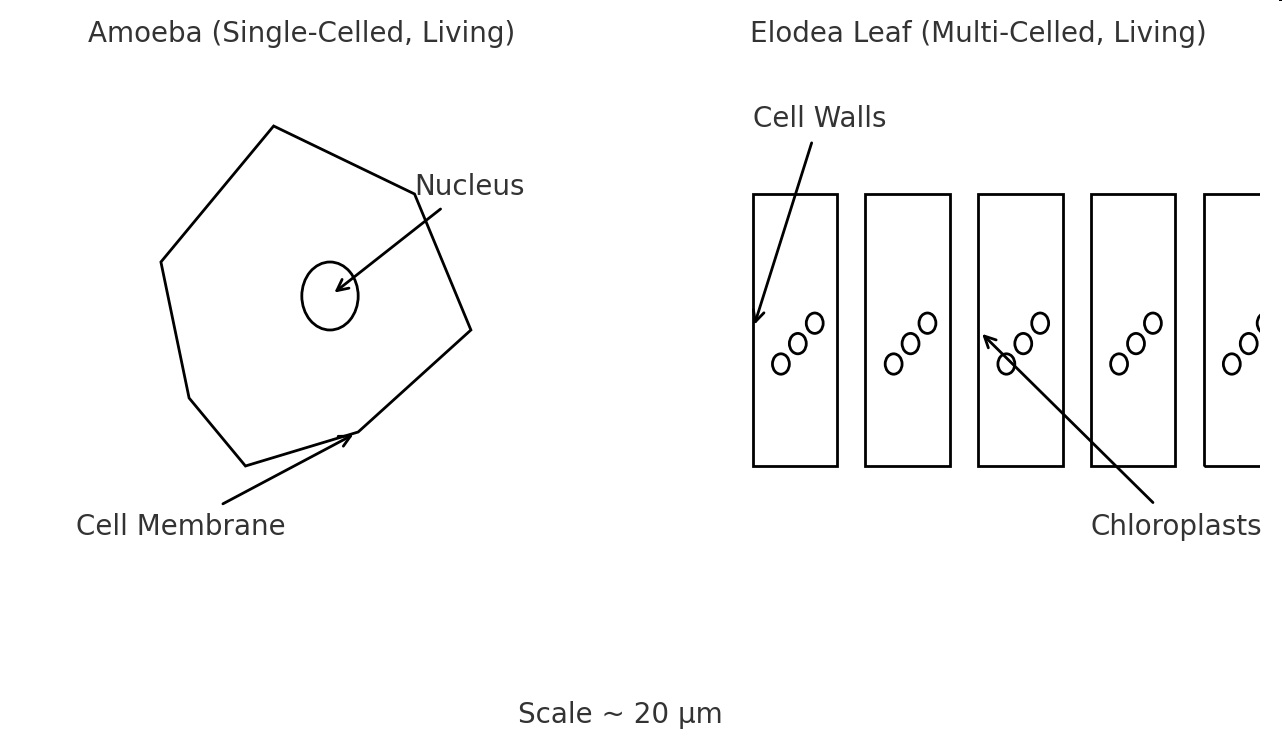
Single-Celled vs. Multi-Celled Organisms
All living organisms are made of cells, but not all organisms are made of the same number of them. Some organisms, such as bacteria, amoebas, and paramecia, consist of just one cell. These single-celled organisms perform all life processes - such as feeding, movement, and reproduction - inside that single unit. They are microscopic, but each cell is a complete living organism.
In contrast, multicellular organisms like humans, plants, and animals are made up of millions or trillions of cells. Each cell has a specialized function. For example, muscle cells help movement, nerve cells transmit signals, and leaf cells in plants perform photosynthesis. These cells work together to keep the entire organism alive, communicating through chemical and electrical signals.
Under a microscope, a single-celled organism like Amoeba appears as one irregularly shaped blob that moves and engulfs food. A multicellular organism, like Elodea, shows many neatly arranged plant cells with visible walls and chloroplasts.
The key difference isn’t just the number of cells - it’s cell specialization. In multicellular life, different cells perform different jobs, while a single cell must do it all.
This distinction helps explain the diversity of life: from microscopic bacteria to towering redwoods, cells are the building blocks of every living thing.
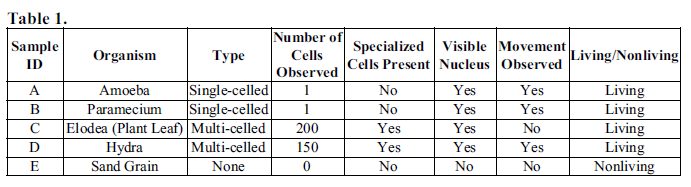
Graph of Information - Figure 1.
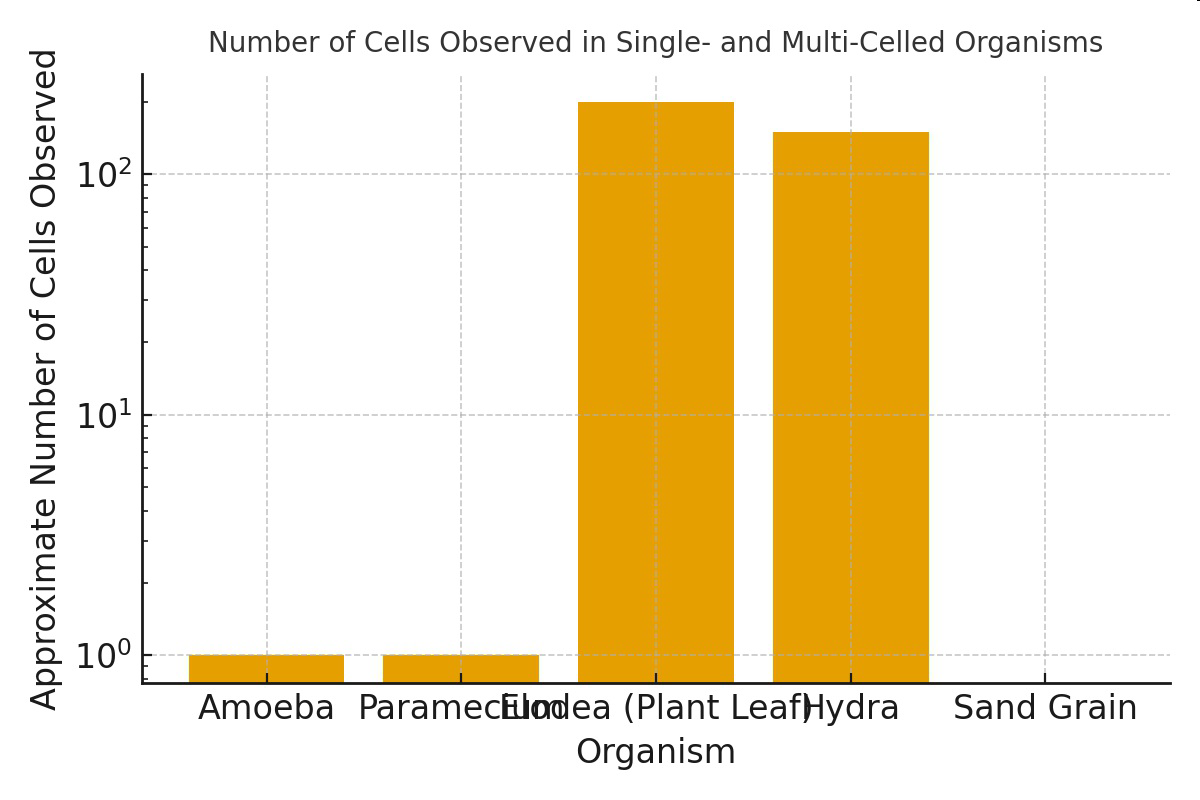
Figure 2.