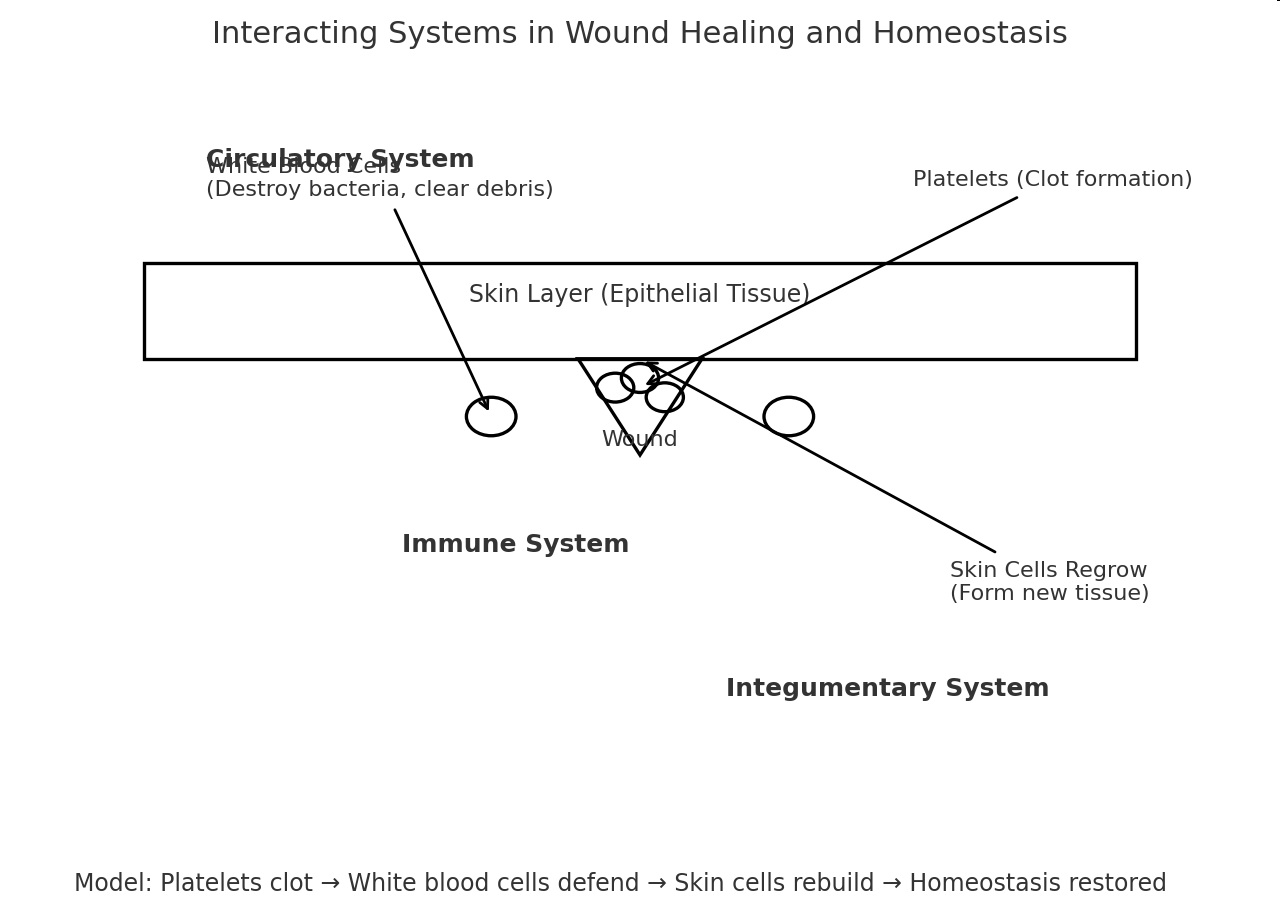
Skin Healing After a Cut
The skin is the body’s largest organ, forming a protective barrier between the body’s internal systems and the outside world. When that barrier is broken - even by a small cut - the body launches a coordinated healing response involving multiple systems.
First, the circulatory system responds. Blood vessels constrict to reduce bleeding, and platelets gather at the wound site to form a clot, sealing the break. The clot hardens into a scab, preventing further blood loss and blocking bacteria from entering.
Next, the immune system activates. White blood cells, especially macrophages, move to the site to destroy any invading pathogens and clear out damaged tissue. The area may swell and turn red as part of this defense process - a sign of increased blood flow and immune activity.
Finally, the integumentary system repairs the damage. Skin cells (epithelial cells) begin to multiply and move across the wound, forming new tissue. Fibroblasts in the underlying tissue create collagen, strengthening the new skin. Over days or weeks, the scab falls off and the skin is restored - the body’s balance returned.
Each system - circulatory, immune, and integumentary - plays a vital part, showing how cells, tissues, and organs interact to achieve homeostasis after injury.
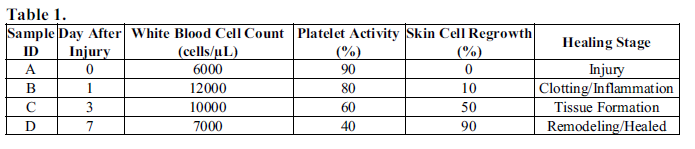
Graph of Information - Figure 1.
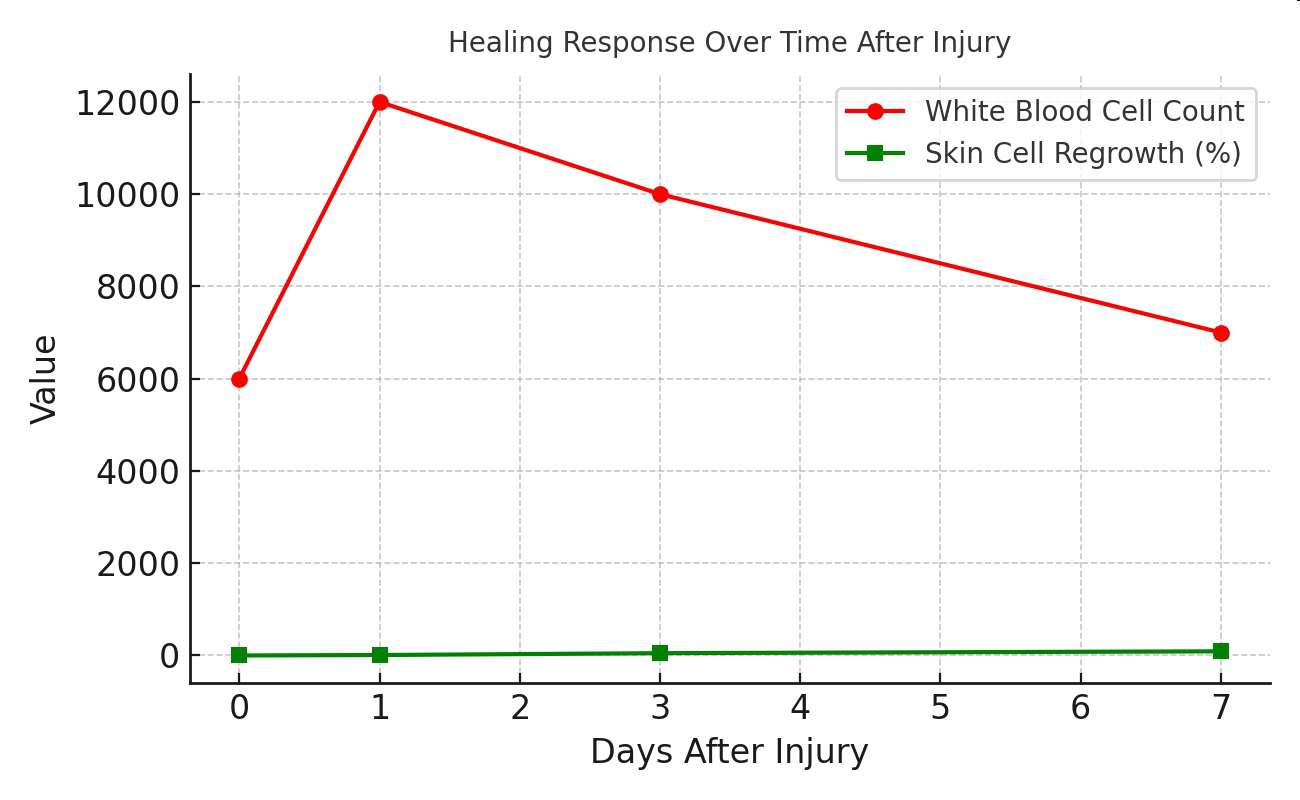
Figure 2.