Smell and Memory Connection
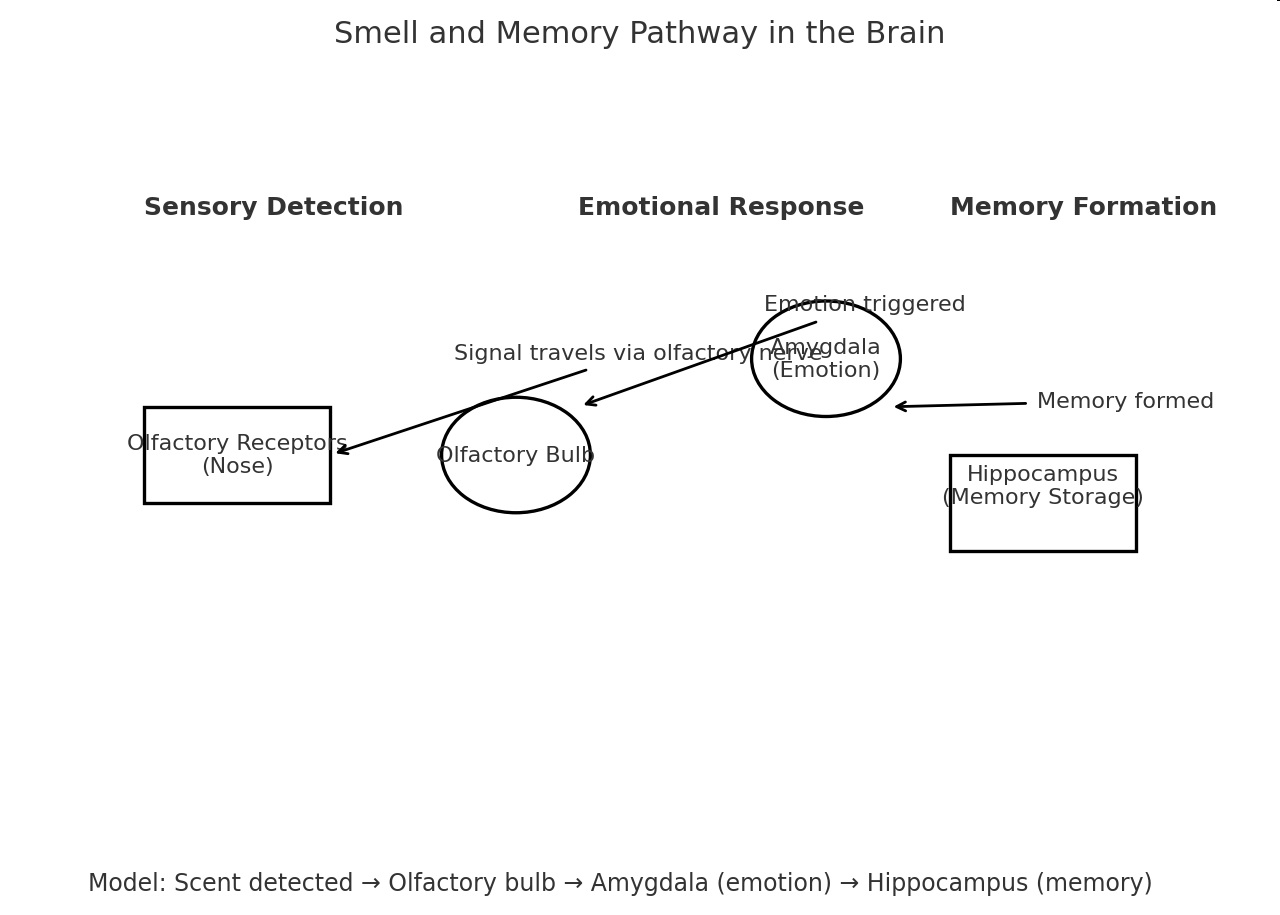
The sense of smell, or olfaction, begins when sensory receptors inside the nasal cavity detect molecules in the air. These receptors send electrical signals through the olfactory nerve to the olfactory bulb, a structure located at the front of the brain.
What makes smell unique is that its neural pathway bypasses the thalamus - the brain’s usual “relay center.” Instead, it connects directly to two important parts of the limbic system:
The amygdala, which processes emotion, and
The hippocampus, which forms and stores memories.
This direct connection explains why smells often trigger strong emotional memories. For example, the smell of sunscreen might remind someone of the beach, or pine might bring back a memory of winter holidays.
When a scent is detected, the brain may respond immediately with emotion (“I love that smell!”) or store the information as part of a memory. This shows that sensory receptors not only cause instant reactions but also support long-term memory formation, connecting sensory biology with behavior and emotion.
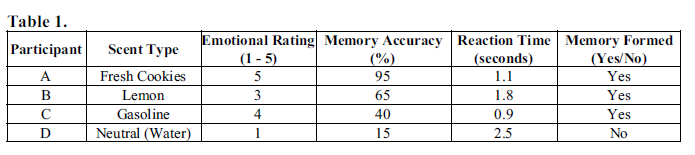
Graph of Information - Figure 1.
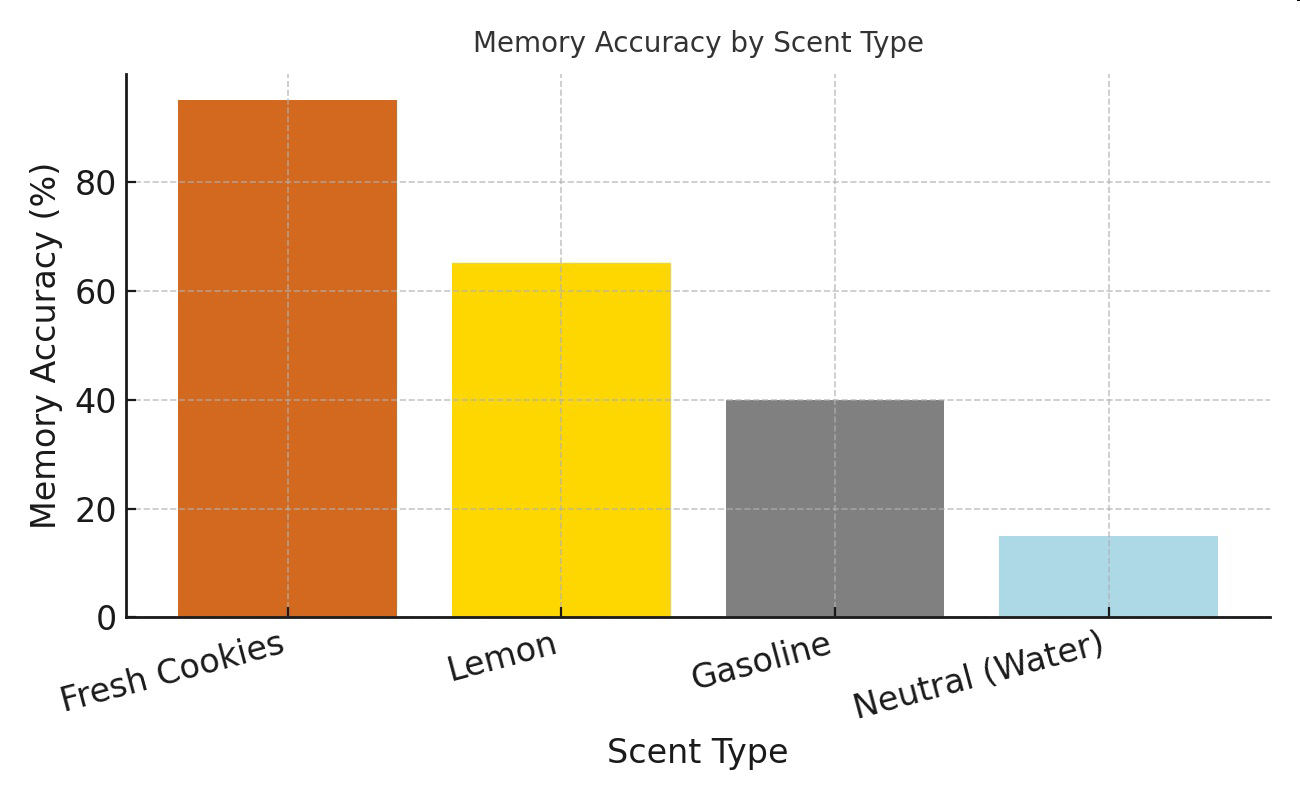
Figure 2.