Sweating and Temperature Regulation
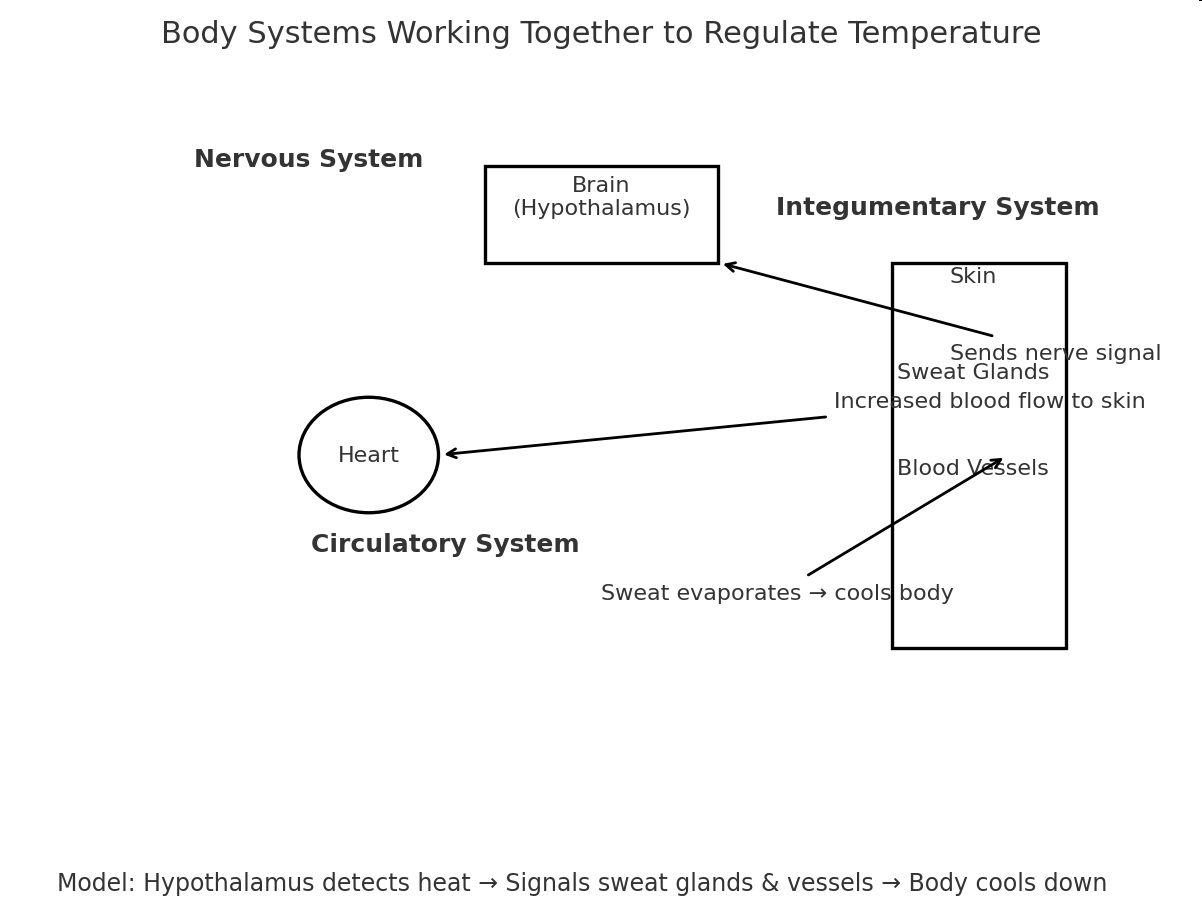
Human cells and tissues function best within a narrow temperature range. When your body temperature rises, sensors in the skin and in a part of the brain called the hypothalamus detect the change. The hypothalamus acts as a control center, sending signals to start cooling processes.
The nervous system triggers the sweat glands in the skin to produce sweat. As sweat evaporates from the surface, it removes heat from the body. Meanwhile, blood vessels near the skin widen (a process called vasodilation) to carry more warm blood from deeper tissues to the surface, where the heat can escape. This explains why your face turns red and feels warm when you exercise.
If the body cools too much, the hypothalamus sends different signals: blood vessels narrow (vasoconstriction) and sweat production stops, conserving heat. In this way, the body constantly balances heat production from muscle activity with heat loss through the skin and circulatory system - keeping your temperature stable even in changing environments.
These adjustments happen automatically and involve communication between cells, tissues, organs, and systems. Each part - sweat glands, blood vessels, and nerve cells - has a role, but together they maintain thermal homeostasis for the entire organism.
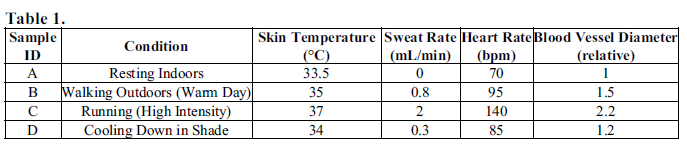
Graph of Information - Figure 1.
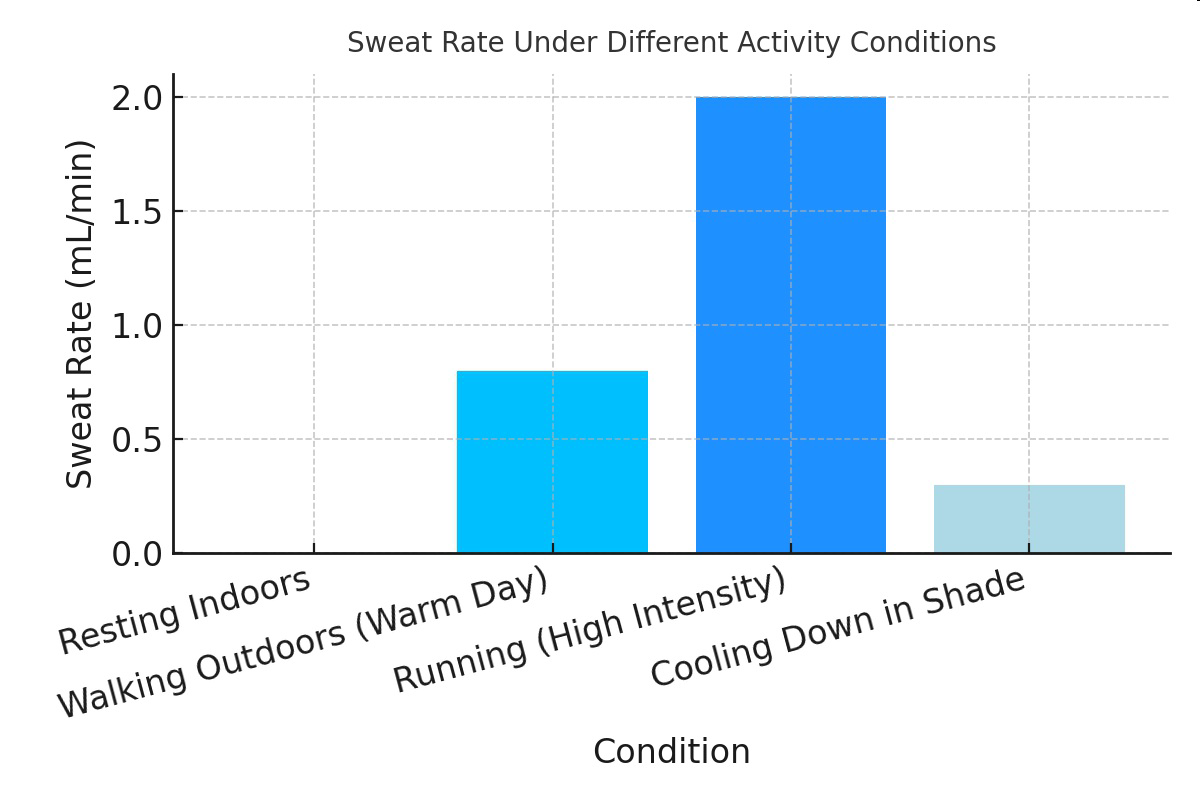
Figure 2.