White Blood Cells Attacking Bacteria
The human body relies on millions of white blood cells to defend against germs. Among them are macrophages and neutrophils, specialized cells designed to locate and destroy bacteria through a process called phagocytosis.
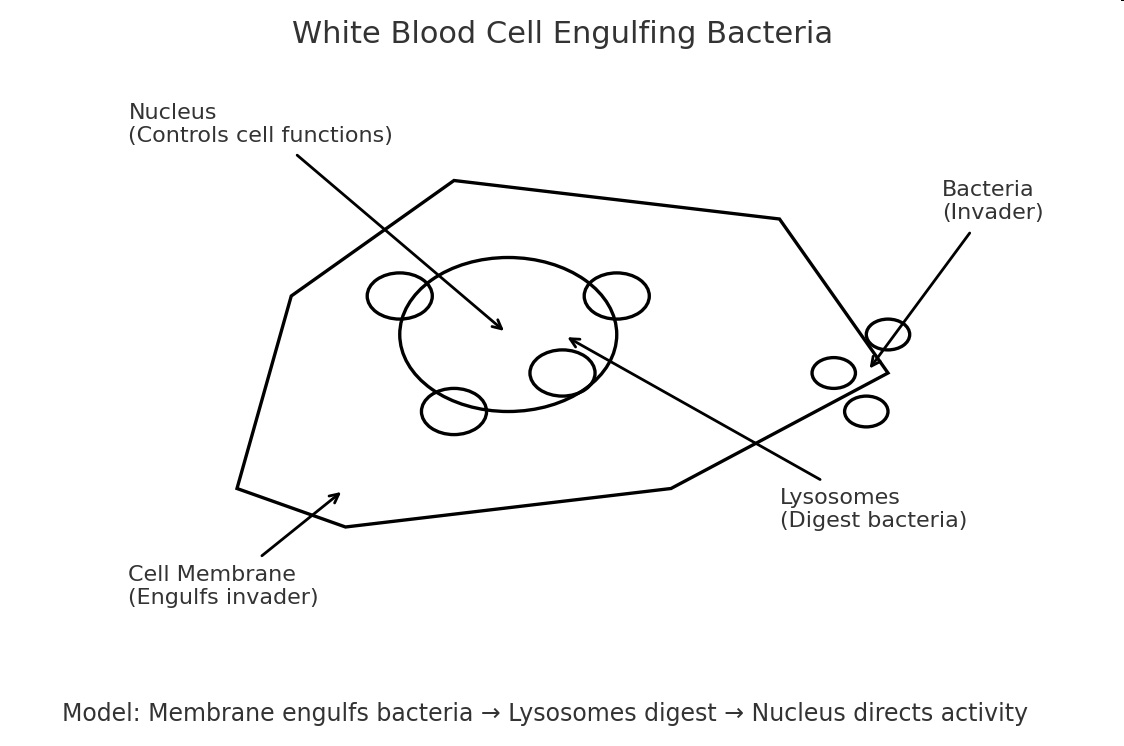
It begins when the cell membrane of a white blood cell detects a foreign particle. Receptor proteins on the membrane recognize specific molecules on the surface of the bacteria. The cell then surrounds the bacteria with its membrane, enclosing it in a small sac called a phagosome.
Once the bacteria are trapped inside, lysosomes - small organelles filled with digestive enzymes - fuse with the phagosome. The lysosomes release their enzymes, breaking down the bacteria into harmless materials that can be reused or discarded. Throughout this process, the nucleus directs the cell’s activities by regulating which enzymes are made and when to trigger an immune response.
The white blood cell also depends on mitochondria to provide energy for movement and digestion, while the cell membrane controls the exchange of materials to maintain internal balance.
This phenomenon shows that cell survival and body defense depend on organelles working together - much like a team - to recognize, capture, and destroy pathogens.
Table 1.
Sample ID | White Blood Cell Type | Bacteria Present | Phagocytosis Occurring | Lysosome Activity (enzyme level) | ATP Use (units/min) | Bacteria Destroyed (%) |
|---|
A | Resting Neutrophil | No | No | 10 | 2000 | 0 |
B | Activated Neutrophil | Yes | Yes | 85 | 8000 | 90 |
C | Macrophage | Yes | Yes | 95 | 10000 | 95 |
D | Mutant Cell (No Lysosomes) | Yes | No | 0 | 7000 | 5 |
Graph of Information - Figure 1.
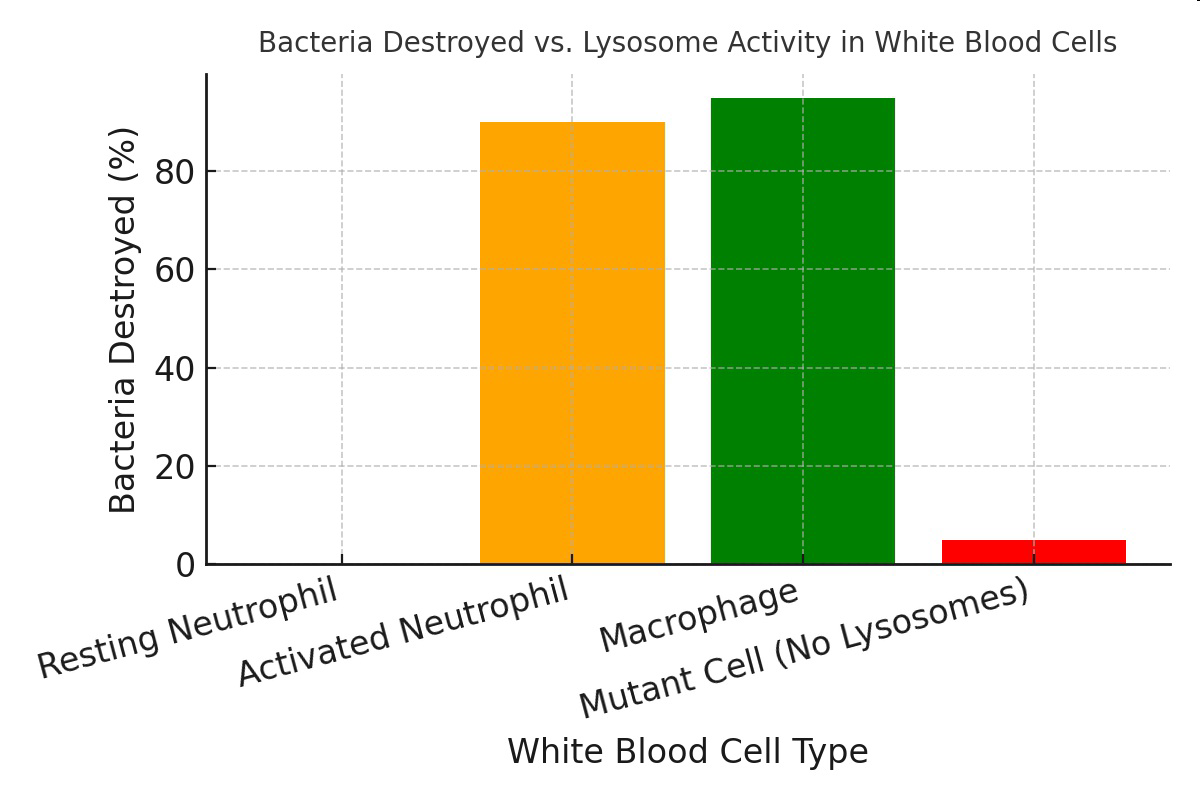
Figure 2.