Browning of a Cut Apple
Real-World Phenomenon
When an apple is cut and left exposed to air, the white surface slowly turns brown. This change does not happen immediately and does not occur on the inside of an uncut apple. Scientists collect data on properties before and after the apple interacts with air to determine whether browning is a chemical reaction.
Diagram 1.
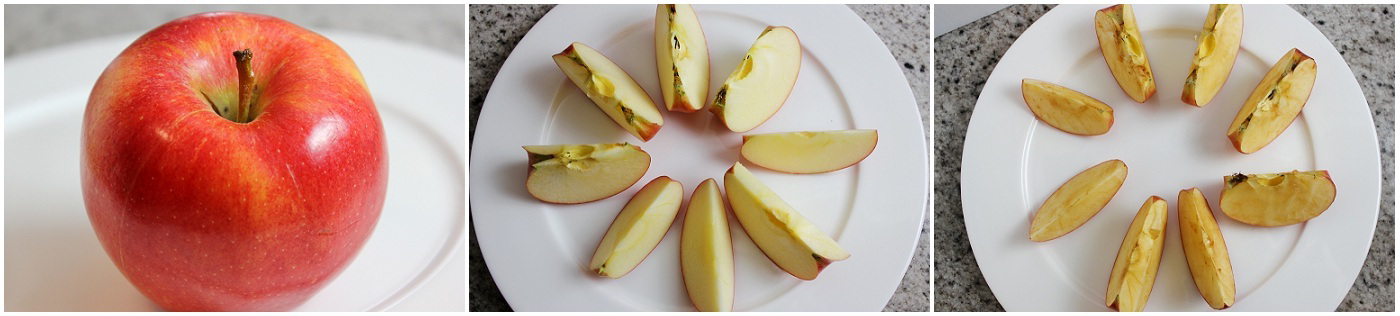
Source: https://www.decodingdelicious.com/why-apples-turn-brown/
When substances interact, scientists determine whether a physical change or a chemical reaction has occurred by analyzing changes in properties. In a physical change, the substance remains the same even if its form changes. In a chemical reaction, new substances form and properties change in ways that are not easily reversed.
Apple browning happens when the inside of an apple is exposed to oxygen in the air. The apple contains enzymes that react with oxygen, causing chemical reactions that produce new substances called oxidized compounds. These new substances cause the apple’s surface to turn brown.
Scientists look for evidence of chemical reactions by comparing properties before and after interaction. In apple browning, important properties include color, mass, and surface appearance. The color of the apple changes from light white to brown over time. This change happens even if the apple is not heated or mixed with another visible substance.
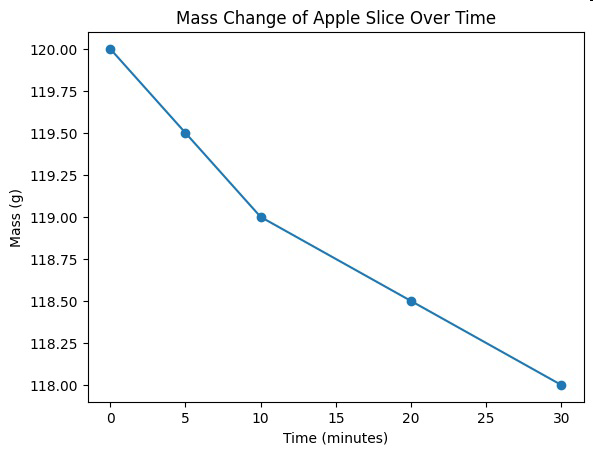
Although the mass of the apple may change slightly due to moisture loss, the most important evidence is the formation of new substances on the apple’s surface. The brown color cannot be reversed by simply reshaping or separating the apple. This indicates that a chemical change has occurred rather than a physical one.
By collecting data over time and analyzing changes in properties, students can determine that apple browning is a chemical reaction caused by the interaction between substances in the apple and oxygen in the air.
Diagram 2. Maybe something to try?
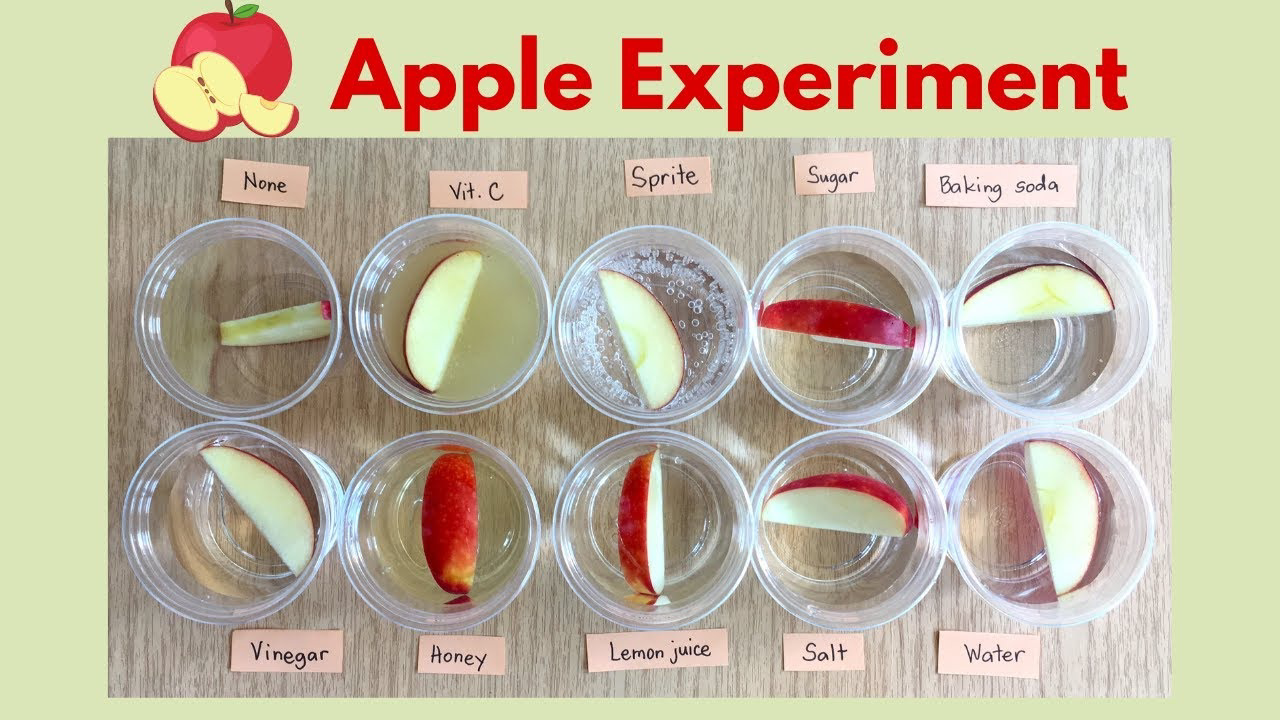
Source: https://www.youtube.com/watch?v=36K4EiupQzo
Table 1.
Time (minutes) | Browning Level (0 - 5) | Mass (g) |
|---|
0 | 0 | 120 |
5 | 1 | 119.5 |
10 | 2 | 119 |
20 | 3 | 118.5 |
30 | 4 | 118 |
Graph of Information - Figure 1.
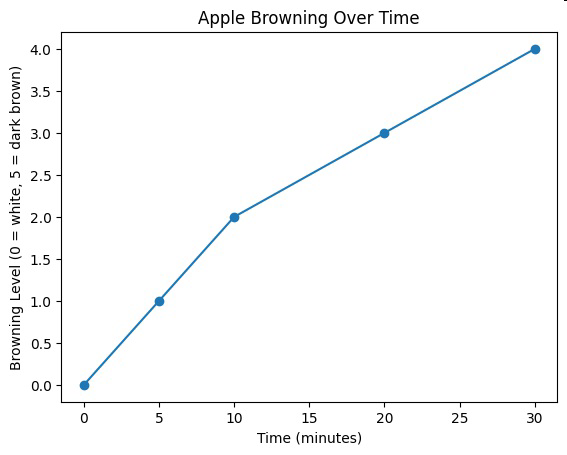
Graph of Information - Figure 2.