1 BIO - EOC - Organization for Matter and Energy Flow in Organisms
star
star
star
star
star
Last updated 6 months ago
7 Nsɛmmisa
Humans produce eleven of the twenty amino acids needed for life. The nine amino acids humans cannot produce are called essential amino acids, and they must be obtained from foods. Foods that contain all nine essential amino acids are called complete proteins and include beef, poultry, fish, eggs, dairy, quinoa, soy, and buckwheat. Foods that contain some of the essential amino acids are called incomplete proteins and include nuts, seeds, beans, and some grains.
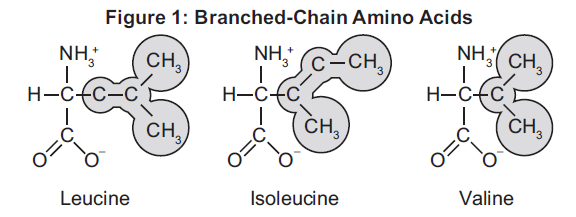
Of the amino acids humans must get from food, three are vital to muscle energy: leucine, isoleucine, and valine. These amino acids are known as branched-chain amino acids, or BCAAs. Benefits of BCAAs include increased muscle growth, decreased muscle soreness, decreased exercise fatigue, and decreased muscle loss. Figure 1 shows the three BCAAs. These amino acids show the elements found in all amino acids. However, some amino acids contain sulfur as well.
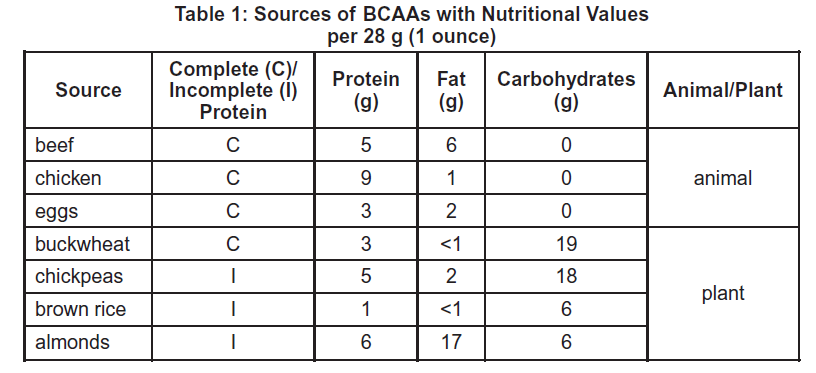
Athletes particularly need BCAAs, and many eat an omnivorous diet of plants, grains, and animal protein to get their complete amino acids. However, some athletes eat a vegan diet that excludes animal proteins in favor of plant-based proteins. Table 1 shows some sources of BCAAs which contain all or some of the nine essential amino acids.
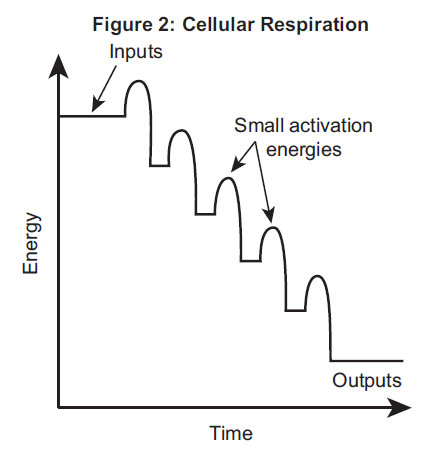
 A model of the series of energy activation steps in cellular respiration is shown in Figure 2.
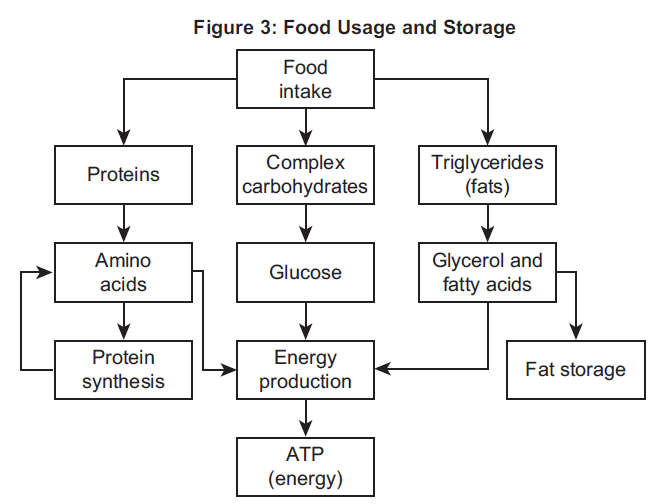
 When humans eat food, it goes through different chemical processes depending on the type of nutrients contained in the food. Figure 3 shows a simplified model for how food is used or stored by the human body.
 One common carbohydrate is sucrose, or table sugar. Figure 4 shows what happens to sucrose when it is broken down into glucose and fructose in the human body. Sucrose, glucose, and fructose are all types of sugars that can be used as energy sources.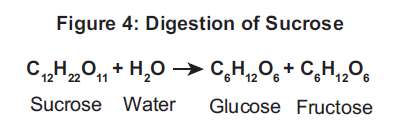
A runner makes a claim: Eating carbohydrates such as brown rice before races will improve performance. What is in brown rice that supports this claim?
Amino acids can be different structurally, but they have similar elements present in them.
Using information from the source, add a check mark for each element in one of the columns in the table to classify it as Always Present, May Be Present, or Never Present in amino acids.
Carbon (C)
Oxygen (O)
Hydrogen (H)
Nitrogen (N)
Sulfur (S)
Sodium (Na)
Always Present
May Be Present
Never Present
Vegan athletes do not eat any animal products, but they are still able to obtain the nutrients they need to build muscle.
Using information from Table 1, explain how vegan athletes can use plant-based food sources to obtain the needed nutrients for building muscle.
Enter the answer in the box.
Based on Figures 2 and 3, how is energy transferred during cellular respiration?
Select all that apply.
During exercise, athletes often consume sports drinks that contain sugar. Why would athletes consume these drinks rather than a sugar-free drink?
Select all that apply.
Which claim about glucose, sucrose, and fructose can be supported by information in the source?
A student claims that when sucrose is digested, carbon dioxide is released to the environment.
Using Figure 4, explain whether the claim is supported or unsupported.
Enter the answer in the box.