5 BIO - EOC - Heredity: Inheritance & Variation of Traits
star
star
star
star
star
Last updated 6 months ago
7 Nsɛmmisa
A shortened tail, called a bobtail, is a phenotype that can be preferred for some hunting and working dog breeds such as the corgi. It lowers the risk of a tail injury when working around livestock, fences, and machinery. Achieving the bobtail length used to be done by physically shortening corgis’ tails; however, now this shortened tail can occur naturally due to selective breeding.
Figure 1: Long-Tailed and Bobtailed Corgis
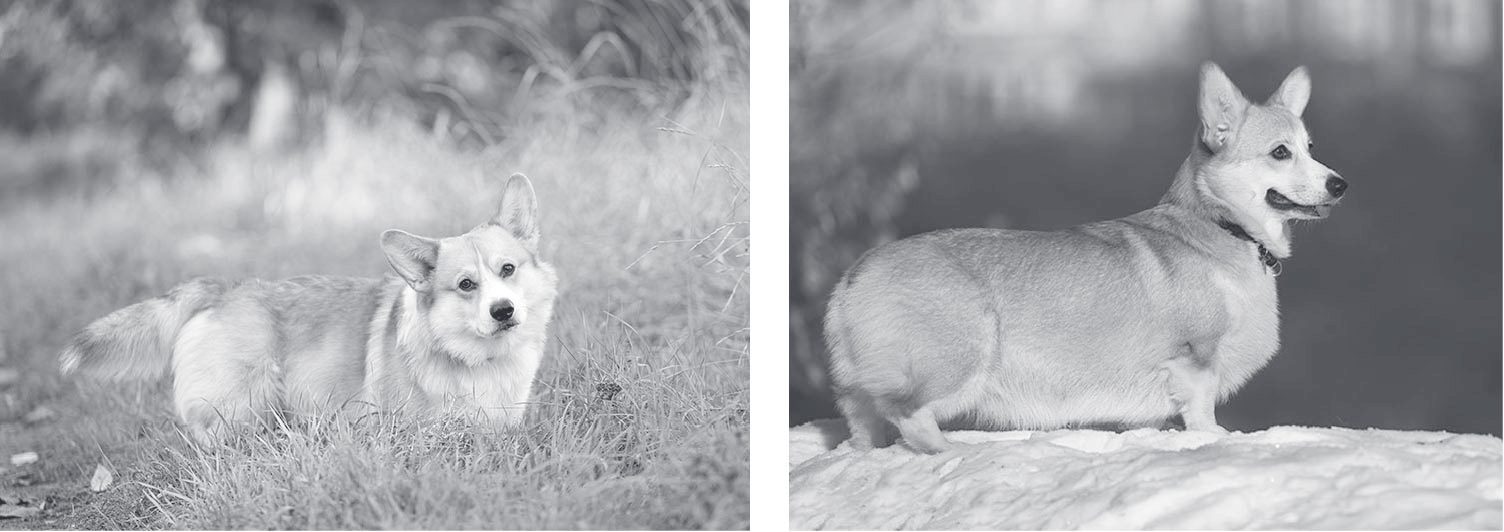
Long-Tailed Corgi (left) and Bobtailed Corgi (right)
The bobtail phenotype can be caused by a natural mutation in the T-gene, which can cause dogs to develop fewer vertebrae while in the embryonic state. A comparison of the amino acid sequences in both the long-tail and bobtail T-gene is shown.
Amino Acid Sequences
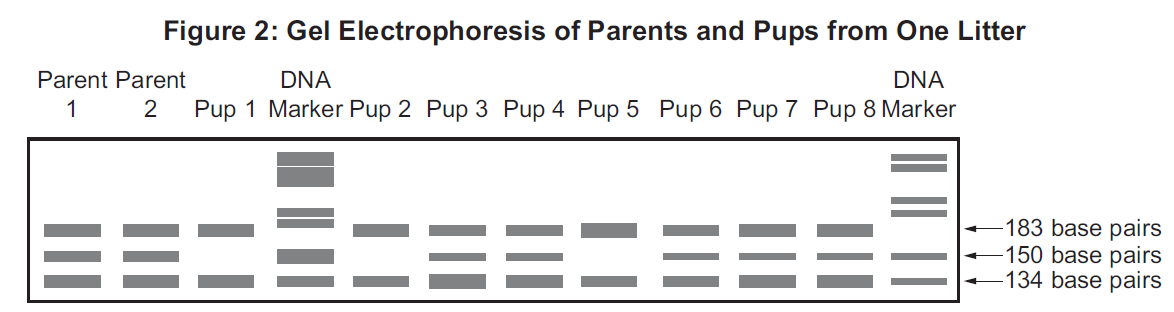
 This mutation can be seen when studying gel electrophoresis data. Long-tailed dogs show two DNA fragments at 183 and 134 base pairs. Bobtailed dogs show 3 DNA fragments at 183, 150, and 134 base pairs. Figure 2 shows an electrophoresis DNA marker comparison of 2 parent corgis and their 8 pups.
When studying the genetics of 315 corgis, all the long-tailed corgis (182) were found to be homozygous dominant
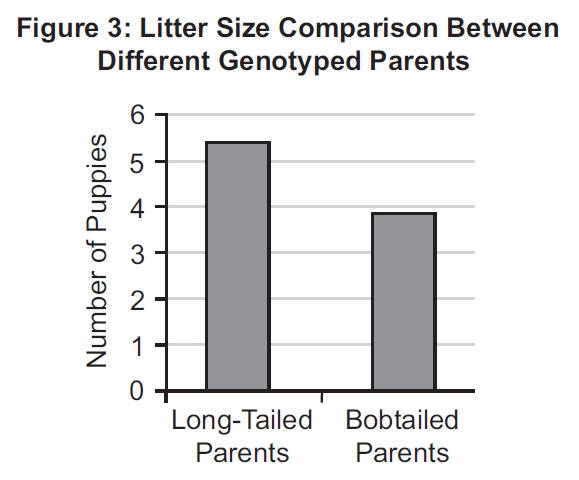
Figure 3 compares litter sizes when both parents are homozygous (long-tailed) versus when both parents are heterozygous (bobtailed).
Which model in the source illustrates the mutation that gives some corgis bobtails?
Based on Figure 2, what was the ratio of long-tailed corgis to bobtailed corgis from the litter?
What caused the difference in the amino acid sequence between the long-tailed and bobtailed corgis?
Analyze the Amino Acid Sequences comparison. How is the amino acid sequence different between the long-tailed T-gene and the bobtailed T-gene?
What would be the expected phenotypic outcome of a cross between a long-tailed corgi and a bobtailed corgi?
When studying the genetics of 315 corgis, 182 were
Based on Figure 2, complete the pedigree to show the inheritance of traits in the litter of pups 1 through 8 as shown. An unshaded circle represents a homozygous dominant genotype, a partially shaded circle represents a heterozygous genotype, and a completely shaded circle represents a recessive genotype.