6 BIO - EOC - Heredity
star
star
star
star
star
Last updated 6 months ago
8 Nsɛmmisa
Aphids are small insects that suck the sap (sugar-water) from plant leaves and stems. They are a successful plant pest because they can switch from asexual to sexual reproduction to adapt to environmental changes.
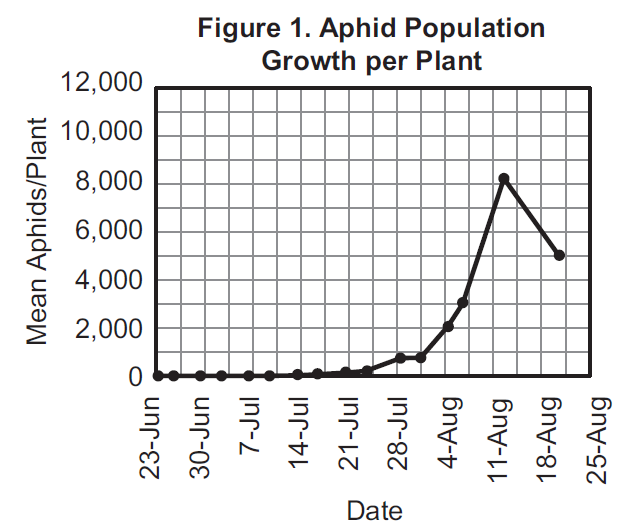
In March, the first females hatch from eggs. During this time, when temperatures and conditions are stable, the females reproduce asexually for 10–30 generations. Figure 1 shows aphid population growth per plant during summer conditions.
In late September, the temperatures drop and there is a decrease in available daylight hours. Aphids undergo a single round of sexual reproduction to produce fertilized eggs to prepare for stressful winter conditions. This switch between asexual and sexual reproduction has many advantages to the aphid population.
The climate in Europe, which includes France and Romania, is changing due to increased emission of greenhouse gases. The changes include increased average temperatures and changes to local growing seasons and conditions. These changes impact the nutrition, reproduction patterns, and overall size of aphid populations. Diseases such as those caused by bacteria can be additional stressors on aphid populations.
A study in Europe compared the genetic diversity of aphid populations in Romania and France. Romania has very harsh winters, while France has mild winters. Figure 2 shows the results of this study.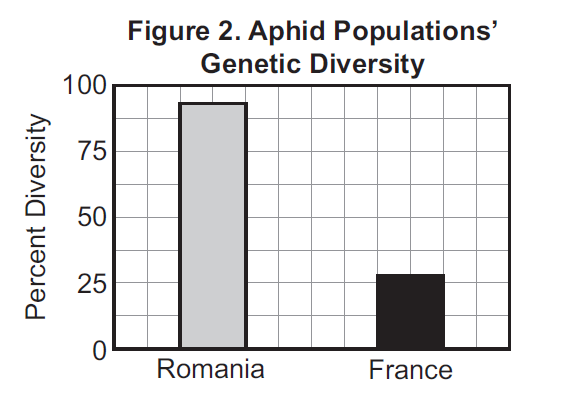
Which statement is best supported by the source and Figure 1?
Based on the information in the source, what is the most likely effect of climate change on aphid populations in Europe?
In Figure 1, which factors could be causes of the observed change in the population after August 11?
Select all that apply.
The model illustrates one of the reproductive processes of aphids.
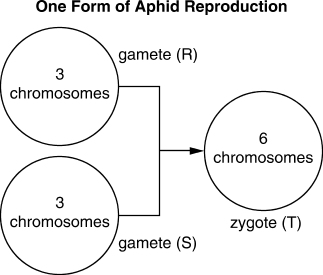
Which statements describe the process? Select all that apply.
Part A: Describe how aphids benefit from reproducing asexually.
Part B: Describe how aphids benefit from reproducing sexually.
Identify which type of aphid reproduction would be most beneficial for each environmental condition.
warmer temperatures
stable conditions
disease in aphid population
Asexual reproduction
Sexual reproduction
The winters in Romania are colder and longer than in France, which leads to more reproduction and genetic diversity.