9 EOC - BIO - Human Impacts on Earth's Systems
star
star
star
star
star
Last updated 6 months ago
8 Nsɛmmisa
Coral reefs are among the most diverse ecosystems on Earth. Over a million ocean species rely on coral reefs for habitats, to find food, to reproduce, and to shelter their young. These ecosystems are threatened by natural events such as storms, predators, and diseases. A wide variety of human activities, ranging from coastal development to overfishing, have also endangered the health of coral reef ecosystems.
One such activity is blast fishing. Blast fishing uses dynamite to quickly harvest many fish, but it instantly destroys large areas of coral reefs. Coastal development that leads to excess human activity in the same waters where reefs are found can also stress coral species. Stress in coral leads to coral bleaching, in which corals appear to turn white as described in Figure 1.
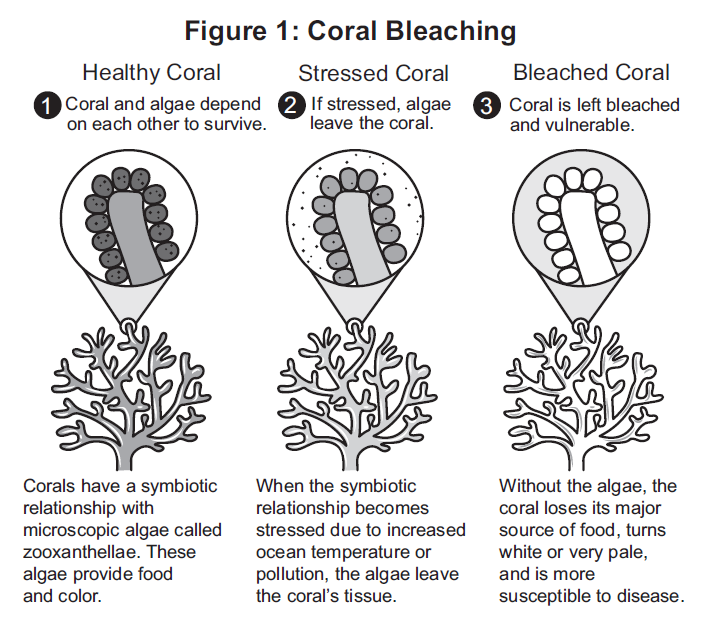 Coral can return to health if stressors are no longer present. However, if the stress event continues, corals will eventually die, and only their skeletons will remain. Rising water temperatures contribute to coral stress. Ocean temperatures correlate to global surface temperatures. Since the 1960s, both global surface temperatures and the amount of carbon dioxide, a greenhouse gas, in Earth’s atmosphere have steadily increased, as shown in Figure 2.
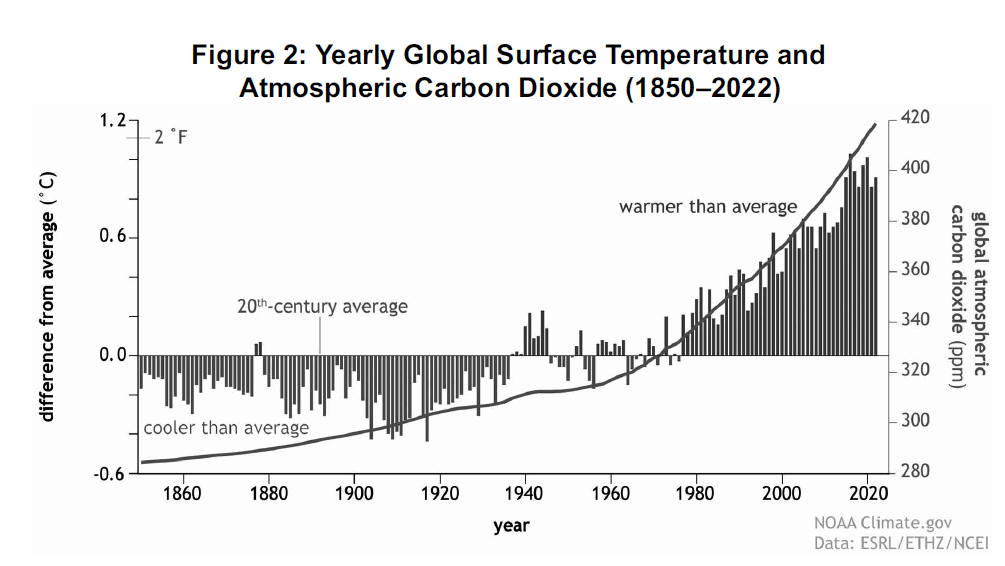
Greenhouse gases are part of Earth’s atmosphere. A greenhouse effect occurs when heat is trapped near Earth’s surface by these gases. Human activities, primarily the burning of fossil fuels, release excess carbon dioxide into the atmosphere. Excess carbon dioxide also impacts Earth’s hydrosphere by increasing the acidity of ocean water. Both acidification and increased water temperature are stressors that can lead to coral bleaching.
Scientists from all over the world are working to develop technologies that use natural coral reproduction processes to restore stability to damaged coral reef populations. In Florida, a group of scientists grow healthy coral in the lab, then break the coral into small pieces called micro-fragments. The micro-fragments are spread over large areas of coral skeletons, where they quickly grow to create a healthy layer of living coral. Coral can naturally reproduce through fragmentation methods. This is shown in Figure 3 as Process 2.
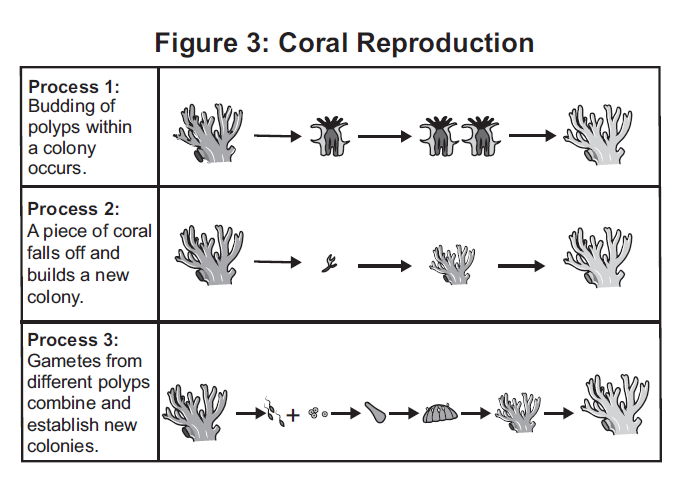 A group of scientists from the Philippines are prompting lab-grown coral to release gametes that combine to produce coral larvae. The larvae are taken to the ocean and released into large areas of coral skeletons, where they settle and grow to maturity. This type of reproduction is also shown in Figure 3 as Process 3.
Scientists from Hawaii found that slight ocean temperature increases caused only some coral in populations to bleach. These scientists bring the surviving coral back to the lab to breed with other surviving coral of the same species. The larvae produced in the lab are released into the ocean to grow to maturity.
Based on Figure 1, a mutualistic relationship exists between the algae and the coral. If the algae are expelled from the coral, what effect does this have on the carrying capacity of the ecosystem?
Describe the effects of burning fossil fuels on some of Earth’s spheres and organisms.
Select the words describing these effects to correctly complete the sentences.
Human activities such as burning fossil fuels have atmospheric carbon dioxide. This has led to global surface temperatures.
Because of these changes, ocean water temperatures have , which has led to biodiversity in coral reef ecosystems.
Compare and contrast the ways that coral can reproduce as shown in Figure 3.
Classify each process as asexual reproduction or sexual reproduction.
Process 1
Process 2
Process 3
Asexual Reproduction
Sexual Reproduction
Analyze the information in Figure 3.
Indicate whether each process involves meiosis or does not involve meiosis.
Process 1
Process 2
Process 3
Involves Meiosis
Does Not Involve Meiosis
Add a check mark in each column to create a model that illustrates the inputs and outputs of the algae as they perform photosynthesis.
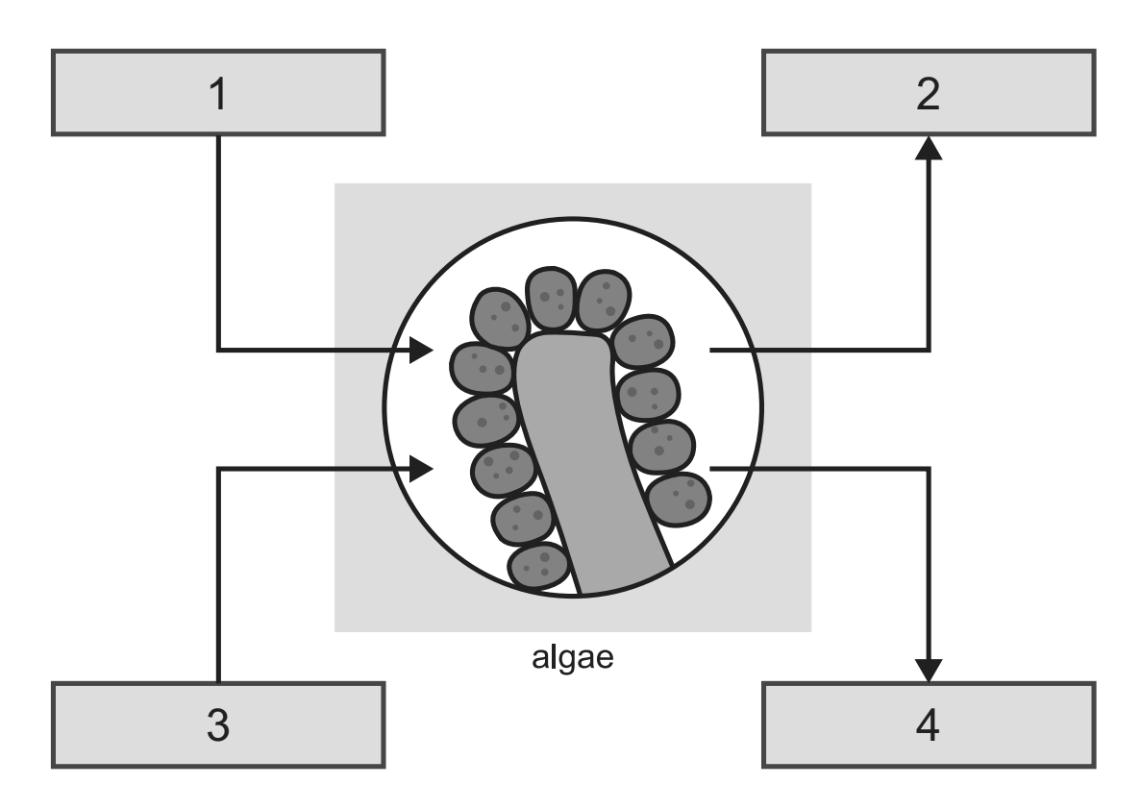
Carbon dioxide
Water
Oxygen
Glucose
Inputs to algae during photosynthesis
Outputs from algae during photosynthesis
Coral has the ability to reproduce in a variety of ways. Analyze Figure 3. Which reproductive process would increase genetic variation in a coral population?
Add one check mark in each row to predict how each human activity will most likely impact the coral population.
restricting house building on beaches of reef zones
distributing coral micro-fragments over coral skeletons
developing new blast fishing technology
Coral Population Increase
Coral Population Decrease
Explain why the procedure used by the scientists in Hawaii would create a more stable population of coral if greenhouse gases continue to increase.
Enter the answer in the box.
