Heating Sugar
Diagram 1.
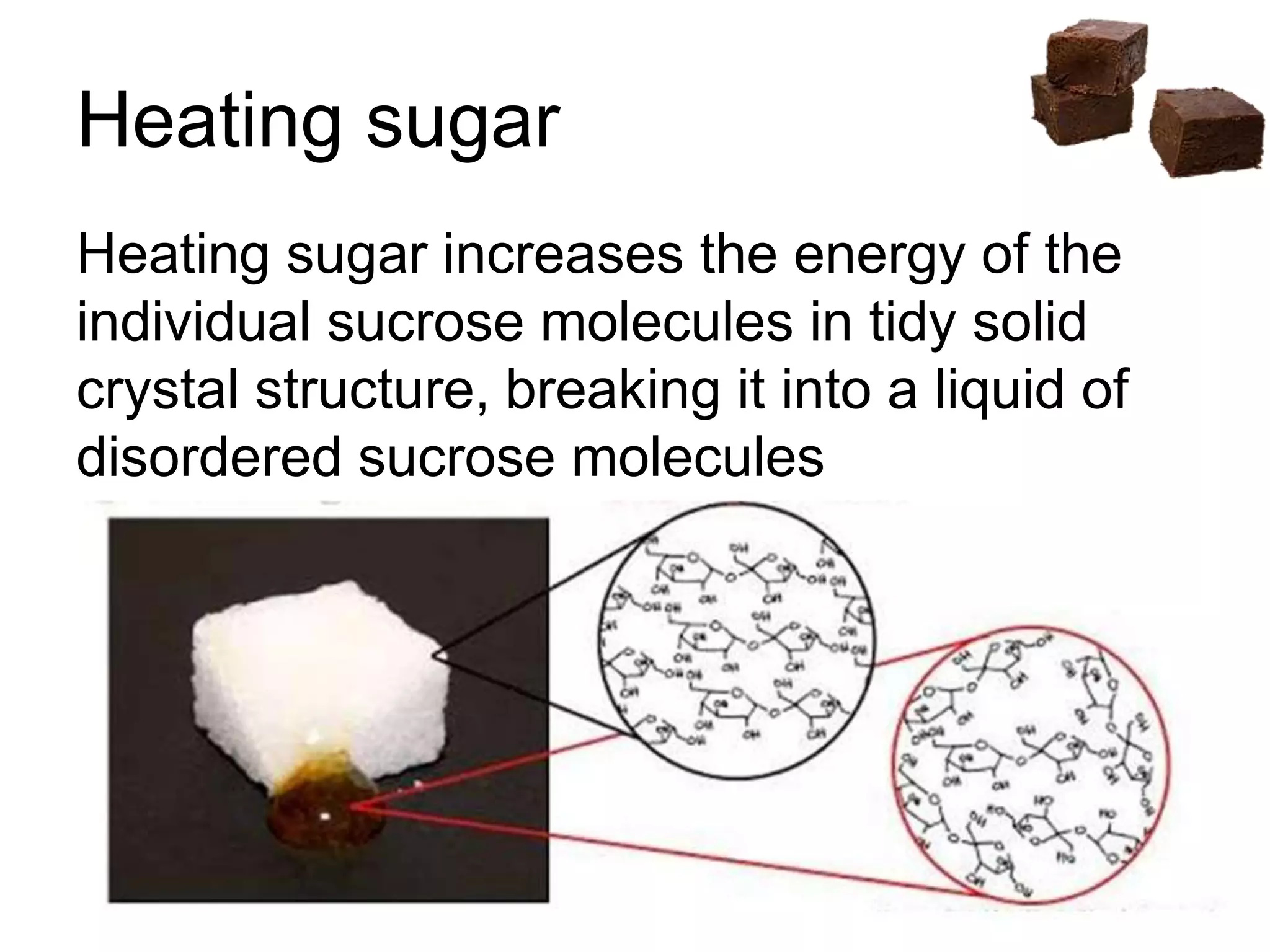
Source: https://www.slideshare.net/slideshow/fudges-characteristic-features-and-principles/86529271
Real-World Phenomenon
When sugar is heated in a pan, it first melts into a clear liquid. With continued heating, the liquid turns brown, produces a strong smell, and eventually becomes black and sticky. The substance after heating looks very different from the original sugar. Scientists analyze data on properties before and after heating to determine whether a chemical reaction has occurred.
Changes in matter can be physical changes or chemical reactions. In a physical change, the substance remains the same even though its form changes. For example, when ice melts, it becomes liquid water, but the substance is still water. In a chemical reaction, new substances form with different properties.
Sugar is a solid substance made of specific molecules. When sugar is gently heated, it melts into a liquid. At this stage, the sugar is still the same substance, just in a different physical state. However, when heating continues, the sugar begins to turn brown and produces a strong smell. This process is called caramelization.
During caramelization, the sugar molecules break apart and rearrange into new substances. These new substances have different colors, smells, and chemical properties than the original sugar. The changes cannot be reversed by cooling the substance back into a solid.
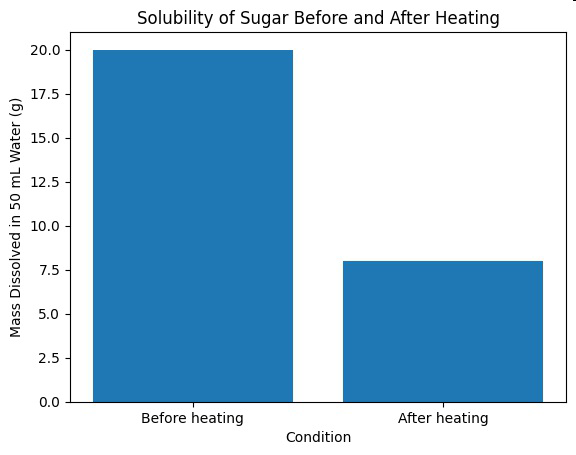
Scientists can collect evidence by measuring properties before and after heating. Important properties include color, mass, odor, and solubility in water. Heated sugar often has a lower mass because gases are released, and it may no longer dissolve the same way in water. These changes indicate that new substances have formed.
By analyzing data on these property changes, students can determine that heating sugar beyond melting causes a chemical reaction, not just a physical change.
Table 1.
Property | Before Heating | After Heating |
|---|
Mass (g) | 20 | 17 |
Color | White crystals | Brown/black sticky |
Solubility in 50 mL water (g dissolved) | 20 | 8 |
Graph of Information - Figure 1.
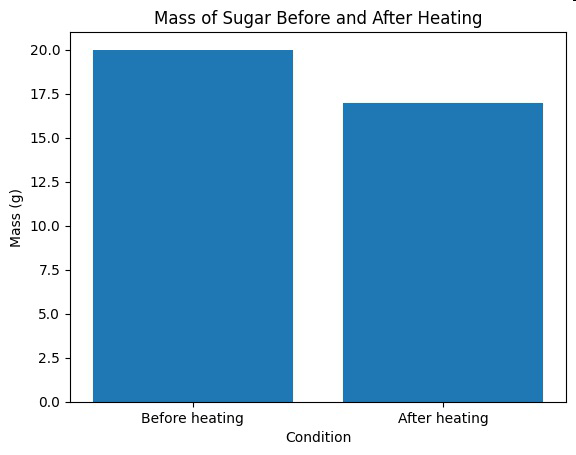
Graph of Information - Figure 2.