Heating Sugar in a Closed System
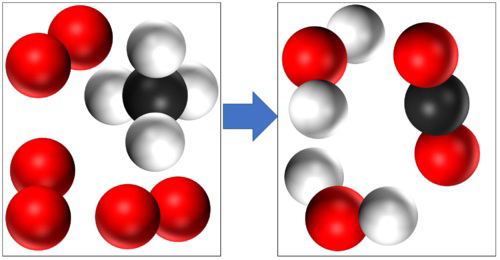
Diagram 1. Conservation of Mass with a Rearrangement of Atoms
Source: https://keystagewiki.com/index.php/Chemical_Reaction
Real-World Phenomenon
When sugar is heated in an open pan, it turns brown, produces a strong smell, and may leave a darker residue. It can also seem like “some mass is lost.” But when the same heating happens in a sealed (closed) container, the sugar still changes appearance, yet the total mass of the sealed system stays the same. Scientists use models of atoms and mass data to explain why mass is conserved even when substances change.
In a chemical reaction, atoms are not created or destroyed. Instead, atoms rearrange to form new substances. Because atoms have mass, conserving atoms means the total mass is conserved. However, whether mass appears to change depends on whether the system is open or closed.
Sugar can undergo both physical and chemical changes when heated. If sugar is gently heated, it can melt. Melting is a physical change because the sugar molecules stay the same, just changing state. With stronger or longer heating, sugar can change color, produce new odors, and form new materials. These changes are evidence that new substances have formed, meaning a chemical reaction occurred.
In an open system, gases produced during heating can escape into the air. If students measure only what remains in the container, it may look like mass decreased. That does not mean mass disappeared. It means part of the matter left the measured system as gas.
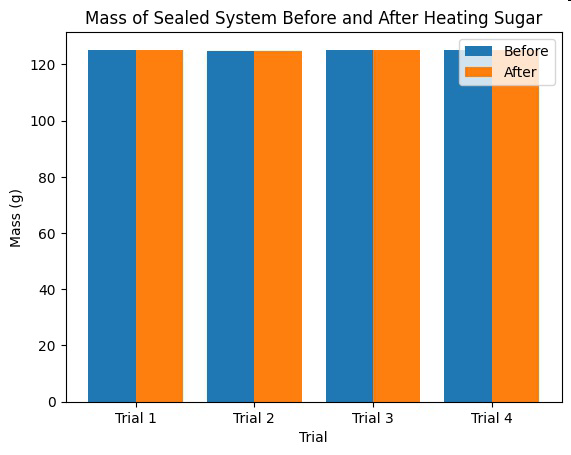
In a closed system, gases cannot escape. Even if sugar changes into different substances, all atoms remain inside the sealed container. When mass is measured before and after heating in a closed system, the total mass stays the same. This provides evidence for conservation of mass.
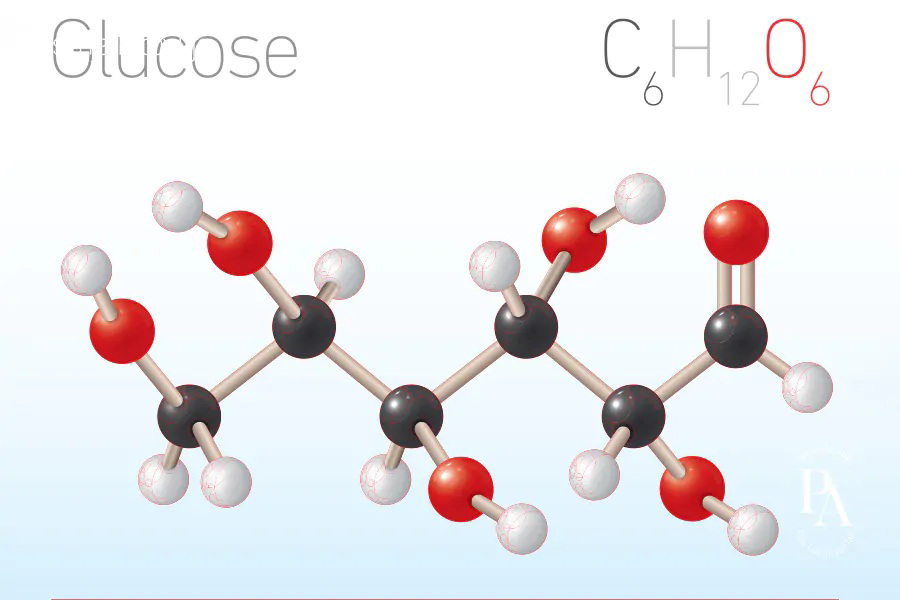
A model of atoms supports this conclusion. Before heating, atoms are arranged in sugar molecules. During heating, those same atoms rearrange into new substances, including gases and solids. The atoms are still present, just in different arrangements. When the system is closed, the total number of atoms (and therefore total mass) remains constant.
Diagram 2.
Source: https://www.allthescience.org/what-is-a-glucose-assay.htm
Table 1.
Trial | Mass Before Heating (g) | Appearance Before | Mass After Heating (g) | Appearance After |
|---|
Trial 1 | 125 | White crystals | 125 | Brown/darker residue |
Trial 2 | 124.8 | White crystals | 124.8 | Brown/darker residue |
Trial 3 | 125.2 | White crystals | 125.2 | Brown/darker residue |
Trial 4 | 125.1 | White crystals | 125.1 | Brown/darker residue |
Graph of Information - Figure 1.