A Wire Heating Up When Electric Current Flows
Real-World Phenomenon
A metal wire in a circuit feels slightly warm when a small electric current flows through it. When the current is increased, the wire becomes noticeably warmer over the same amount of time.
Diagram 1.
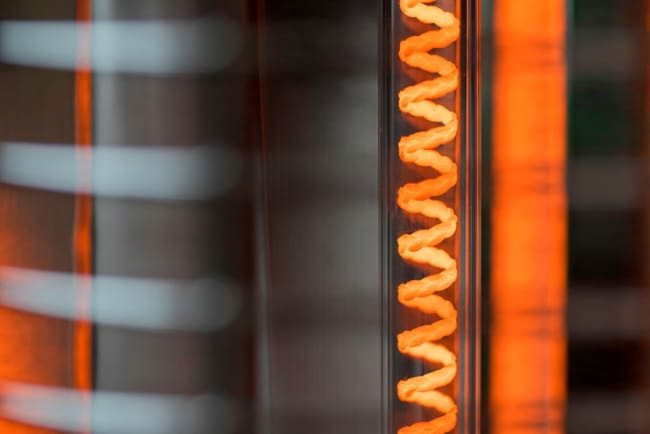
Source: https://www.scottprecisionwire.com/how-does-a-heating-coil-system-work/
Electric current is the flow of electric charges through a conductor, such as a metal wire. When these charges move through the wire, they collide with atoms in the metal. These collisions transfer energy from the moving charges to the atoms, increasing the wire’s thermal energy.
This transfer of energy occurs because the wire has resistance, which slows the movement of charges. As a result, some of the electrical energy carried by the current is transformed into thermal energy. This process causes the wire to heat up.
When the current in the wire increases, more charges pass through the wire each second. This means that more energy is transferred to the wire in the same amount of time. As a result, the temperature of the wire increases more when the current is higher.
In this investigation, the wire and its surroundings make up the system. When electric current flows, energy is transferred from the power source to the wire through the electric current. The increase in the wire’s temperature provides observable evidence that energy is being transferred.
The energy does not disappear. Instead, electrical energy is transformed into thermal energy in the wire and then transferred to the surrounding air. This phenomenon shows that electric currents can transfer energy and can cause measurable changes in a system.
Table 1.
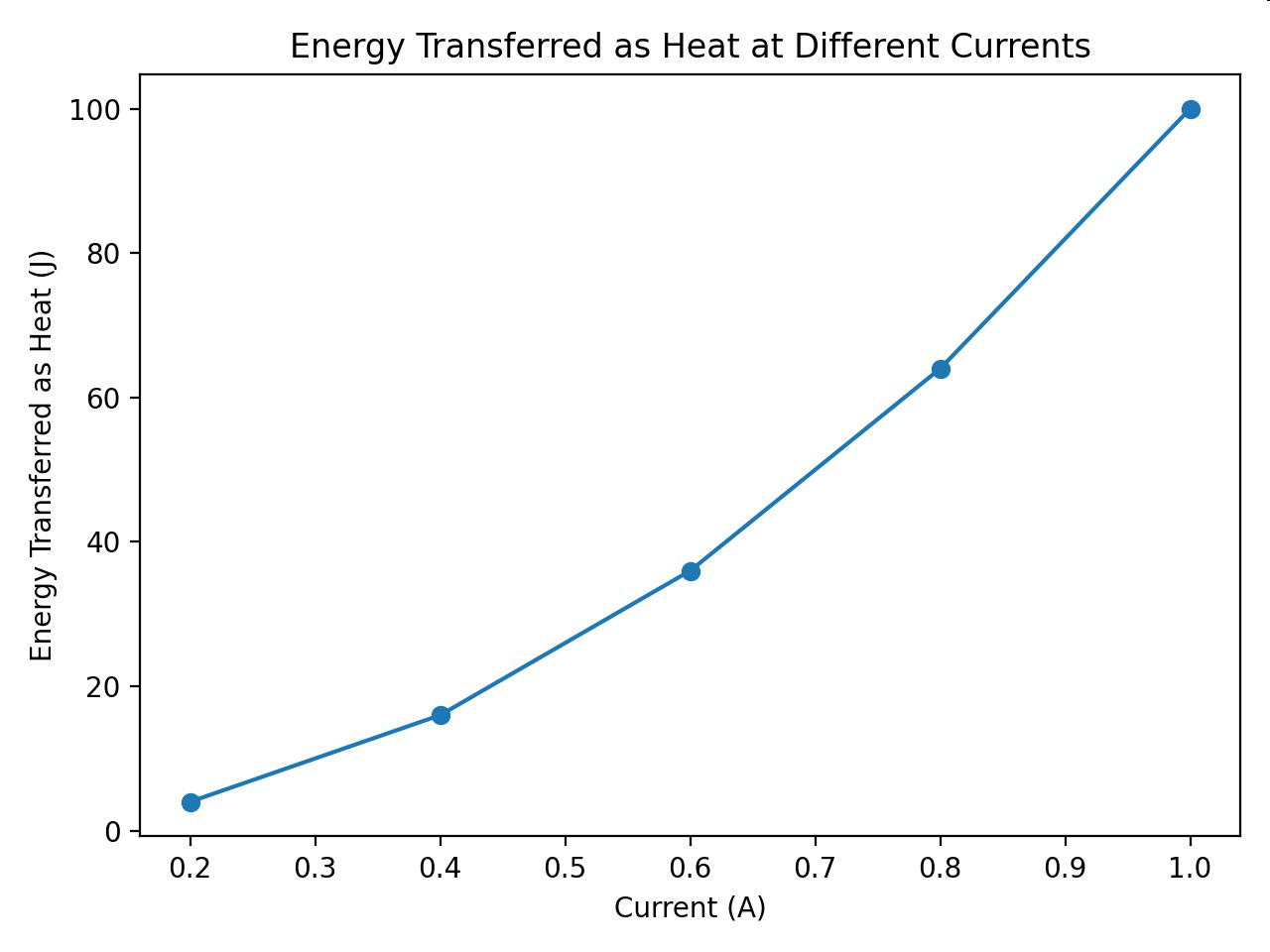
Current (A) | Resistance of Wire (ohms) | Temperature Increase of Wire (ºC) | Energy Transferred as Heat (J) |
|---|
0.2 | 10 | 3 | 4 |
0.4 | 10 | 8 | 16 |
0.6 | 10 | 15 | 36 |
0.8 | 10 | 25 | 64 |
1 | 10 | 38 | 100 |
Graph of Information - Figure 1.
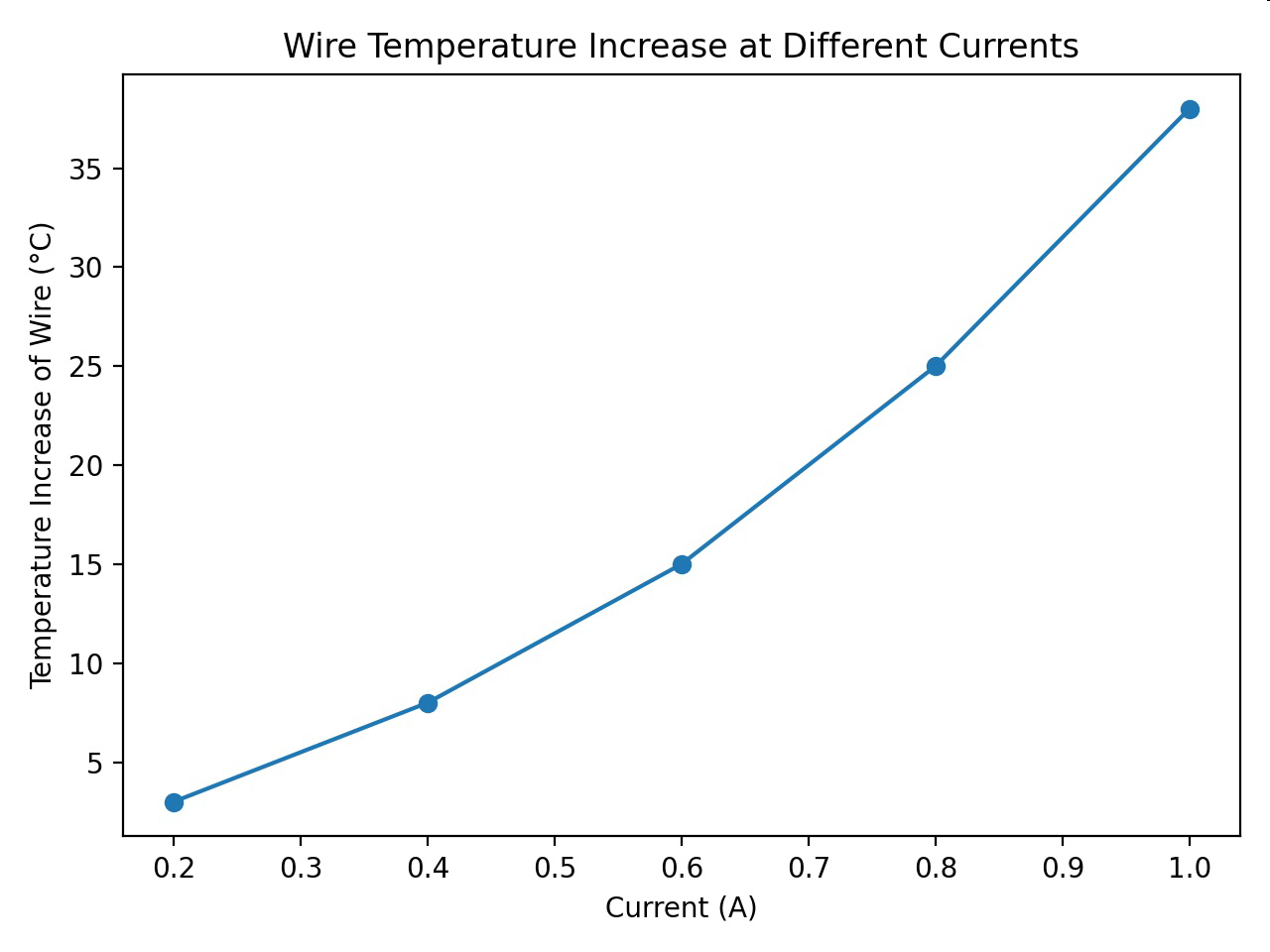
Graph of Information - Figure 2.