Gravitational Potential Energy on a Ramp
Diagram 1.
Source: https://www.fity.club/lists/suggestions/potential/
Real-World Phenomenon
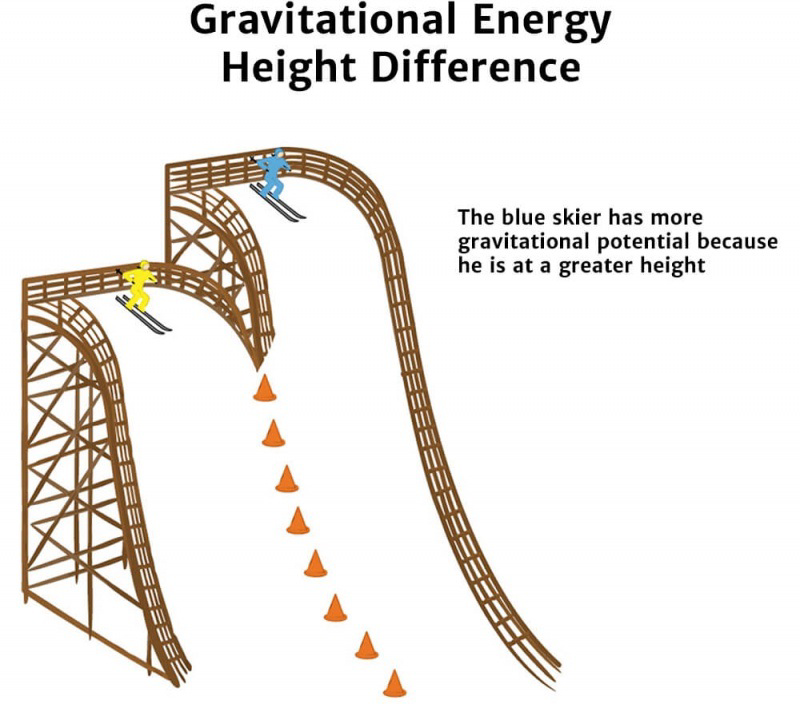
A cart held higher on a ramp stores more energy than the same cart held lower. When released, the higher cart speeds up more, showing that more potential energy was stored due to its arrangement relative to Earth.
Energy can be stored in a system based on how objects are arranged, even when nothing is moving. This stored energy is called potential energy. In systems where objects interact at a distance, changing the arrangement of those objects changes how much potential energy is stored.
In a ramp system, a cart and Earth interact through gravity. Gravity is a force that acts at a distance, meaning the cart does not need to be touching Earth for the interaction to occur. When the cart is placed higher on the ramp, the distance between the cart and Earth’s center increases slightly. This change in arrangement stores more gravitational potential energy in the system.
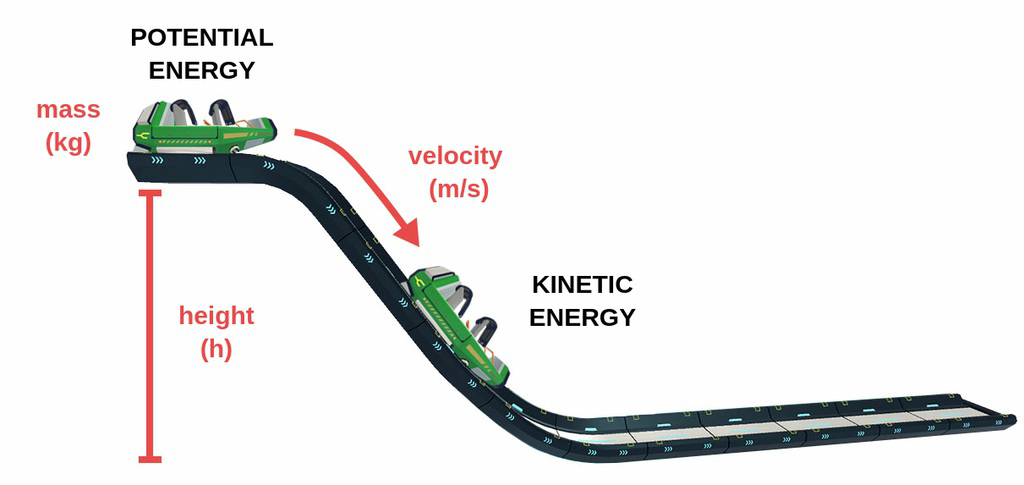
When the cart is held still at the top of the ramp, it is not moving, but energy is still present in the system. This stored energy can later be transferred into motion when the cart is released. A cart released from a higher position gains more speed by the bottom of the ramp than a cart released from a lower position. This difference in motion provides evidence that different amounts of potential energy were stored before the cart was released.
Diagram 2.
Source: https://theory.labster.com/potential_energy/
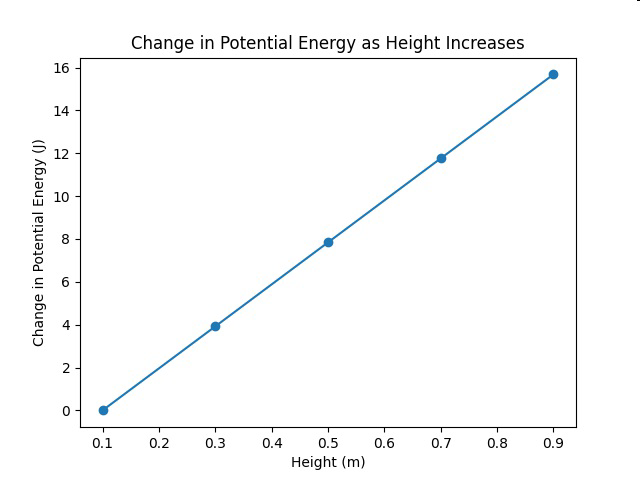
To study this relationship, scientists measure the height of the cart on the ramp and calculate the gravitational potential energy at each height. When these values are graphed, a clear pattern appears: as height increases, gravitational potential energy increases.
In this investigation, a model using data tables and graphs helps describe how height affects gravitational potential energy. The model shows that when the arrangement changes by raising the cart higher, the system stores more energy.
Table 1.
Cart Mass (kg) | Height (m) | Gravitational Potential Energy (J) | Change in PE from Lowest (J) |
|---|
2 | 0.1 | 1.96 | 0 |
2 | 0.3 | 5.88 | 3.92 |
2 | 0.5 | 9.8 | 7.84 |
2 | 0.7 | 13.72 | 11.76 |
2 | 0.9 | 17.64 | 15.68 |
Graph of Information - Figure 1.
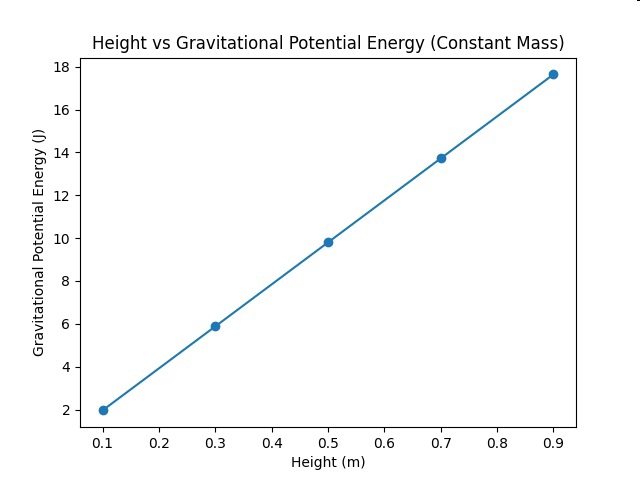
Graph of Information - Figure 2.