Pushing a Box Up a Ramp Versus Lifting It Straight Up
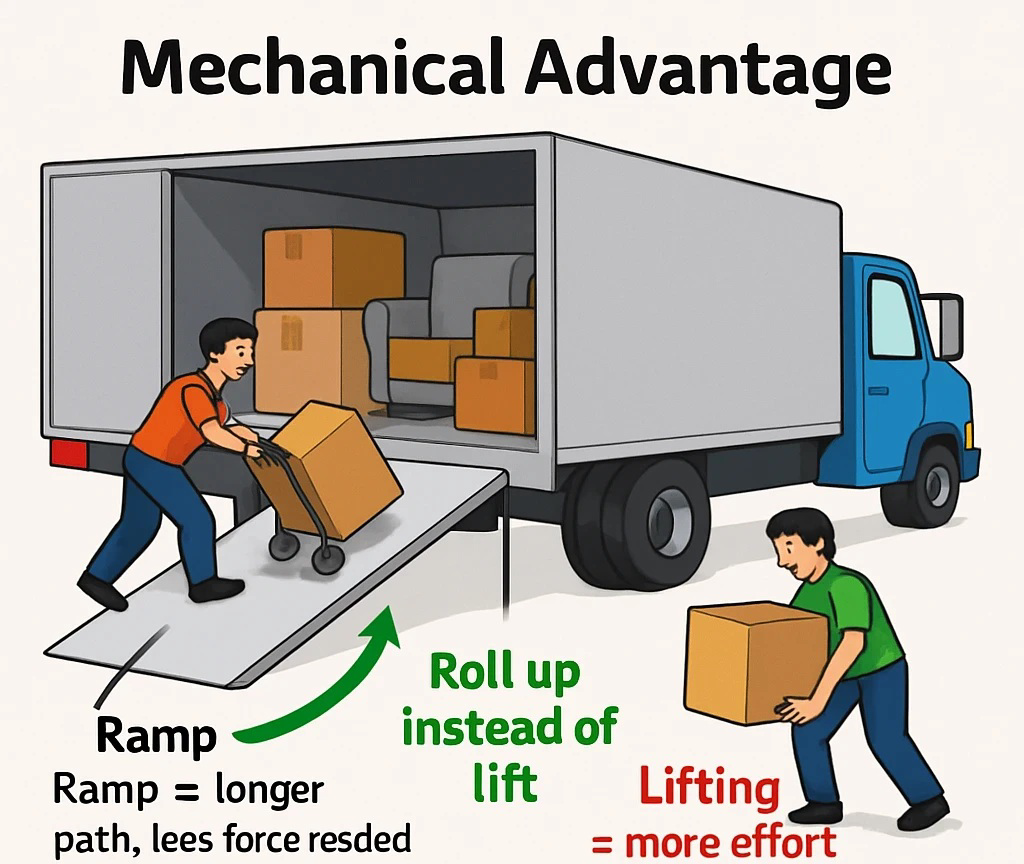
Diagram 1.
Source: https://www.baamboozle.com/game/3579537
Real-World Phenomenon
A student moves the same box to the same height in two ways: (1) lifting it straight up onto a table, and (2) pushing it up a ramp onto the same table. The ramp feels easier (less force), but the box still ends up at the same height.
When a force causes an object to move, work is done. Work is a way that energy is transferred into or out of a system. In this situation, the system we care about is the box–Earth system, because the box is being raised to a higher height in Earth’s gravitational field.
When the box is lifted straight up, the student applies an upward force over a short vertical distance. The student does work on the box, and energy is transferred into the box–Earth system. As a result, the system’s gravitational potential energy increases. This increase depends on the box’s weight and the change in height. If the height is the same, the increase in gravitational potential energy is the same.
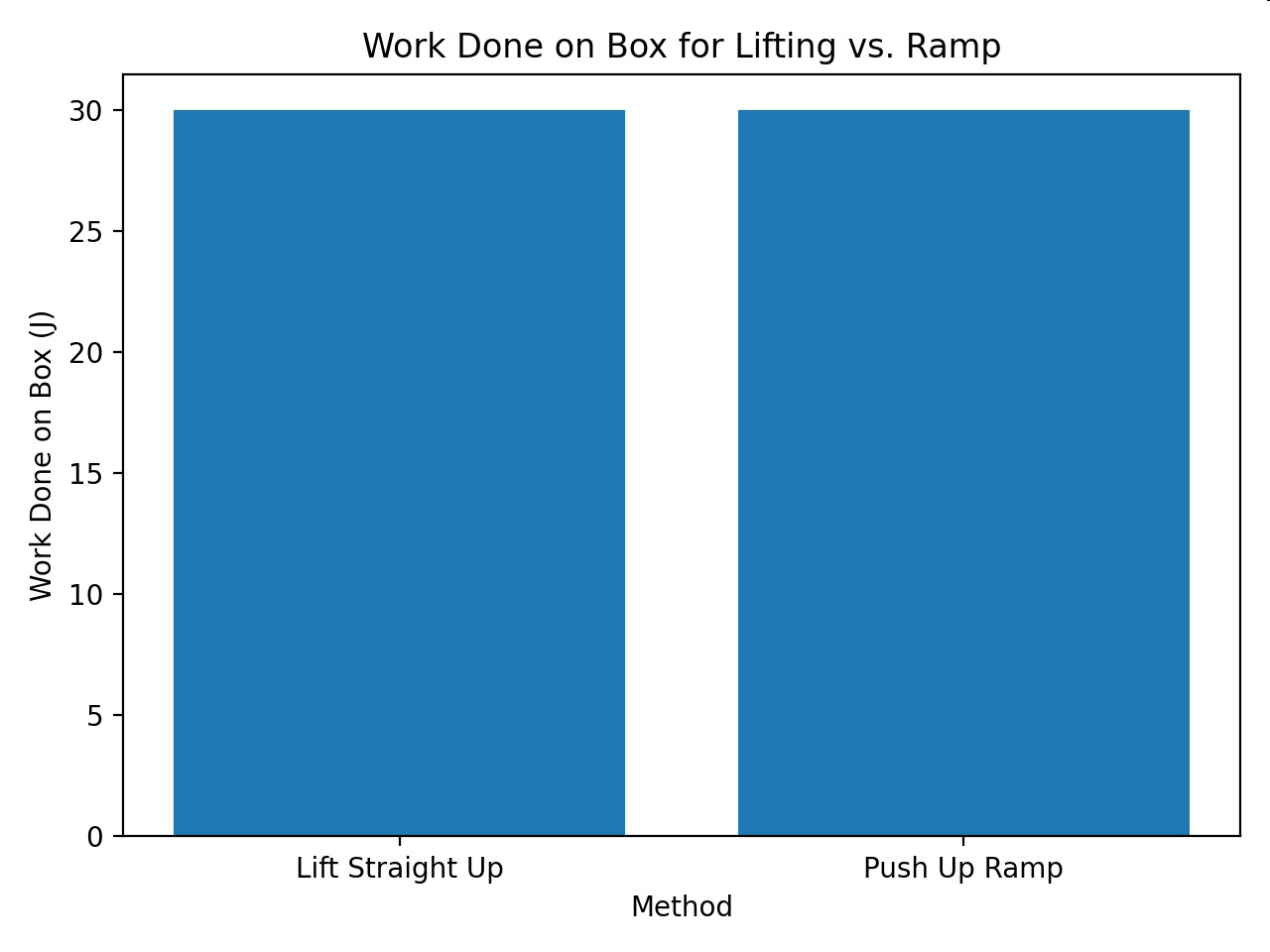
When the box is pushed up a ramp to the same height, the student usually applies a smaller force because the ramp spreads the height change over a longer distance. However, the box travels farther along the ramp. Work depends on both the force and the distance moved in the direction of the force. That means a smaller force over a longer distance can result in a similar amount of work as a larger force over a shorter distance.
If friction is small, the work done to raise the box to the same height is close to the same for both methods, because both transfer about the same amount of energy into the box–Earth system. If friction is present, the ramp method may require more work overall because some energy is transferred to the surroundings as thermal energy due to friction.
This phenomenon supports the idea that when work is done on or by a system, the system’s energy changes. In both cases, work done by the student transfers energy into the system and increases the system’s gravitational potential energy.
Table 1.
Method | Average Applied Force (N) | Distance Moved in Direction of Force (m) |
|---|
Lift Straight Up | 60 | 0.5 |
Push Up Ramp | 25 | 1.2 |
Graph of Information - Figure 1.
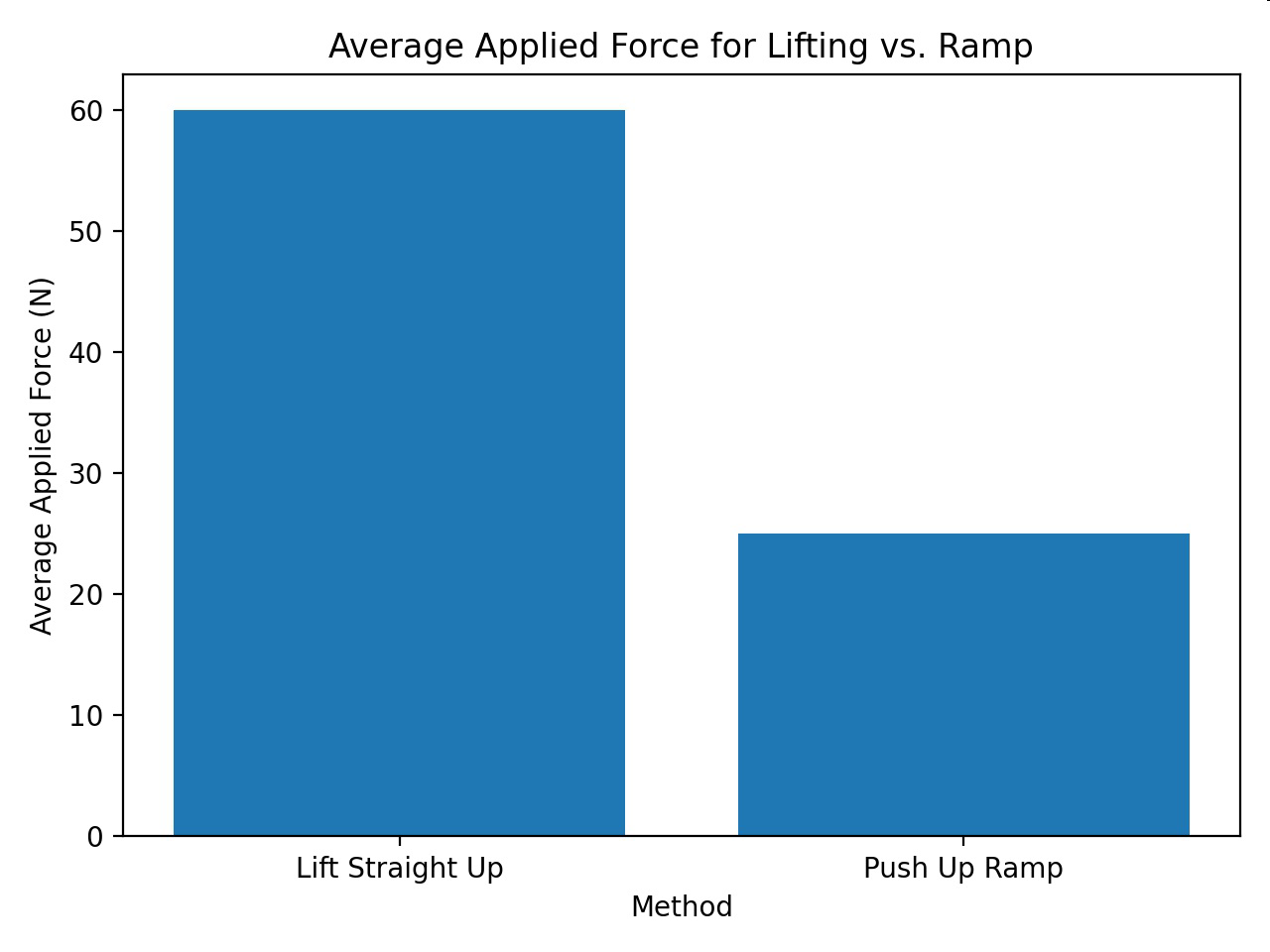
Table 2.
Method | Work Done on Box (J) | Change in Gravitational Potential Energy (J) |
|---|
Lift Straight Up | 30 | 30 |
Push Up Ramp | 30 | 30 |
Graph of Information - Figure 2.