Rapid Heat-Transfer Stirrer
Diagram 1.
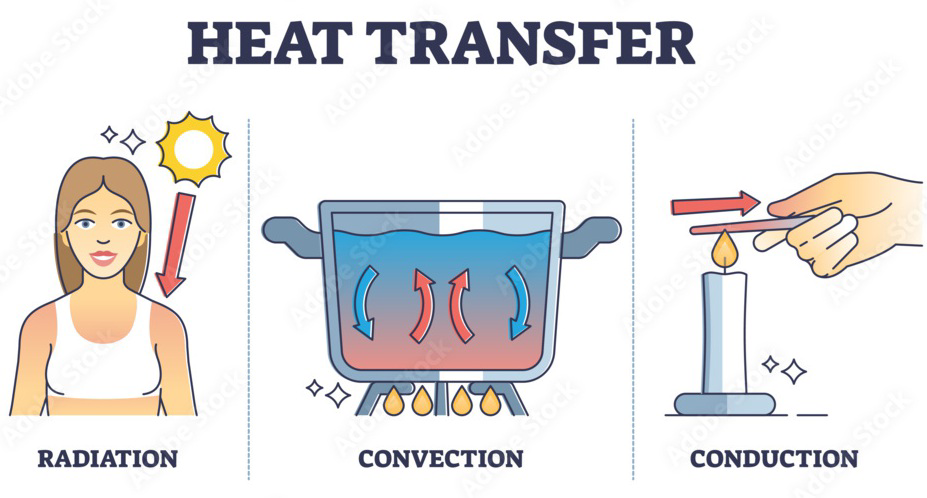
Source: https://stock.adobe.com/lk/images/heat-transfer-types-with-radiation-convection-and-conduction
Real-World Design Problem
Hot liquids cool faster when thermal energy transfers efficiently from the liquid to the surroundings. The challenge is to design a device that maximizes thermal energy transfer so hot water cools as quickly as possible.
Thermal energy transfers whenever there is a temperature difference between objects. Hot water has more thermal energy than the surrounding air, so energy naturally flows out of the water, causing it to cool. This transfer occurs through conduction, convection, and radiation.
In still water, cooling happens slowly. Thermal energy moves through the container by conduction, and warm water near the surface transfers energy to the air by convection. However, this process can be sped up by increasing how easily energy leaves the water.
In this design challenge, students create a cool-down stirrer that maximizes thermal energy transfer from hot water. Design features might include:
High-conductivity materials (such as metal instead of plastic)
Increased surface area (fins, holes, or extended shapes)
Stirring motion, which increases convection by constantly moving warm water to the surface
A device that maximizes thermal energy transfer will cause the water temperature to drop more quickly than a simple spoon or no stirrer at all. Students test their designs by starting with the same amount of hot water at the same temperature and measuring temperature over time while using different stirrers.
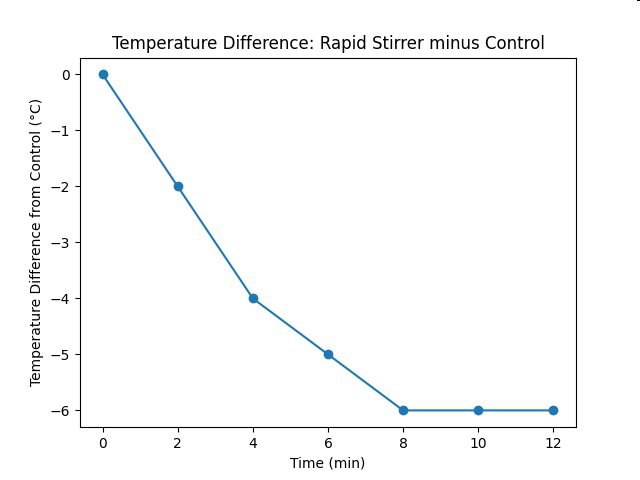
In this investigation, students apply ideas about conduction and convection to explain why some designs remove thermal energy faster than others. By analyzing temperature–time data, students can evaluate which design best maximizes heat transfer and explain why it works.
Graph of Information - Figure 1.
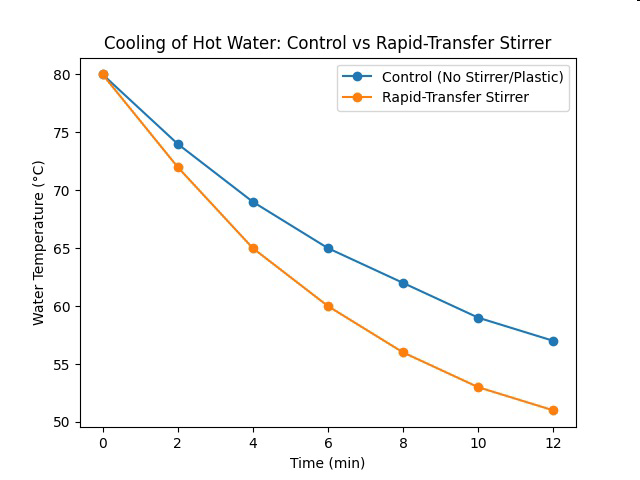
Graph of Information - Figure 2.