Solar Oven Snack Warmer
Diagram 1.
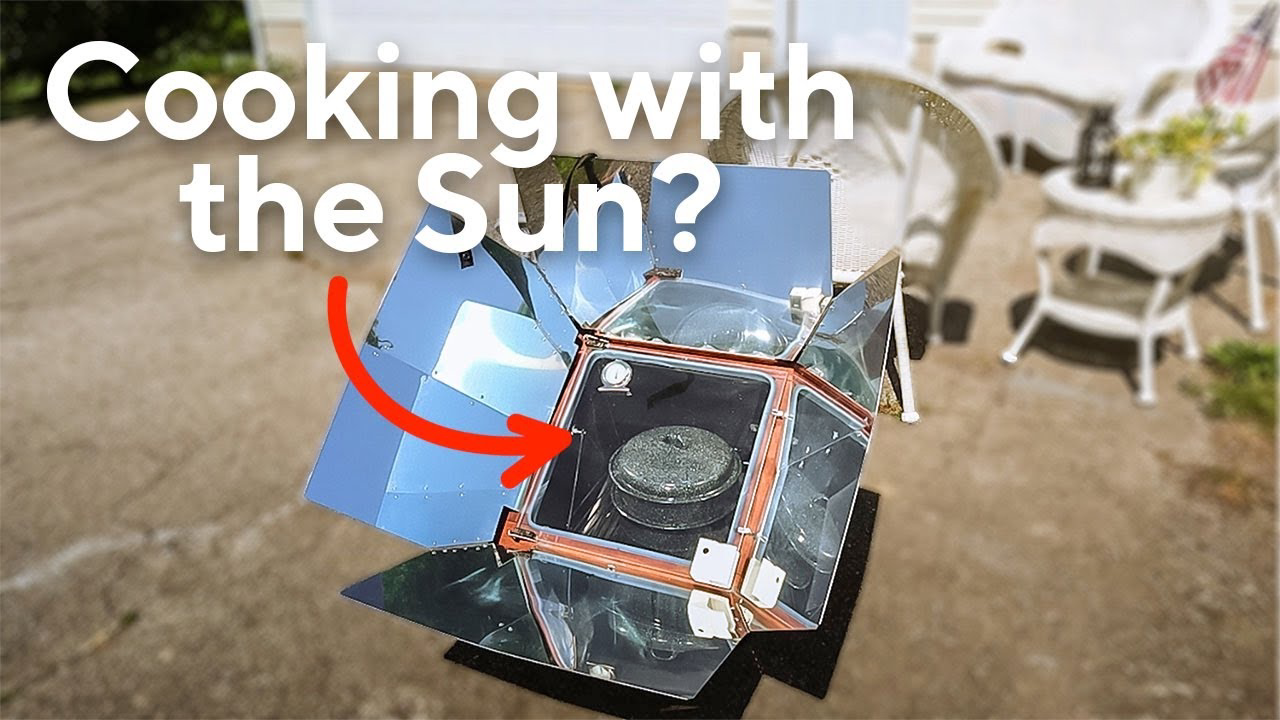
Source:
https://www.youtube.com/watch?v=R8yzaznukac
Real-World Design Problem
Sunlight can warm objects, but some setups heat much faster than others. The challenge is to design a device that maximizes thermal energy transfer from sunlight to a target (like a cup of water or a marshmallow “snack warmer”).
Thermal energy transfers whenever energy moves from one place to another because of a temperature difference. In a solar oven, the energy source is the Sun. The goal is to transfer as much solar energy as possible into the inside of the oven and into the object being heated.
A solar oven mainly uses radiation, which is energy transferred by electromagnetic waves. Sunlight travels through space as radiation and can be absorbed by surfaces on Earth. Dark, dull surfaces absorb more radiant energy than shiny, reflective surfaces. That is why a black interior is often used inside a solar oven: it absorbs solar radiation and warms up. The warm interior can then transfer thermal energy to the air and to the food or water inside by conduction (direct contact) and convection (moving warm air).
Design features can increase heating by:
Reflectors (like aluminum foil) that bounce more sunlight into the oven.
A clear plastic window that reduces convection by trapping warm air in.
Better sealing to prevent warm air from escaping.
Positioning and angle of reflectors to increase incoming radiation.
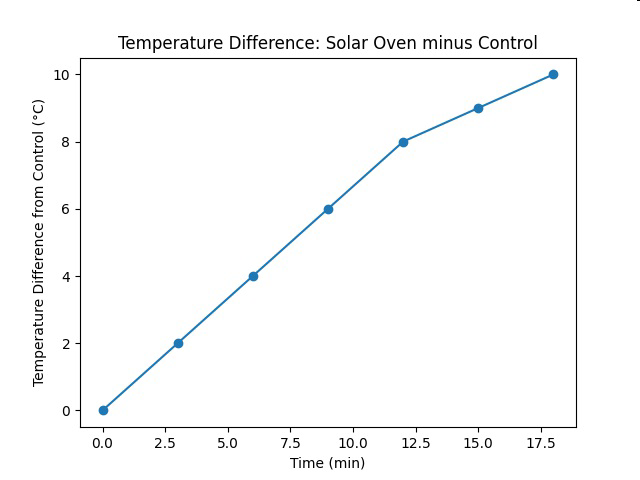
Students can test the performance of their solar ovens by measuring the temperature of water (or air inside the oven) over time using the same starting temperature and the same location outdoors. If a design maximizes thermal energy transfer, the temperature rises faster and reaches a higher value.
In this example, students use ideas about radiation, absorption, reflection, and insulation to improve their solar oven design, then evaluate performance using temperature–time data.
Graph of Information - Figure 1.
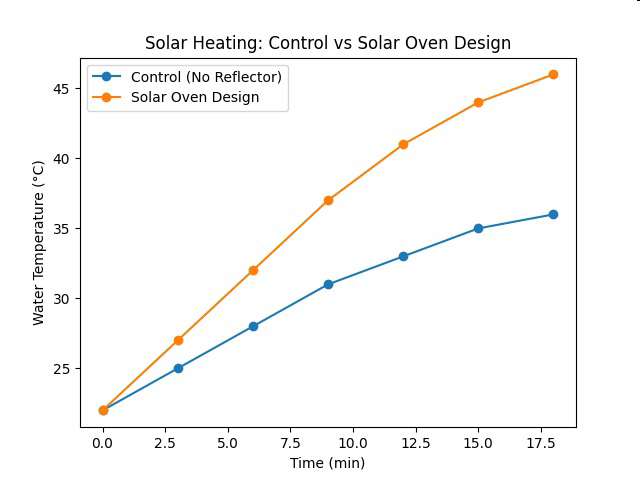
Graph of Information - Figure 2.