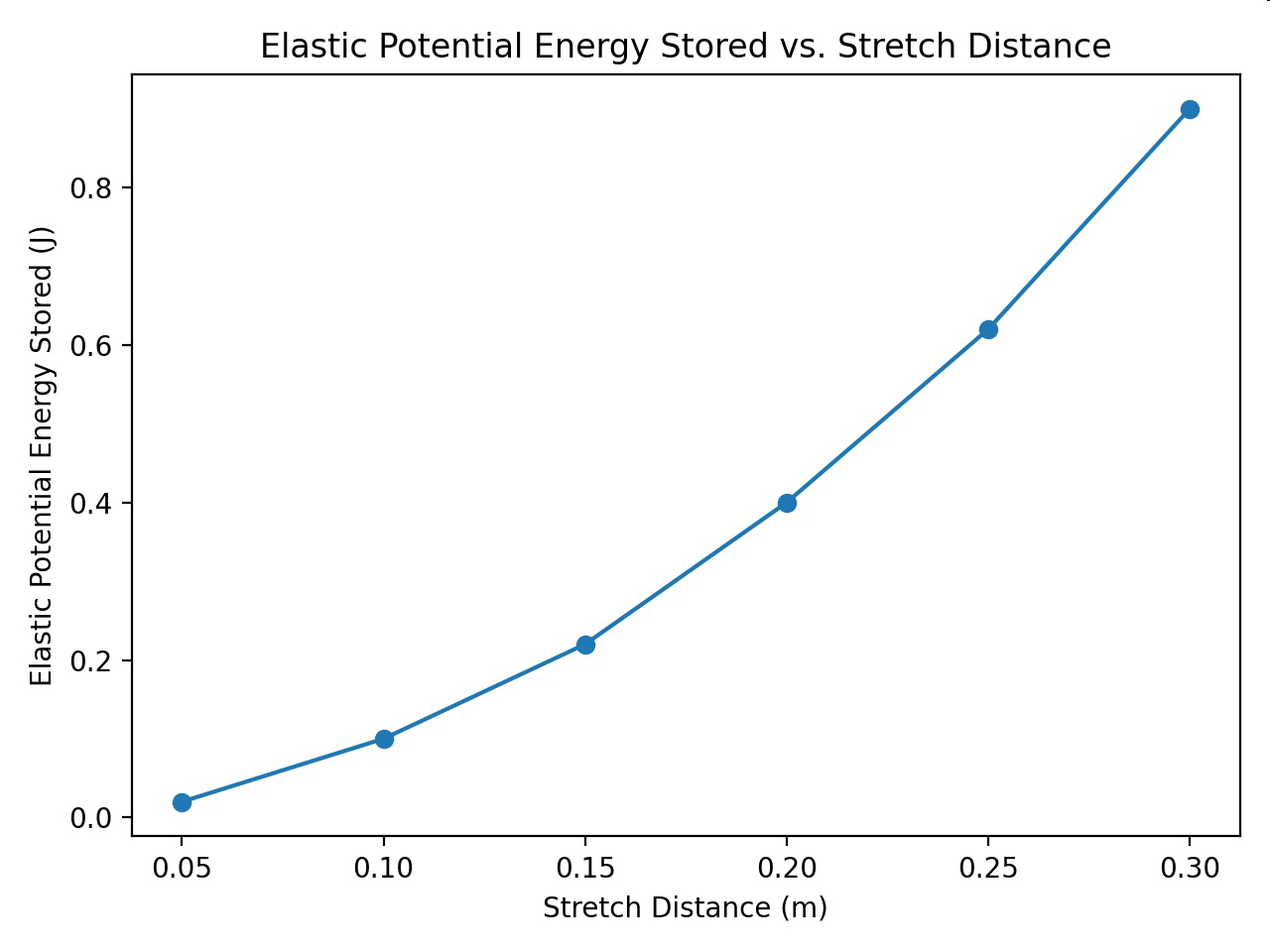
Stretching a Spring by Different Amounts
Diagram 1.
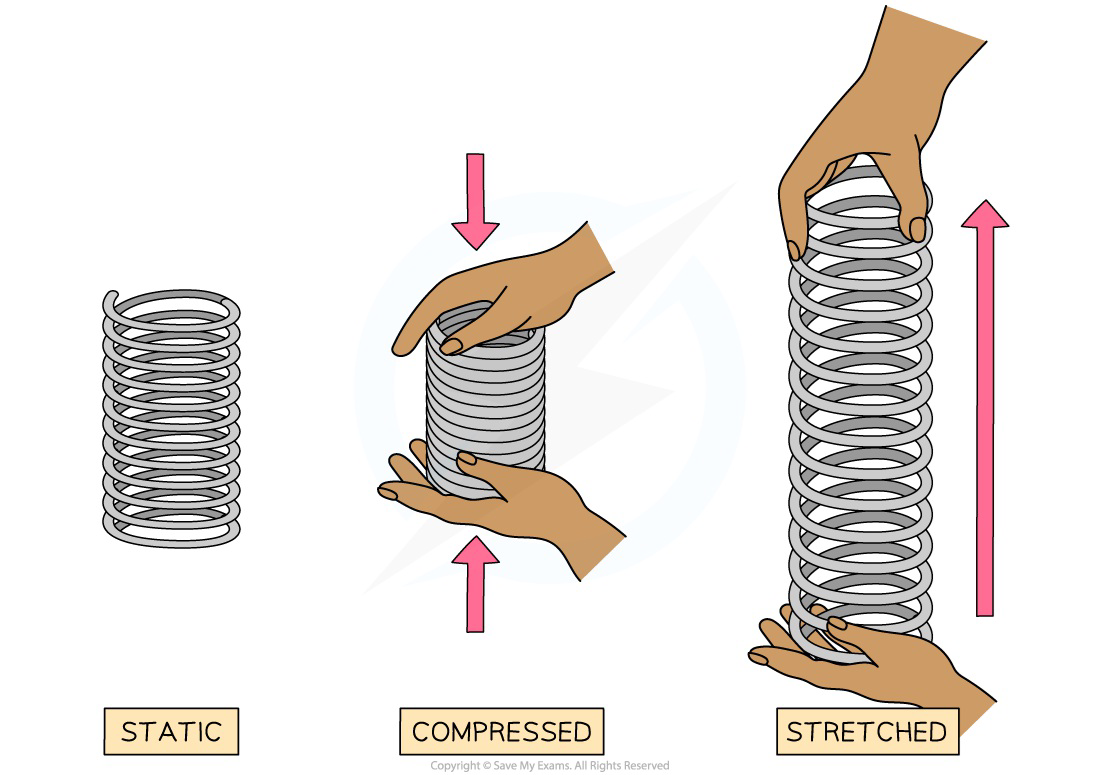
Source: https://www.savemyexams.com/gcse/physics/aqa/18/revision-notes/5-forces/5-3-forces-and-elasticity/5-3-4-work-done-on-a-spring/
Real-World Phenomenon
A student stretches the same spring by small, medium, and large amounts. When the spring is released, it snaps back faster and moves objects farther when it was stretched more.
When a force causes an object to move, work is done on that object. Doing work transfers energy into or out of a system. In a spring system, stretching the spring requires a force applied over a distance. When a student pulls on a spring and stretches it, the student does work on the spring.
As the spring is stretched, energy is transferred from the student to the spring. This energy is stored in the spring as elastic potential energy. The more the spring is stretched, the more work is done, and the greater the increase in the spring’s stored energy.
When the spring is released, the stored energy does not disappear. Instead, the spring does work on whatever it is connected to, such as a cart or a mass. As the spring returns to its original shape, energy is transferred out of the spring system. This transfer causes the attached object to move, giving it kinetic energy.
Diagram 2.
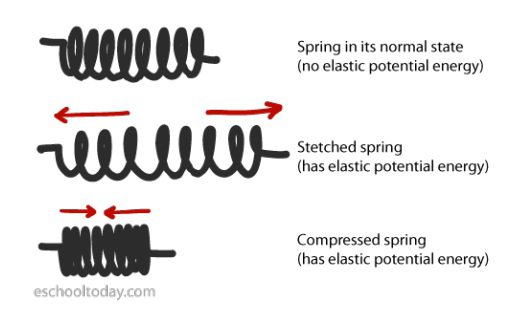 Source: https://studymind.co.uk/notes/elastic-potential-energy/
The amount of energy transferred depends on how much the spring was stretched. A small stretch transfers a small amount of energy, while a larger stretch transfers more energy. This is why objects attached to a more-stretched spring move faster or travel farther after release.
This phenomenon demonstrates that the energy of a system changes when work is done on or by the system. Work done on the spring increases its energy, and work done by the spring decreases its energy as energy is transferred to another object. The total energy change is directly related to the amount of work done during stretching.
Table 1.
Stretch Distance (m) | Applied Force (N) |
|---|
0.05 | 1 |
0.1 | 2 |
0.15 | 3 |
0.2 | 4 |
0.25 | 5 |
0.3 | 6 |
Graph of Information - Figure 1.
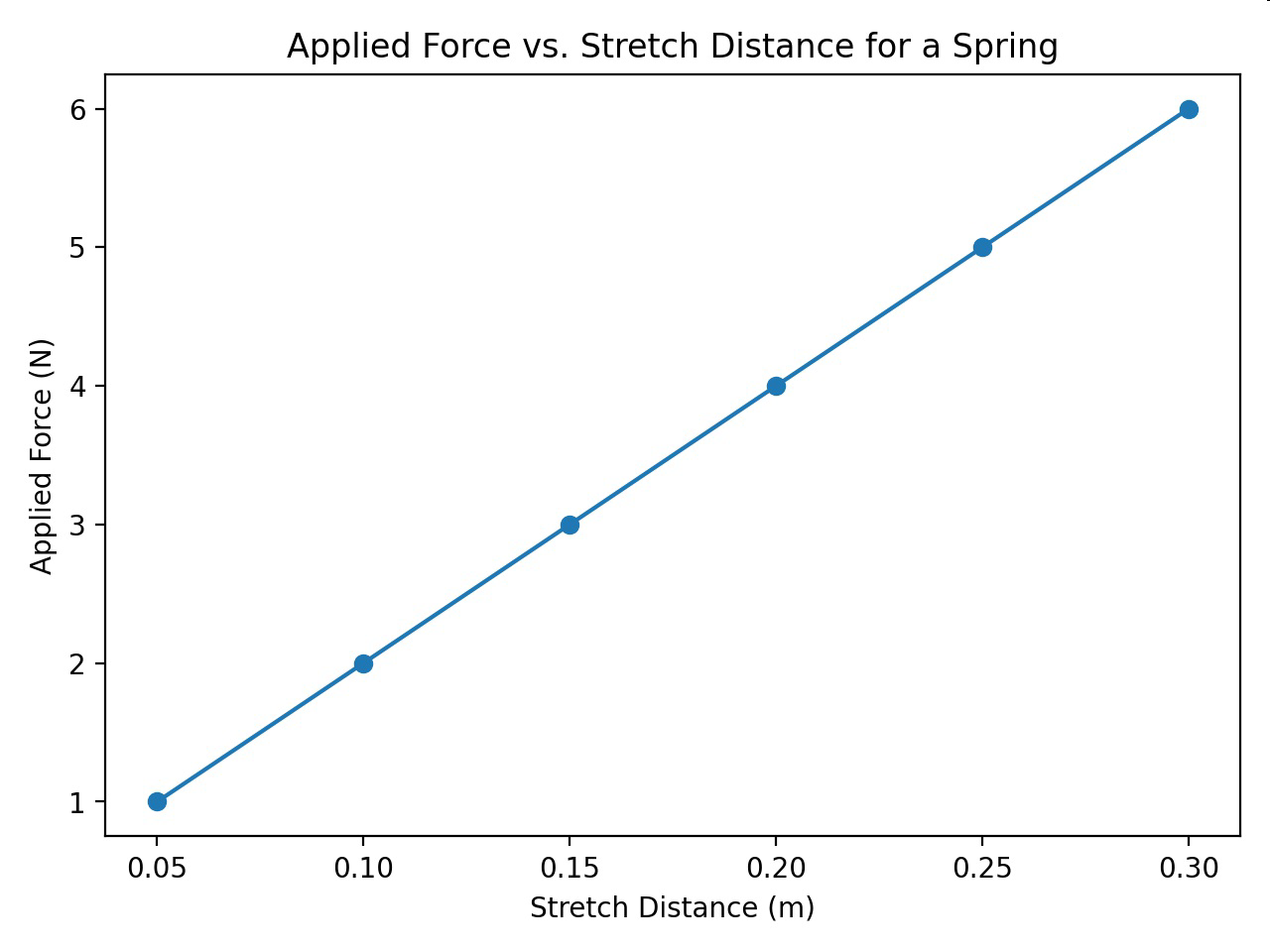
Table 2.
Stretch Distance (m) | Elastic Potential Energy Stored (J) | Speed of Object After Release (m/s) |
|---|
0.05 | 0.02 | 0.45 |
0.1 | 0.1 | 0.65 |
0.15 | 0.22 | 0.82 |
0.2 | 0.4 | 0.98 |
0.25 | 0.62 | 1.12 |
0.3 | 0.9 | 1.25 |
Graph of Information - Figure 2.