Charging a Battery Using an Electric Current
Real-World Phenomenon
A rechargeable battery connected to a charger becomes warm and takes longer to fully charge when the charging current is lower. When the charging current is higher, the battery reaches a higher charge level in less time.
Electric current can transfer energy into a system and cause that energy to be stored for later use. In a rechargeable battery, electrical energy from a power source is transferred into the battery through an electric current and stored as chemical energy.
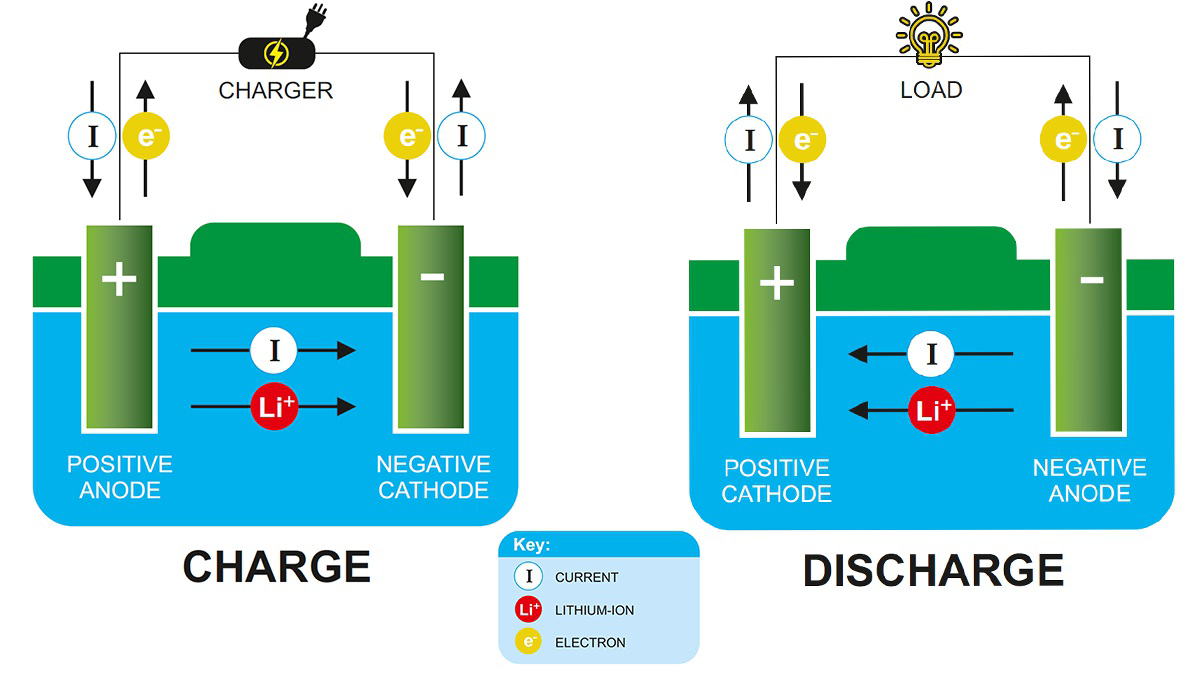
When a battery is connected to a charger, electric current flows into the battery. This current causes chemical reactions inside the battery that store energy. The battery’s energy increases as more electric charge moves into it. This process shows that electric current is a way that energy can be transferred into a system.
Diagram 1.
Source: https://www.nvclighting.fi/technical-support/view/introduction-to-lithium-batteries-36
The amount of energy transferred to the battery depends on the size of the current and how long the current flows. A larger current transfers more energy each second, allowing the battery to charge faster. A smaller current transfers energy more slowly, so the battery takes longer to reach the same charge level.
As the battery charges, some of the electrical energy is also transferred to the surroundings as thermal energy, which is why the battery may feel warm. Even so, most of the energy carried by the electric current is stored inside the battery.
When the battery later powers a device, electric current flows out of the battery. Energy is then transferred out of the battery system and used to light a bulb, run a motor, or power electronics.
These observations provide evidence that energy can be transferred by electric currents. Electric current moves energy into the battery during charging and out of the battery during use.
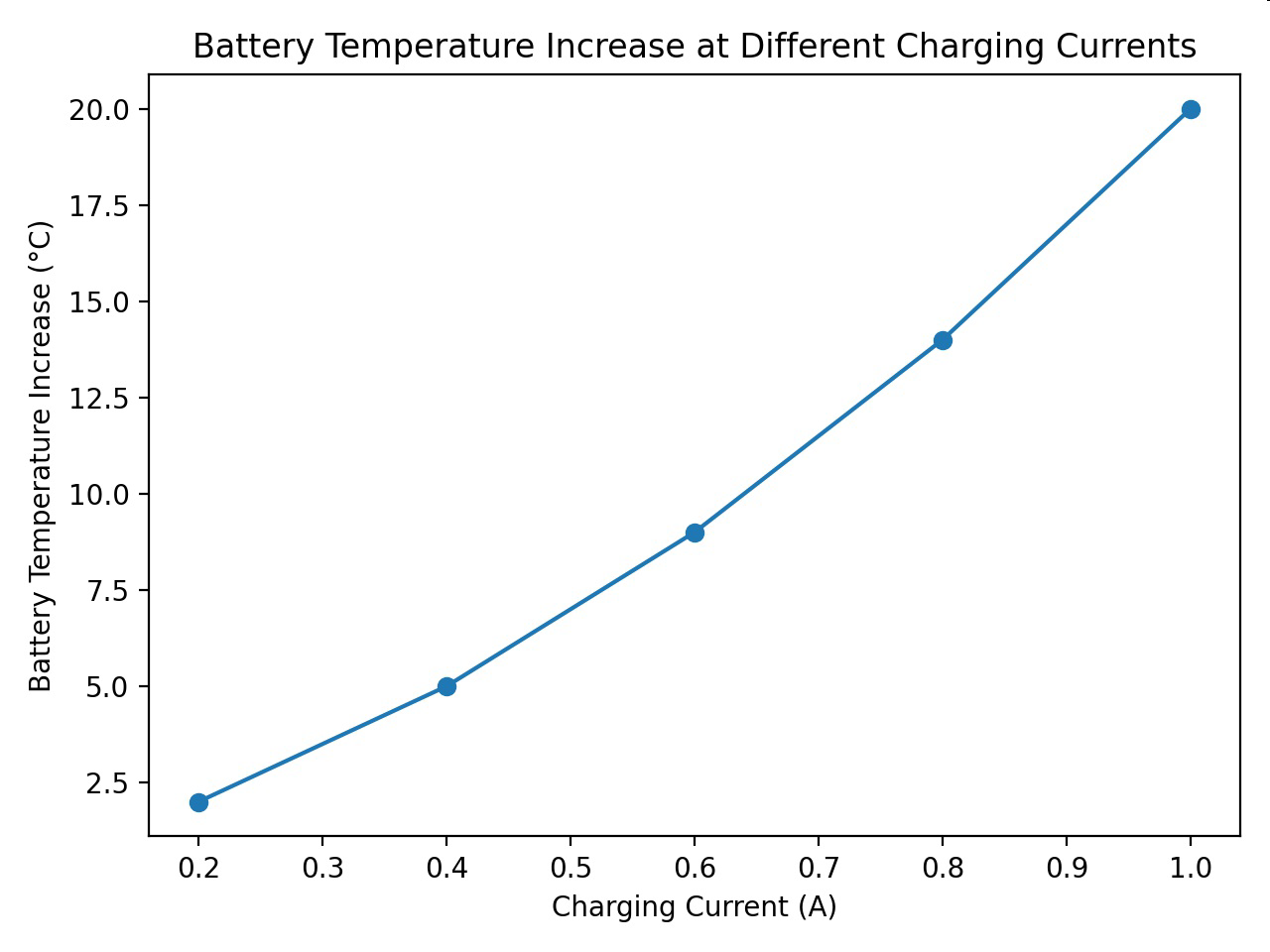
Table 1.
Charging Current (A) | Charging Time (minutes) | Energy Stored After Charging (J) | Battery Temperature Increase (°C) |
|---|
0.2 | 30 | 120 | 2 |
0.4 | 30 | 240 | 5 |
0.6 | 30 | 360 | 9 |
0.8 | 30 | 480 | 14 |
1 | 30 | 600 | 20 |
Graph of Information - Figure 1.
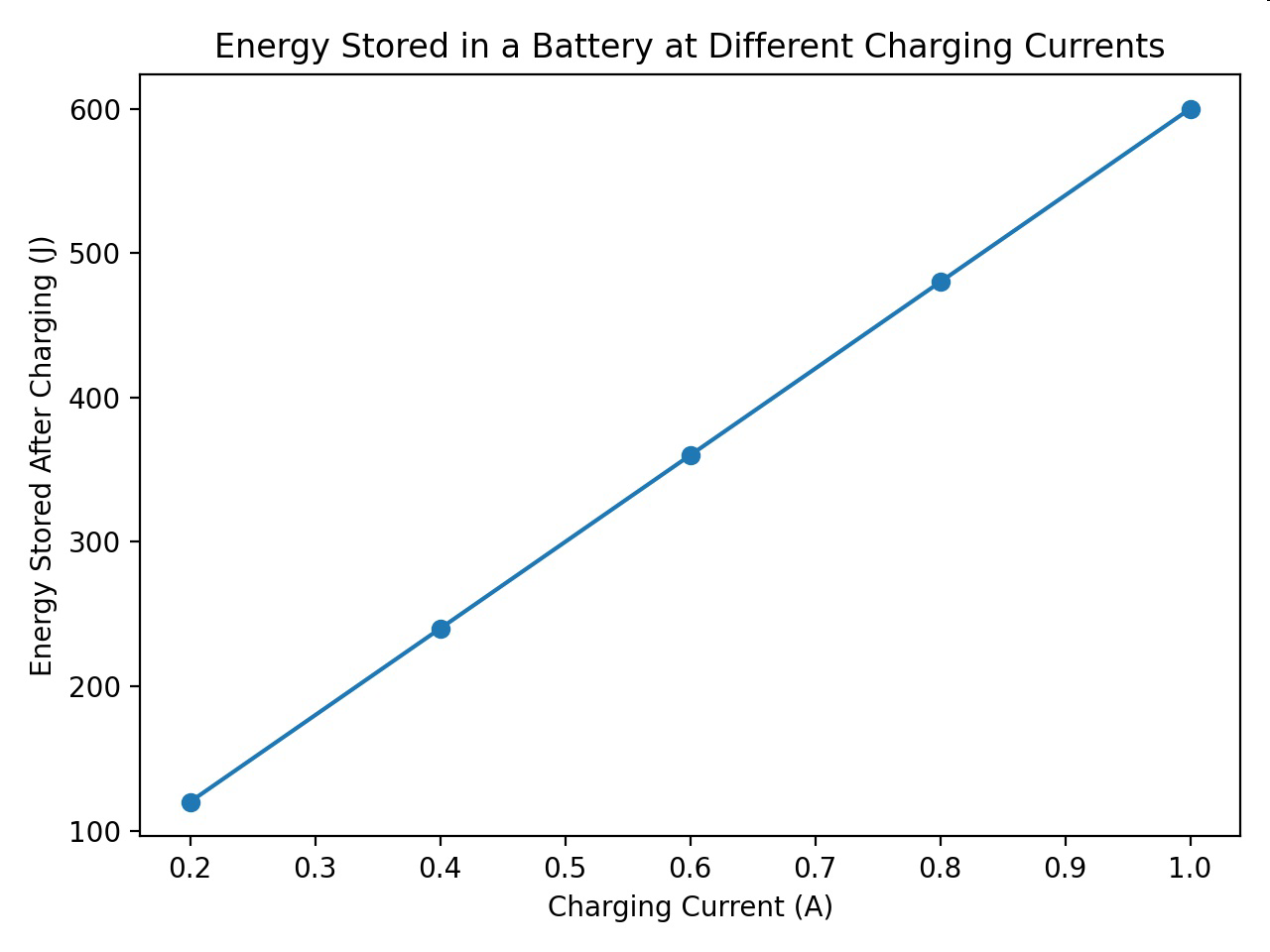
Graph of Information - Figure 2.