Insulated Cup Challenge
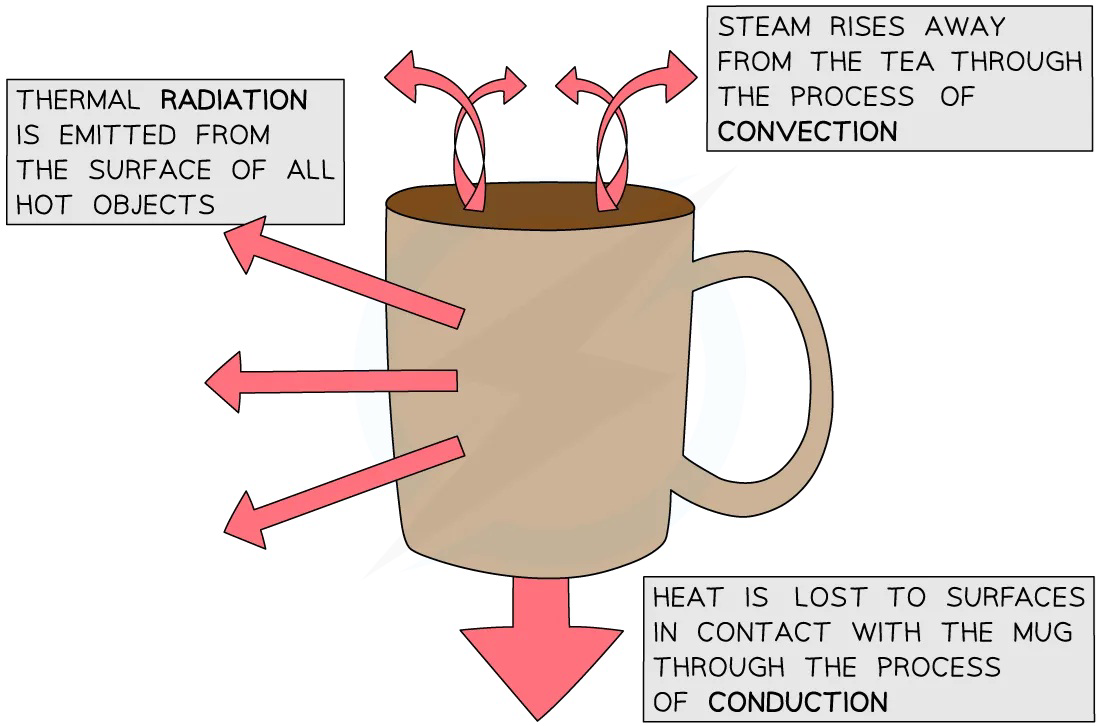
Diagram 1.
Real-World Design Problem
Hot drinks cool down over time because thermal energy transfers from the hot liquid to the cooler surrounding air. Some cups slow this process much better than others. The challenge is to design a device that minimizes thermal energy transfer so a liquid stays hot (or cold) for as long as possible.
Thermal energy is the energy associated with the motion of particles. When two objects at different temperatures are near each other, thermal energy transfers from the warmer object to the cooler one. This transfer can happen through conduction, convection, and radiation.
An uncovered cup of hot water loses thermal energy quickly. Heat moves through the cup walls by conduction, warm air rises away from the cup by convection, and energy radiates outward from the hot surface. An insulated cup reduces these transfers by using materials that slow the movement of thermal energy.
In this design challenge, students create an insulated cup sleeve that minimizes thermal energy transfer. The cup itself stays the same, but students change the arrangement and materials around the cup. Materials such as foam, felt, bubble wrap, cardboard, or aluminum foil can be layered to trap air, reduce conduction, and reflect radiant heat back toward the cup.
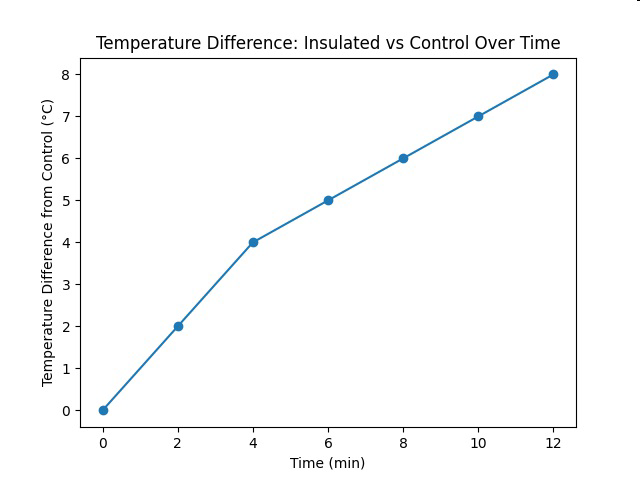
Students test their designs by pouring hot water into identical cups and measuring the temperature over time. If a design works well, the temperature decreases more slowly. This provides evidence that the device successfully reduced thermal energy transfer.
In this example, students use principles of heat transfer to guide their design choices, test how well their device works, and evaluate which materials and arrangements are most effective. By comparing temperature–time data from different designs, students can determine which device best minimizes thermal energy transfer and explain why it works.
Graph of Information - Figure 1.
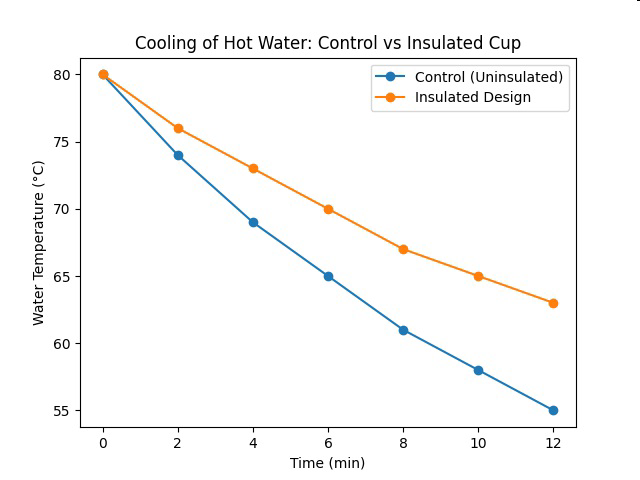
Graph of Information - Figure 2.