Same Mass, Different Speeds (Bicycle or Toy Car)
Diagram 1.
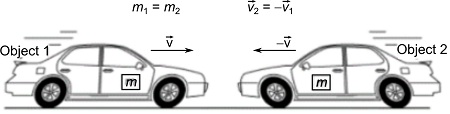
Source: https://homework.study.com/explanation/two-cars-of-the-same-mass-are-moving-toward-each-other
Real-World Phenomenon
The same cart rolling faster has much more kinetic energy than when it rolls slowly. A small increase in speed can lead to a much larger increase in kinetic energy.
Kinetic energy is the energy an object has because it is moving. Scientists describe kinetic energy as depending on two variables: the mass of the object and the speed of the object. When mass stays the same, changes in kinetic energy are caused only by changes in speed.
In this investigation, the cart’s mass stays constant. The cart is tested at several different speeds, such as slow, medium, and fast. For each speed, the kinetic energy can be calculated using a relationship that shows speed has a strong effect on kinetic energy. In fact, kinetic energy increases with the square of the speed. This means that doubling the speed does not just double the kinetic energy, it increases it by a factor of four. Tripling the speed increases kinetic energy by a factor of nine.
This squared relationship creates a pattern that is easy to see in graphs. When kinetic energy is graphed against speed, the graph curves upward, showing that kinetic energy increases more rapidly at higher speeds. This helps explain why faster-moving objects can cause much larger effects in collisions, even if the object’s mass does not change.
In this example, students use graphs to describe how kinetic energy changes when speed changes while mass stays constant. Interpreting the shape of the graph and using data points from the graph provides evidence that speed has a powerful impact on kinetic energy.
By analyzing the pattern, students can describe the relationship between kinetic energy and speed and explain why speed is such an important factor in motion and energy.
Diagram 2.
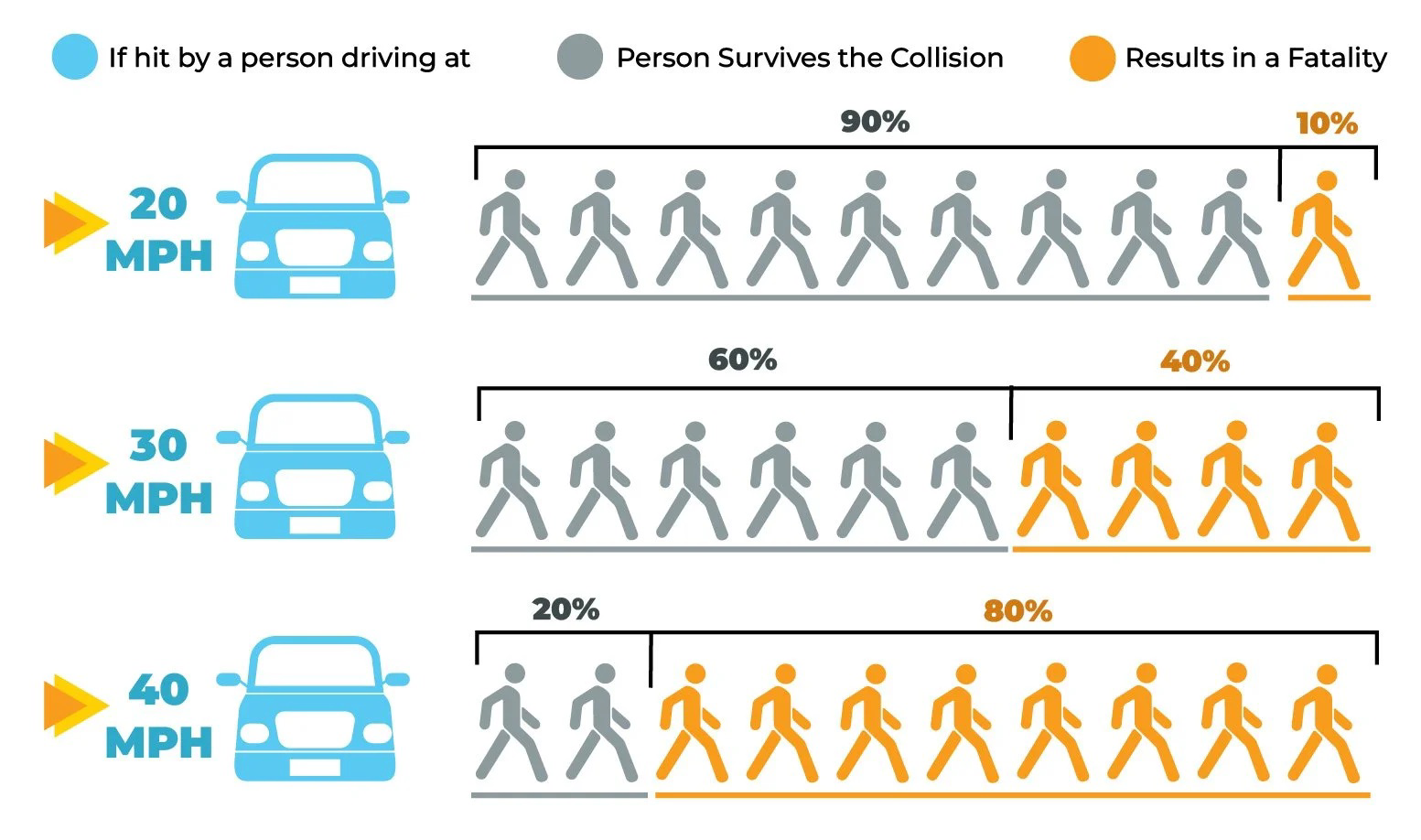 Source: https://www.streetsareforeveryone.org/blog/speedingkillschildren
Table 1.
Cart Mass (kg) | Speed (m/s) | Kinetic Energy (J) |
|---|
1.5 | 0.5 | 0.1875 |
1.5 | 1 | 0.75 |
1.5 | 1.5 | 1.6875 |
1.5 | 2 | 3 |
1.5 | 2.5 | 4.6875 |
Graph of Information - Figure 1.
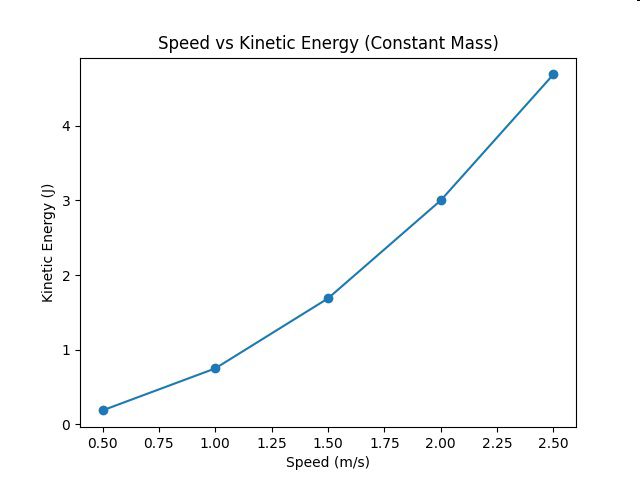
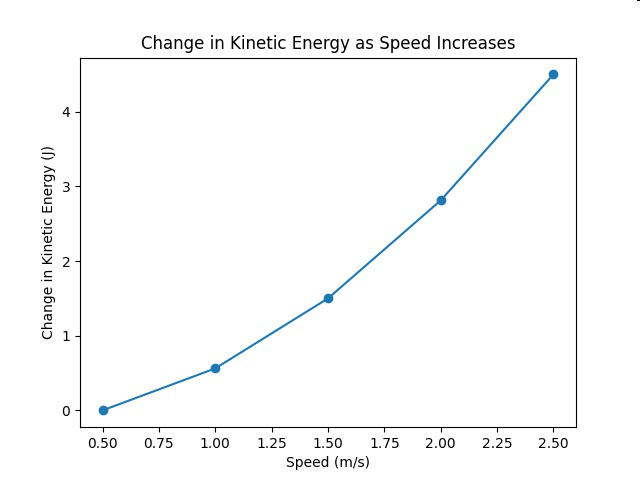
Table 2.
Speed (m/s) | Kinetic Energy (J) | Change in KE from Slowest (J) |
|---|
0.5 | 0.1875 | 0 |
1 | 0.75 | 0.5625 |
1.5 | 1.6875 | 1.5 |
2 | 3 | 2.8125 |
2.5 | 4.6875 | 4.5 |
Graph of Information - Figure 2.