Distance from Earth and Gravitational Force
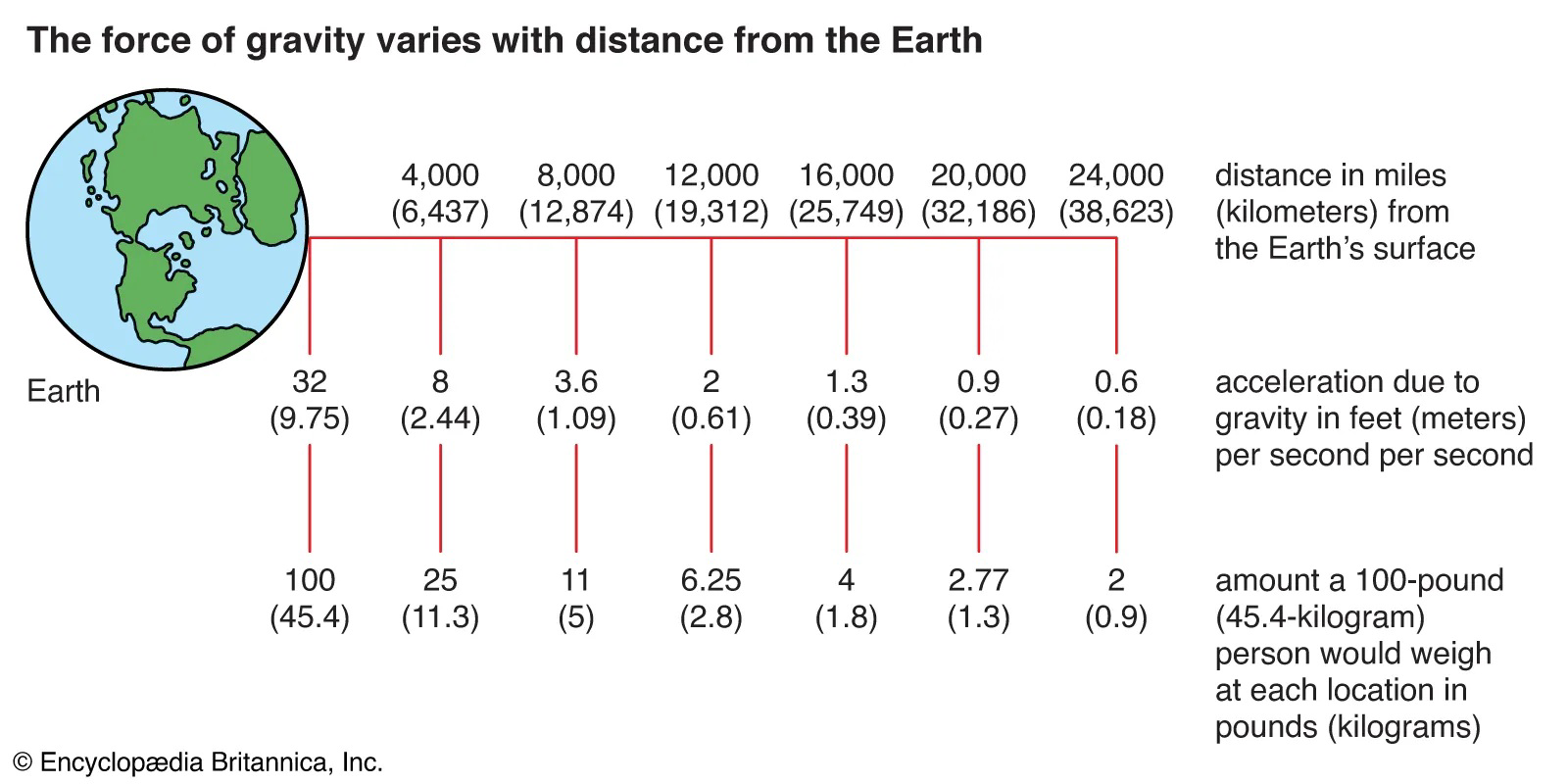
Diagram 1.
 Source: https://www.britannica.com/science/gravitation-physical-process
Real-World Phenomenon
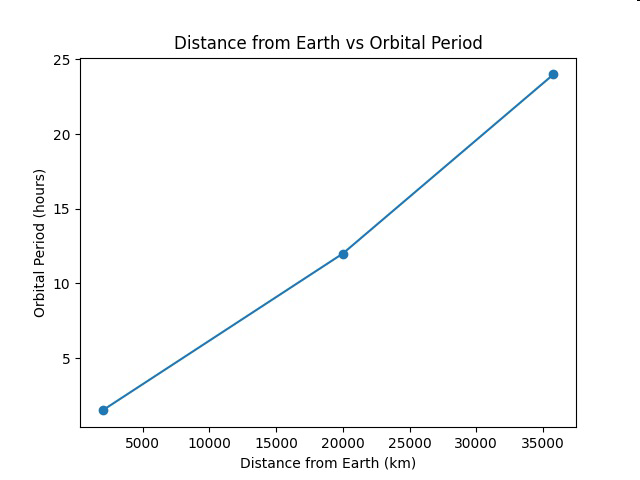
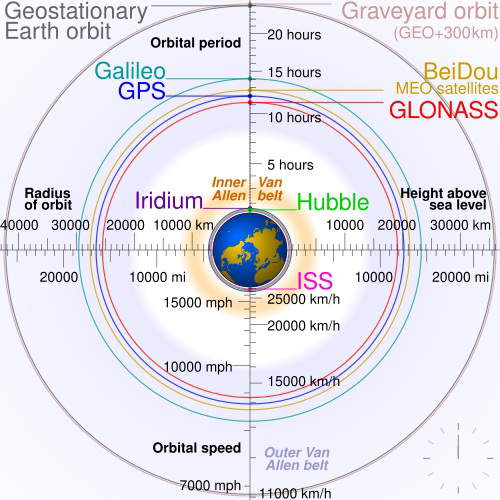
Satellites that orbit closer to Earth move faster than satellites that orbit farther away. As the distance from Earth increases, satellites take longer to complete one orbit.
Gravity is an attractive force that acts between all objects with mass. For satellites orbiting Earth, gravity is the force that pulls the satellite toward Earth and keeps it from flying off into space. The strength of this gravitational attraction depends on the mass of Earth and the distance between Earth and the satellite.
Earth has a very large mass, so it exerts a strong gravitational pull on nearby objects. However, this pull becomes weaker as distance increases. Satellites that are closer to Earth experience a stronger gravitational attraction, which causes them to move faster to stay in orbit. Satellites that are farther away experience a weaker gravitational pull and therefore move more slowly.
Scientists study satellite motion by collecting data about orbital distance, orbital speed, and orbital period. These measurements show clear patterns. Low-Earth-orbit satellites complete an orbit in about 90 minutes, while satellites much farther away can take many hours or even days to complete one orbit. These differences provide evidence that gravity depends on distance.
In satellite orbits, the interaction is clearly attractive because Earth’s gravity continually pulls the satellite inward. If gravity were not attractive, satellites would move in straight lines and leave Earth’s orbit.
Diagram 2.
Source: https://en.wikipedia.org/wiki/Communications_satellite
By comparing data from satellites at different distances, students can see that increasing distance reduces the effect of gravity. This explains why satellites farther from Earth move more slowly and take longer to orbit. These patterns provide strong evidence that gravitational interactions are attractive and depend on the distance between interacting objects.
Table 1.
Orbit Type | Distance from Earth (km) | Orbital Speed (km/s) | Orbital Period (hours) | Change in Period from Lowest (hours) |
|---|---|---|---|---|
LEO | 2000 | 7.2 | 1.5 | 0 |
MEO | 20000 | 3.9 | 12 | 10.5 |
GEO | 35786 | 3.1 | 24 | 22.5 |
Graph of Information - Figure 1.
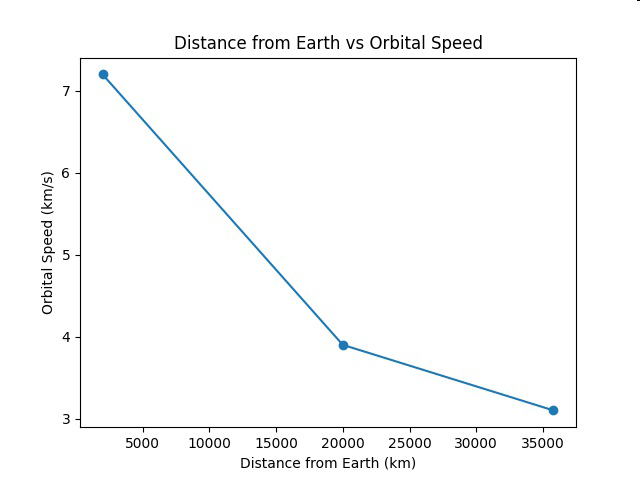
Graph of Information - Figure 2.