Static Charge Attraction Without Contact
Diagram 1.
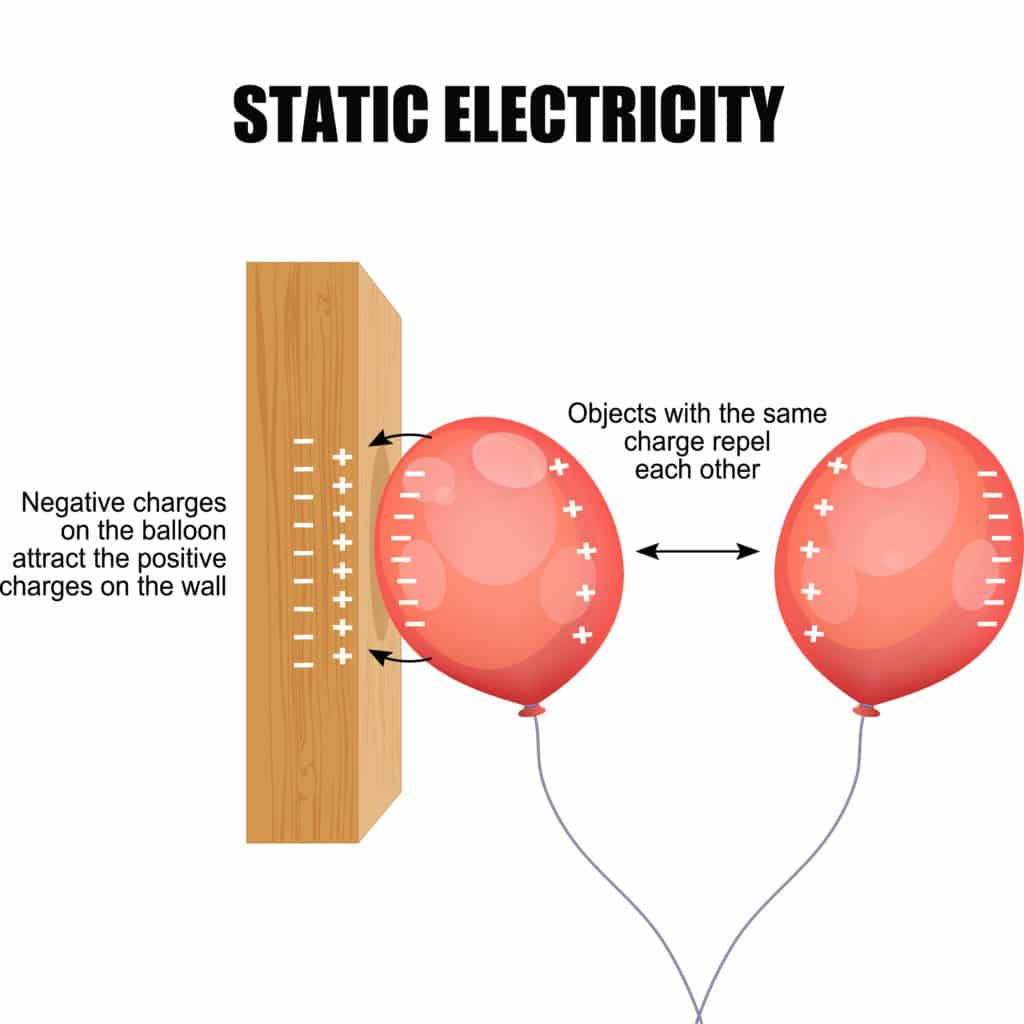 Source:
https://www.science-sparks.com/what-is-static-electricity/
Real-World Phenomenon
A balloon rubbed on hair can attract small pieces of paper or bend a thin stream of water without touching them. The attraction becomes weaker as the balloon moves farther away.
Some forces act even when objects are not in contact. Electric forces are one example. When an object becomes electrically charged, it creates an electric field in the space around it. Other objects placed in that field can experience a force, even if they never touch the charged object.
In this investigation, a balloon is rubbed on hair or fabric to give it an electric charge. Once charged, the balloon can attract small pieces of paper or bend a thin stream of water. The paper pieces and water are affected because they are inside the balloon’s electric field. The field exists in the space between the balloon and the object being attracted.
The strength of the electric force depends on factors such as the amount of charge on the balloon and the distance between the balloon and the object. When the balloon is closer, the electric field is stronger at the object’s location, so the attraction is greater. As the distance increases, the electric field becomes weaker, and the attraction decreases.
To provide evidence that a field exists, scientists collect data showing that an object responds to a force before contact occurs. In this investigation, students can measure how many paper pieces are attracted or how much a water stream bends at different distances. If the paper or water moves without touching the balloon, the force must be acting through the space between them.
Diagram 2.
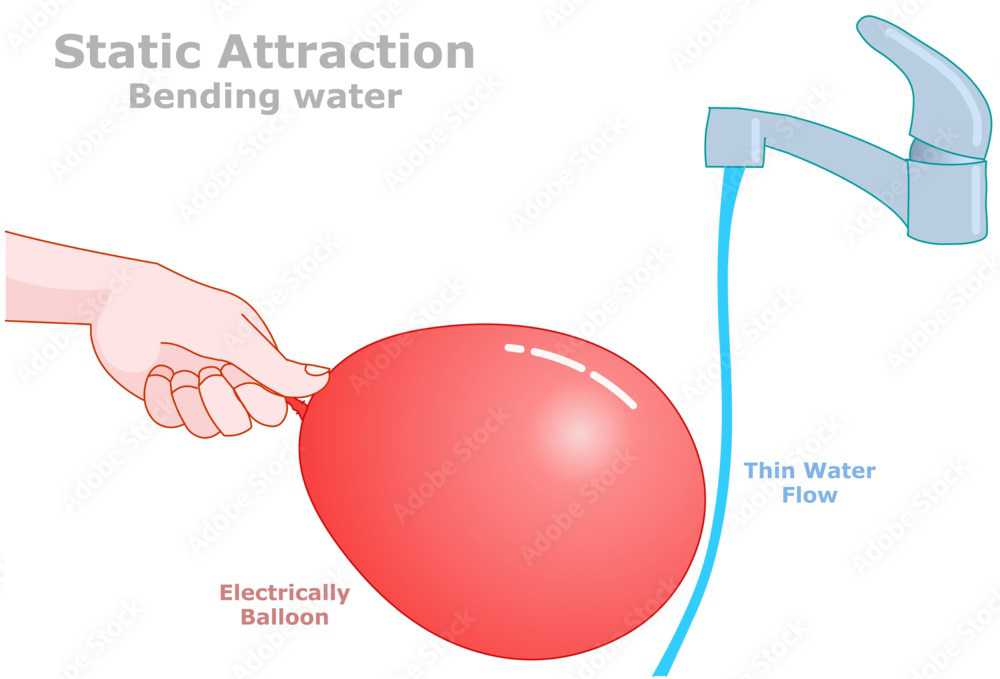
Source: https://stock.adobe.com/fr/images/static-attraction-bending-water-electricity-electrically-red-balloon
A strong design controls variables such as the size of the paper pieces, the flow rate of the water, and the method used to charge the balloon. Repeating trials and measuring distance carefully help ensure that the evidence truly supports the claim that an electric field exists between objects exerting forces on each other even when they are not in contact.
Table 1.
Distance from Balloon (cm) | Paper Pieces Attracted |
|---|
2 | 18 |
4 | 14 |
6 | 9 |
8 | 5 |
10 | 2 |
Graph of Information - Figure 1.
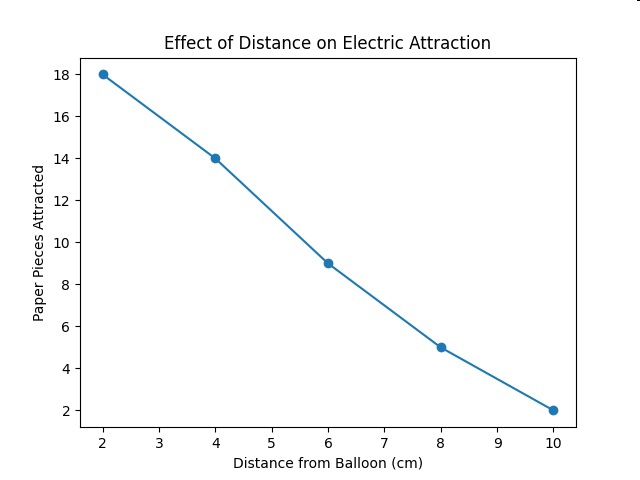
Table 2.
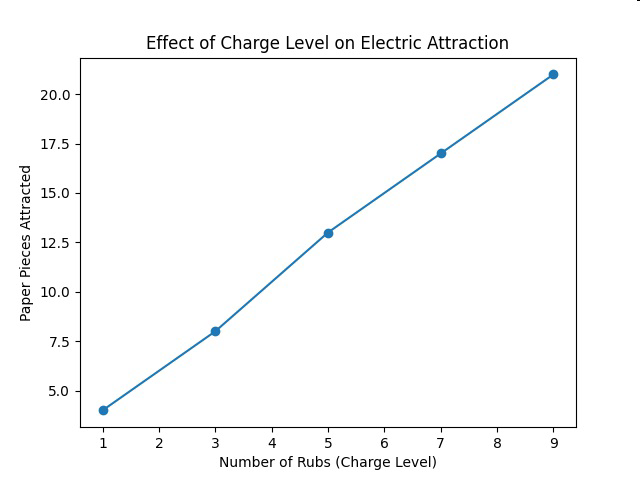
Number of Rubs | Paper Pieces Attracted | Change from Lowest |
|---|
1 | 4 | 0 |
3 | 8 | 4 |
5 | 13 | 9 |
7 | 17 | 13 |
9 | 21 | 17 |
Graph of Information - Figure 2.